








New virus detected in Swiss cattle

The mystery surrounding sick cows in Switzerland has been solved: the Institute of Virology and Immunology has discovered a new orthobunyavirus of the Simbu serogroup in samples taken from sick cattle.
Select your language
Generated with artificial intelligence.
Listening:
New virus detected in Swiss cattle
The institute confirmed this to the Swiss News Agency Keystone-SDA on Monday.
According to the institute, the disease is not an animal disease regulated under the Animal Diseases Ordinance. “It is not a highly contagious disease,” it said in response to an enquiry. Viruses of the Simbu serogroup are therefore not generally considered to be zoonotic pathogens and, based on current knowledge, do not pose a significant risk of infection to humans.
+ Swiss cows affected by mystery disease
The virus is transmitted by midges, a family of small, mostly blood-sucking flies. It was initially unclear whether the current heatwave had increased the animals’ susceptibility to the disease.
The new virus belongs to a group that also includes the Schmallenberg virus. This had already been detected in Switzerland in 2012. It caused deformities in calves, lambs and goats.
More
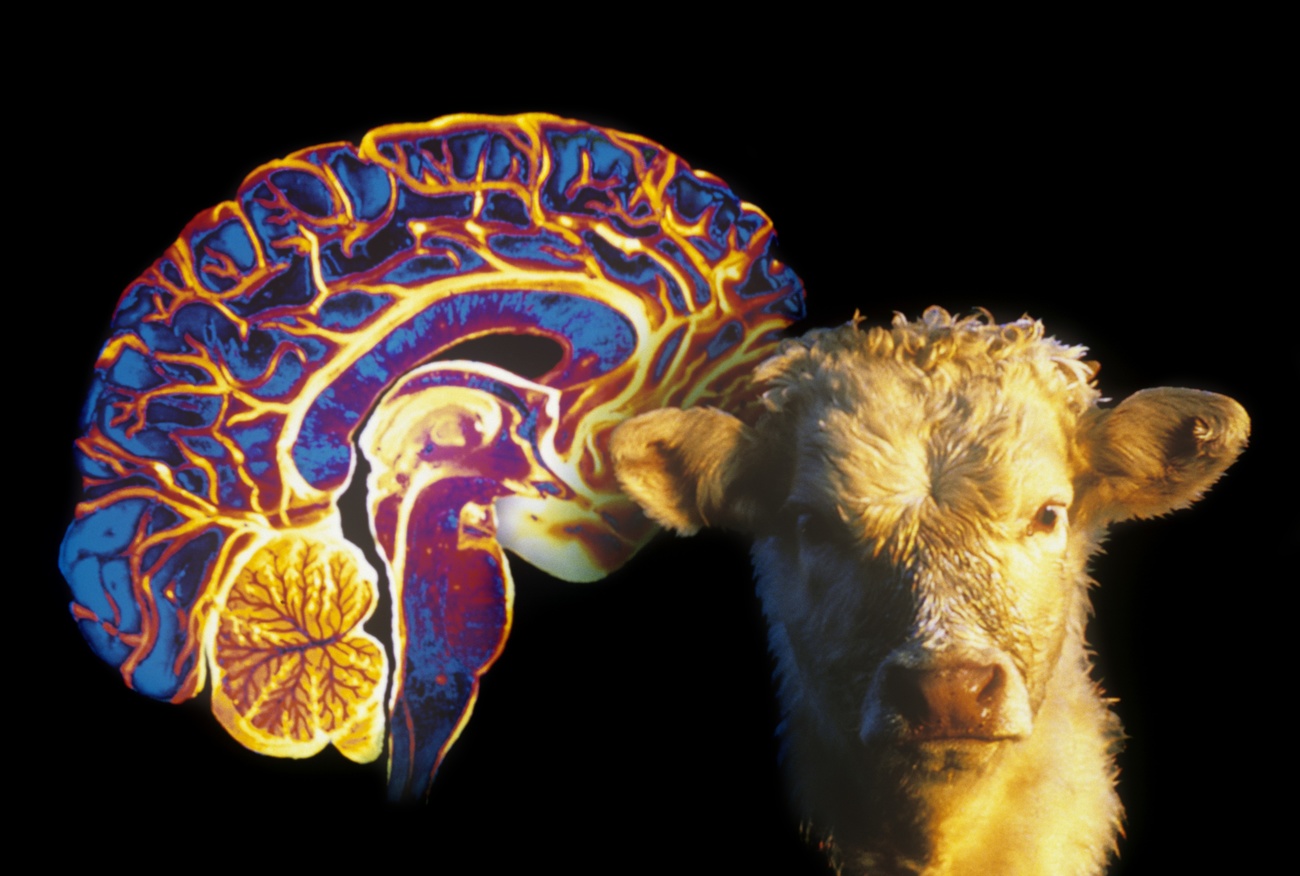
Is mad cow disease making a comeback?
According to the Institute of Virology and Immunology, the course of the disease in the affected cattle farms in Switzerland lasted around 14 to 21 days in each case. The most common symptoms included a fever of over 40°C, a sharp drop in milk production, loss of appetite and diarrhoea. It is currently unclear whether the current heatwave is linked to the cases of the disease. However, high temperatures can make high-yielding dairy cows more susceptible to disease.
These findings in Switzerland are consistent with those from Germany and France. The institute has urged livestock farmers to contact a vet immediately if they notice any non-specific symptoms.
+ How we produce English news
Translated from German, reviewed by an English Department journalist.

In compliance with the JTI standards
More: SWI swissinfo.ch certified by the Journalism Trust Initiative

You can find an overview of ongoing debates with our journalists here . Please join us!
If you want to start a conversation about a topic raised in this article or want to report factual errors, email us at english@swissinfo.ch.