








Pollution delays cleanup of Swiss munitions dump
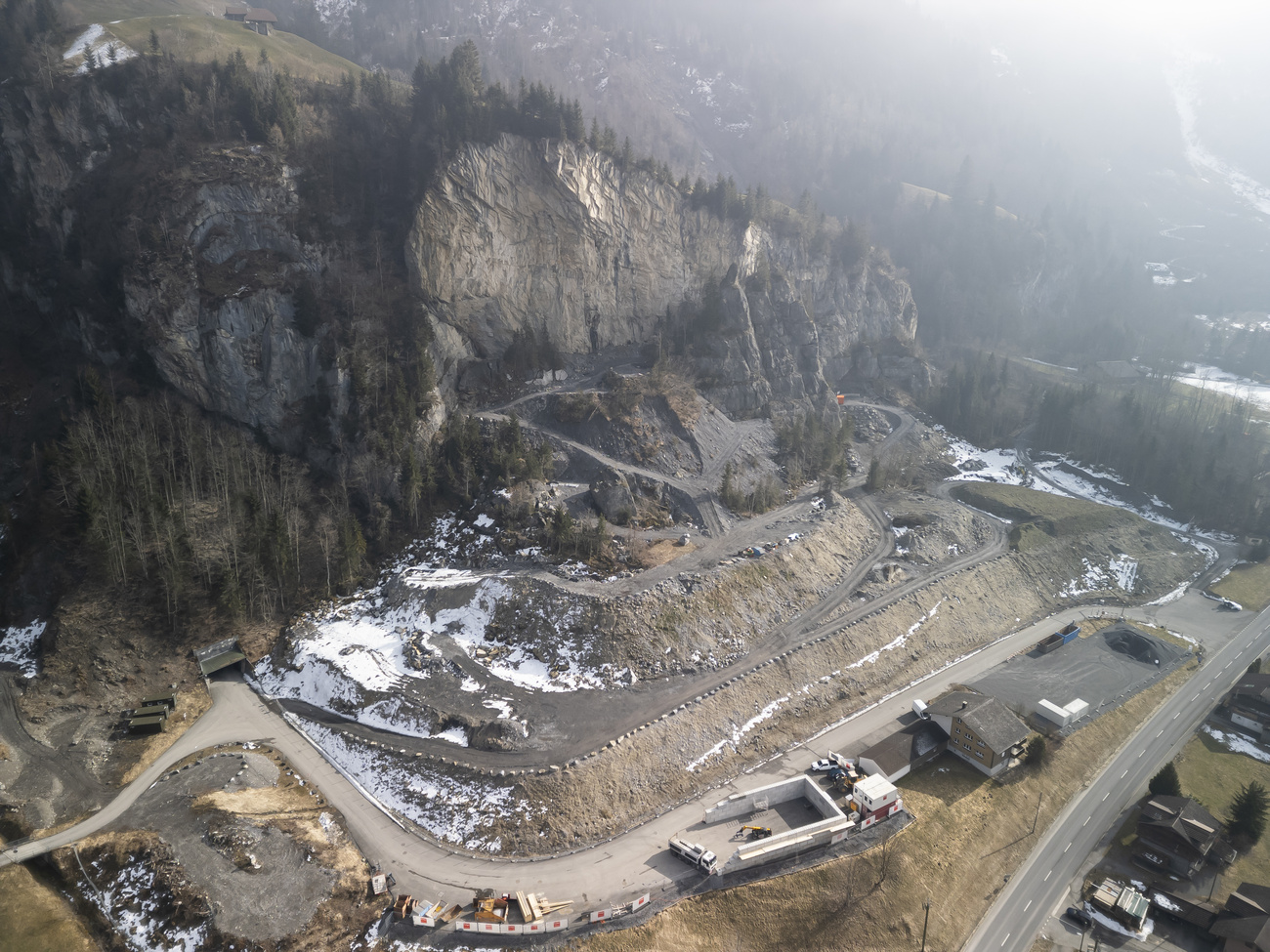
An operation to cleanup a World War II ammunition depot in Switzerland will be delayed by two years after unexpectedly high levels of contaminated materiel was discovered.
Select your language
Generated with artificial intelligence.
Listening:
Pollution delays cleanup of Swiss munitions dump
+Get the most important news from Switzerland in your inbox
Because of the large volume of material with varying levels of contamination at Mitholz in the Bernese Oberland, the cleanup has become more complex. The overall project will take longer with completion now expected in 2047, two years later than previously planned.
On December 19, 1947, part of the 7,000 tonnes of munitions and explosives stored in the facility blew up, killing nine people. The site was considered safe until 2018 when the government ordered it to be cleared of remaining ordinance.

More
Mitholz: Life in the shadow of an Alpine ticking time bomb
Residents who live near to the depot will have to evacuate the area by the end of 2032 for a 10-year period.
Excavated material can only be reused to a limited extent, and heavily contaminated material must be specially treated.
Preliminary investigations found the area to be contaminated with pollutants. In places, the material is buried several metres deep due to mudslides or later construction work for avalanche protection.
Large quantities of contaminated material were blown into a debris cone in front of the dump by the 1947 explosion. Around 350,000 cubic metres of very heavily polluted material are located there.
Decreased cost
“We have enormous amounts of pollutants in Mitholz and must handle them carefully,” said project manager Adrian Götschi. Crevices and fissures beneath the debris cone could still conceal additional material.
There could potentially be environmental risks, but currently no pollutants have been detected in the water. Only areas around shooting ranges and bullet traps need remediation. Other pasture areas remain safe and can continue to be used for grazing and agriculture.
However, initial work has concluded that the risk of explosion has decreased. The defence ministry can now scale down a protective screen for a railway line, saving about CHF8 million – a small amount compared to the total project cost of around CHF2.5 billion.
More
Parliament approves credit for clearing Mitholz ammunition depot
Adapted from German by AI/mga
We select the most relevant news for an international audience and use automatic translation tools to translate them into English. A journalist then reviews the translation for clarity and accuracy before publication.
Providing you with automatically translated news gives us the time to write more in-depth articles. The news stories we select have been written and carefully fact-checked by an external editorial team from news agencies such as Bloomberg or Keystone.
If you have any questions about how we work, write to us at english@swissinfo.ch
External Content

In compliance with the JTI standards
More: SWI swissinfo.ch certified by the Journalism Trust Initiative

You can find an overview of ongoing debates with our journalists here . Please join us!
If you want to start a conversation about a topic raised in this article or want to report factual errors, email us at english@swissinfo.ch.