








Why drugs are becoming more expensive to develop
Drug development has always been expensive and risky, but now it’s measurably more so than a decade ago. Here are three reasons why.
Select your language
Generated with artificial intelligence.
Listening:
Why drugs are becoming more expensive to develop

When it comes to the pharma industry, US President Donald Trump has repeatedly accused European governments of “free-riding” on American spending, arguing that the profits generated from the US market help fund drug research and innovation that benefits the rest of the world. He has also argued that Europe should pay more for innovative medicines.
How true are his claims? Swissinfo is breaking down the figures to understand why developing new drugs is getting more expensive and where the innovation really comes from.
In 2024, the average cost of developing a new drug, from discovery to launch, reached $2.23 billion (CHF1.8 billion) for the world’s 20 biggest biopharma companies – a 65% jump from 2014, or around 25% once inflation is taken into account. The figure, published in Deloitte’s 2025 annual report on biopharma innovationExternal link, is calculated by dividing those companies’ total R&D spending by the number of drugs that made it to market, and it includes the cost of every candidate that failed. Twelve of those 20 companies experienced higher costs, suggesting the pressure is industrywide. So what’s driving the increase?
External Content

More
Drugmakers reassess Europe as Trump overhauls drug-pricing rules
More sophisticated medicines are raising development costs
Drug development has always been difficult, but the biology of today’s medicines makes it harder still, pushing up costs in research, lab work and manufacturing.
For decades the industry’s biggest sellers were simple chemical compounds taken as pills, from statins to painkillers.
“Now companies are increasingly moving into more complex areas: speciality drugs, gene therapies and highly specialised treatments for small patient populations,” Amanda Cole, a director at the UK-based non-profit Office of Health Economics, told Swissinfo.
These include monoclonal antibodies such as Keytruda, an immunotherapy used in cancer treatment. Other examples are RNA-based therapies such as the Covid-19 mRNA vaccines, and cell and gene therapies.
“These can offer real value for patients, but they also create difficult scientific and economic challenges,” Cole said. Traditionally, medicines targeted parts of the body that scientists understood well, but today’s drugs are more likely to go after biological mechanisms researchers are still piecing together – like the misfolded proteins behind Alzheimer’s, or the specific genetic mutations driving a rare cancer. That means longer research timelines and higher laboratory costs before a drug is ready to be tested in patients.
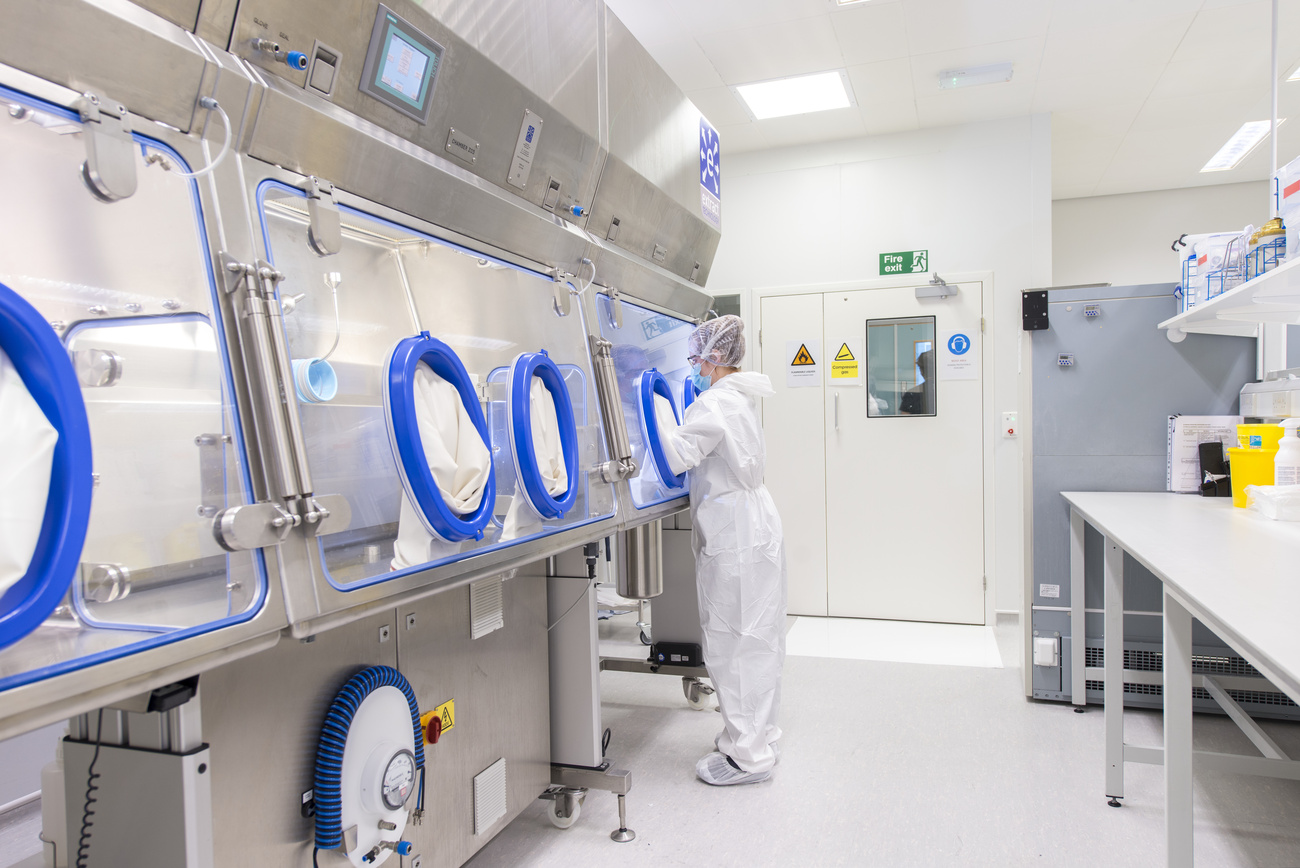
Many of the research efforts are now focused on biologics, drugs made from living cells or organisms rather than chemicals, such as insulin and many modern cancer treatments. Because these are fragile molecules, a small variation in temperature or a contamination can ruin a batch, so companies invest heavily in quality control at every step. Those higher production costs feed into the overall development bill.
External Content
Clinical trials have become more demanding and expensive
It is not only the medicines that have changed: trials themselves have got bigger, more data-heavy and harder to fill. The Tufts Center for the Study of Drug Development, a US research centre that has tracked the pharmaceutical industry for decades, estimatesExternal link that Phase 3 trials cost around $55,700 per day in direct running costs alone.
Trials today are much larger in scale and more data-heavy because they have to satisfy three audiences at once: regulators, who want more detailed evidence of safety and efficacy; insurers and national health systems, who want proof the drug delivers value worth paying for; and the doctors and patients who will ultimately prescribe and use it.
In 2025, a typical Phase 3 protocol – the master plan for the trial – included an average of 19 endpoints, the specific measurements used to judge whether the drug works. This is 30% more than in 2012, according to a studyExternal link by Tufts.
But the biggest jump is the volume of data each trial now collects. In 2012 the average Phase 3 trial gathered about 929,000 datapoints: measurements like blood-test results, scan readings, patient-reported symptoms and vital signs. But by 2025 that figure had risen to nearly six million. And each extra biopsy, MRI scan or country added to the trial requires more approvals and involves more logistics, monitoring and data-management work.
External Content
Running bigger trials is only half the challenge. Finding the right patients to participate has become harder than ever – and that, too, is pushing up costs.
As medicines have become more targeted, the pool of suitable participants has shrunk, but each one needs enough patients to produce statistically reliable results. This is especially visible in cancer and rare diseases, two areas where much of today’s R&D is concentrated.
According to IQVIAExternal link, oncology now accounts for 41% of all clinical trials, and 74% of those started in 2024 evaluated medicines for rare cancers. A new drug to treat lung cancer, for example, will not be tested on all lung cancer patients, but only on those with a specific tumour mutation, who are at a certain stage of the disease and with a specific biomarker profile.
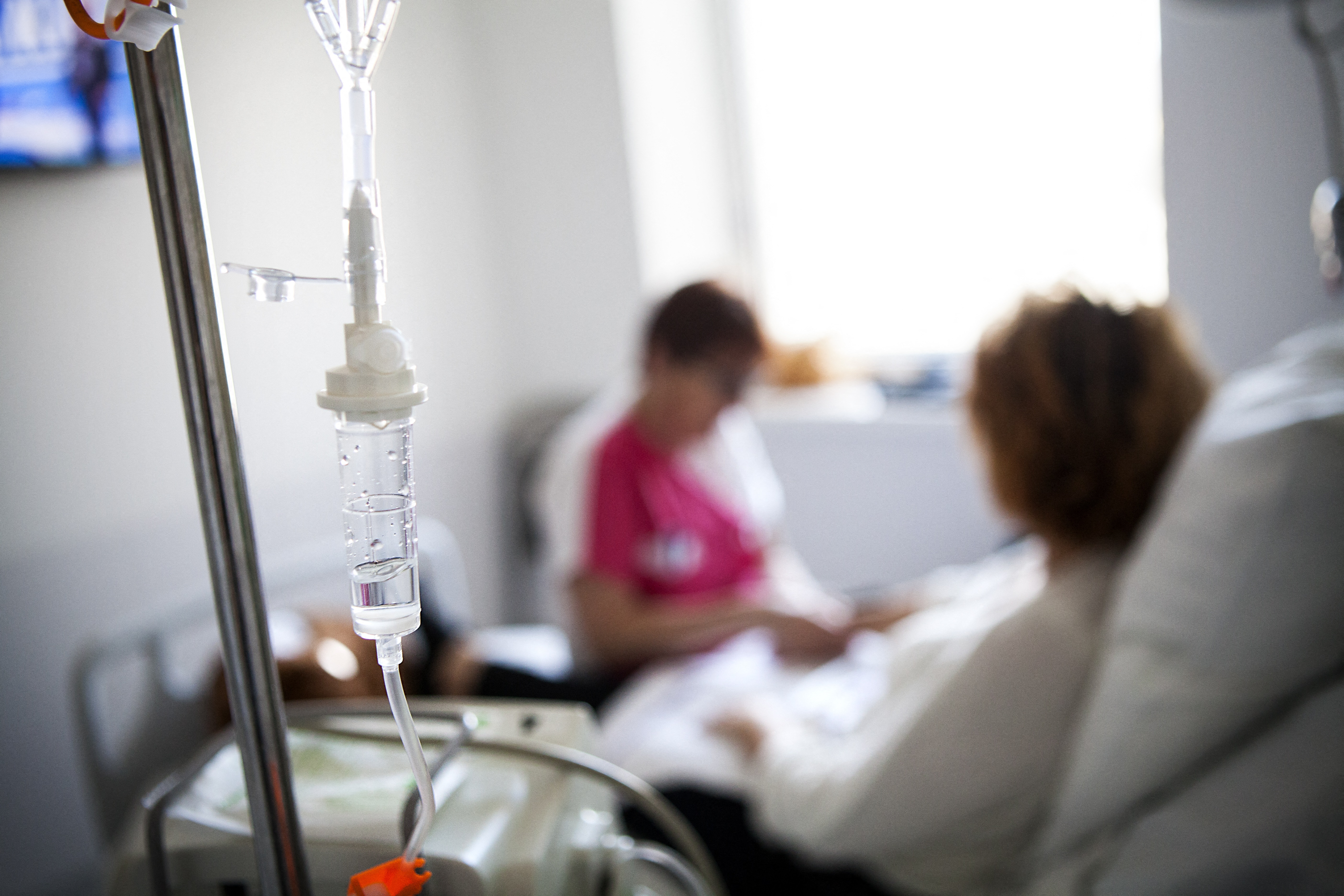
Patient recruitment has become less efficient as a result. ResearchExternal link has found that 81% of people put forward to take part in rare-disease trials turn out to be ineligible, while more than half of those who pass initial screening still fail to be randomised into the trial. Companies therefore have to screen large numbers of patients – often using expensive tests such as biopsies, genetic sequencing and biomarker analysis – to find enough qualified participants.
When recruitment falls short, protocols are amended to relax eligibility criteria or add new sites, triggering costly resubmissions to regulators and delays.
More
The drug-pricing problem no one wants to talk about
Failure is costly – and the chances of success are falling
Success rates in drug development are falling, and each failure is enormously expensive. According to Deloitte’s 2025 report, the top 20 biopharma companies spent around $7.7 billion in 2024 alone on clinical trials for drugs that were ultimately abandoned.
According to an analysisExternal link of data from 2014 to 2023 by Citeline/Biomedtracker, the probability that a drug entering Phase 1 will eventually reach the market has fallen to 6.7%, an all-time low and down from 10.4% in Citeline’s widely cited 2014 estimate. The biggest bottleneck is Phase 2, where only 28% of trials are successful. Even in Phase 3, the longest and most expensive stage of testing, only 55% succeed.
This dynamic helps explain why the headline average cost is so high: each successful drug has to carry the expense of the many that failed along the way – and companies increasingly focus on areas where the biology is still poorly understood and thus diseases are harder to treat.
External Content
Roche’s gantenerumab, developed as a treatment for Alzheimer’s disease, shows how costly failure can be. The drug first failed a Phase 3 trial in 2014. Roche subsequently revived the programme, tested higher doses and launched two new global Phase 3 trialsExternal link, enrolling nearly 2,000 patients across 30 countries. In late 2022, both trials failed again. Roche never disclosed the full cost, but running two global trials of that size for that long almost certainly ran to several hundred million dollars – and all of it had to be written off.
The missing invoice
Even if the broad trend is clear, the development cost of any individual drug remains hard to audit, as pharmaceutical companies rarely disclose how much they spend to develop a specific medicine. Most industry estimates are averages, built from models that make very different assumptions about what should be counted: out-of-pocket spending, failed projects, or the cost of capital tied up for years in research.
This lack of transparency matters most when the conversation turns from cost to price. “It makes it impossible for regulators to check whether the price of a specific medicine can be justified by its investment,” said Patrick Durisch, health policy lead at Swiss NGO Public Eye.
Greater transparency would strengthen the hand of authorities in price negotiations, argues Severin Studer from Swiss insurer Helsana, even if Switzerland’s current pricing system does not formally use R&D costs as the basis for reimbursement decisions.
Drug developers have valid reasons for not publishing these figures: competitive sensitivity, legal exposure, and the difficulty of allocating shared costs across a portfolio. But the effect is that a debate of enormous public consequence – how far rising development costs justify increasing drug prices – is conducted without the product-level evidence needed to resolve it.
More


In compliance with the JTI standards
More: SWI swissinfo.ch certified by the Journalism Trust Initiative

You can find an overview of ongoing debates with our journalists here . Please join us!
If you want to start a conversation about a topic raised in this article or want to report factual errors, email us at english@swissinfo.ch.