








Swiss drag queen faces Chinese repression
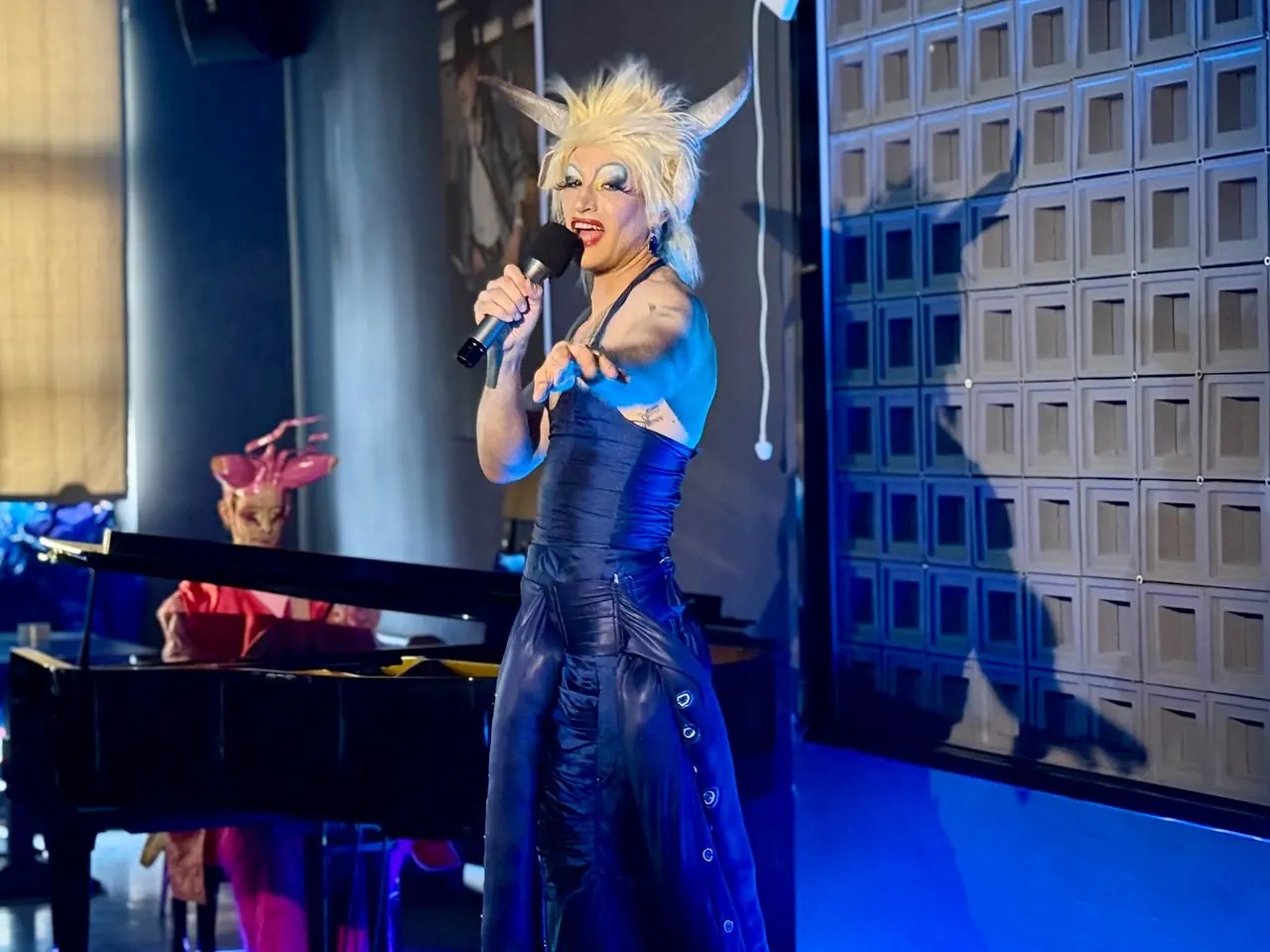
In China, the space available for queer subcultures is shrinking. A drag artist from Zurich experienced this first-hand while on tour.
Select your language
Generated with artificial intelligence.
Listening:
Swiss drag queen faces Chinese repression
In a small venue in Kunming, southern China, ‘Soya the Cow’ is rehearsing her act. The Zurich-based drag queen – or ‘Drag Cow’, as she calls herself – tackles themes including how humans treat animals and homosexuality in the animal kingdom. Whether her show can go ahead later that afternoon, however, is far from certain.
“The tour started in Shanghai. But the performance there was cancelled,” says performer Daniel Hellmann. The gallery’s explanation was that it already needed the rooms for the next exhibition that day. “That sounds very much like an excuse, of course.” Other venues also turned the drag queen down. She and her stage partner, ‘Piano Prince’, have to look for alternatives. “It really was like an obstacle course.”


Venues that had originally been booked suddenly no longer wanted ‘Soya the Cow’ on their stages. This was also the case in Kunming, Zurich’s twin city. The organisers there cited a phone call from the police as the reason for the cancellation.
The crew found an alternative venue. “But that one pulled out too, and then things were really up in the air. Can we even put on the show anywhere at all?” says Hellmann.
Alongside repression, there is support
The Swiss drag queen is repeatedly confronted with contradictions on her journey through China. “I had to laugh out loud. After all these problems, for example, we meet loads of female artists,” says Hellmann.
One of them was a 57-year-old who has been performing drag in Kunming for 30 years. “And I asked: ‘How do you manage that?’ She said: ‘Mostly on behalf of the government for HIV prevention.’”
External Content
In China, restrictions and support can coexist. “There are somehow far more nuances that are difficult to discern from the outside,” says the drag artist.
Doesn’t fit the government’s conservative worldview
What is easier to recognise is that repression is on the rise while support for queer subculture is waning – particularly in recent months and years. This is according to an internationally renowned drag queen from Shanghai. “I haven’t performed in Shanghai for six months because it’s impossible. Drag queens are a sensitive issue.”
External Content
They are considered sensitive because they do not fit into the government’s conservative view of society and are said to represent Western – and therefore decadent – values. Just a few years ago, there was a drag show somewhere in Shanghai every week. During Pride Month, there were numerous events and the queer community was visible in public life.
“I remember filming adverts for major international brands in 2019, which were shown on huge screens along Shanghai’s most famous shopping street,” says the drag queen from Shanghai. “The brands would approach us every year for their Pride Month campaigns. But all of that disappeared within a few years of the pandemic ending.”
The Shanghai-based drag queen now performs exclusively abroad. Not only have drag shows disappeared, but gay and lesbian bars are being closed, queer events banned and exhibitions with gay themes halted by the authorities.
Back at the venue in Kunming. Thanks to considerable support from local scene insiders, creative organisers and additional precautionary measures, the Swiss drag queen is able to perform after all. Late one afternoon, in a bar whose windows have been covered to keep out both the light and prying eyes, the show goes ahead. The Chinese audience is delighted.
“I really enjoyed it. It was sexy, crazy, funny. I could say so many more positive things,” says one visitor. A visibly moved female visitor says she’d been afraid too. “I thought the police would turn up and shut the whole thing down. I was so worried. In our community, we can’t post anything on social media, because otherwise someone will come straight away and tell us that such activities aren’t allowed. That’s why I’m so happy that this performance went ahead.”
Despite the harassment, China’s queer community is still finding spaces to express itself. But these are becoming increasingly scarce.
Join the discussion:
External Content
Translated from German, sub-edited by Alexandra Andrist/ac

In compliance with the JTI standards
More: SWI swissinfo.ch certified by the Journalism Trust Initiative

You can find an overview of ongoing debates with our journalists here . Please join us!
If you want to start a conversation about a topic raised in this article or want to report factual errors, email us at english@swissinfo.ch.