








Better air, same poverty: the Peruvian families behind Switzerland’s carbon offsets

Nearly six years after Switzerland launched a carbon offset programme in the Peruvian Andes, Swissinfo returned to find its beneficiaries healthier – but still barely getting by.
Select your language
Generated with artificial intelligence.
Listening:
Better air, same poverty: the Peruvian families behind Switzerland’s carbon offsets

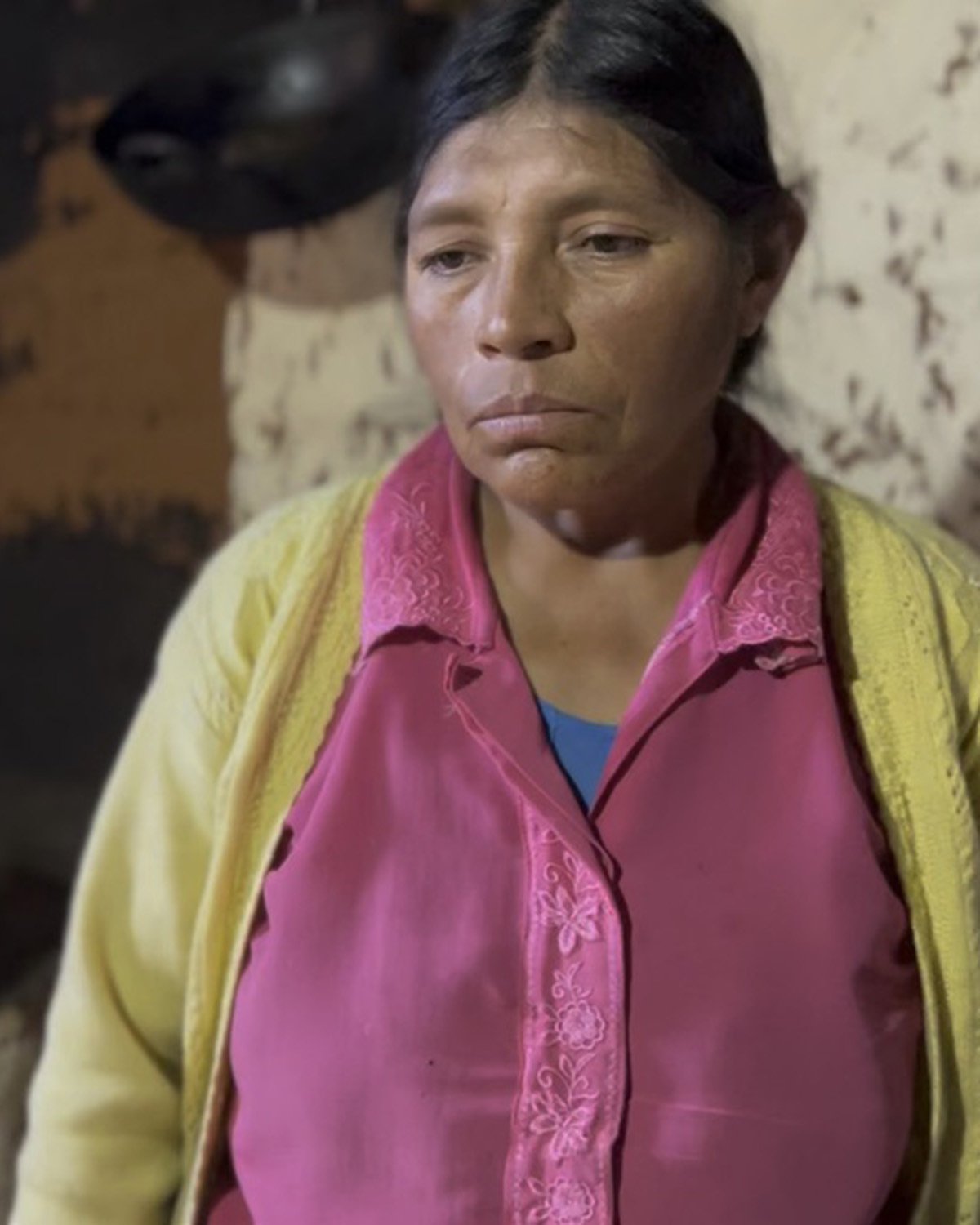
Last June, days before the United Nations began its latest round of climate talks, Juana Briceño arrived home late from her short-term cleaning job in this Andean town. Six months after her husband died following an accident in an illegal coal mine, she and her two teenage children, who stopped attending school to work in illegal gold mining, now scramble to sustain themselves.
“I don’t know what I’ll do after my job ends. I’ll have to work more [for my fatherless children],” Briceño says, clearly still shaken by her loss.
Her situation is not unusual among the roughly 35,000 households in this impoverished Andean region that have received cookstoves under a Swiss-funded carbon offset programme – the world’s first bilateral offset agreement under the Paris climate accord. The stoves have brought real health benefits. But for families like hers, they have not brought much else.
In late 2020, after her household was chosen for the Swiss-funded pilot project to offset carbon emissions generated by road transport in the Alpine country, she was upbeat during a visit from Swissinfo.
The so-called Tuki Wasi plan replaces indoor cooking on open fires with improved cookstoves that require less wood, under a Paris Agreement clause allowing one country’s emissions to be offset in another. Like other Swiss bilateral offset projects, which have become a cornerstone of Alpine climate policy, it is intended to benefit those living in extreme poverty.
“Of course, I am happy with the stove. I don’t have another one,” the mother of four says, adding that it has allowed her children to avoid inhaling “the smoke that filled our homes” from cooking on open fires.
But like many other beneficiaries of the programme that Swissinfo met in this poor mountainous region in northern Peru, she says she would need much more assistance to lift her family out of extreme poverty. Since her husband’s death, she has not received any compensation due to his informal employment, adding that her expenses mounted during his long hospital stay in the city of Trujillo, a five-hour bus ride away.
Santos Briceño Azevedo, 51, another early cookstove recipient, can only find occasional agricultural work, an hour’s walk away, at PEN 30 (CHF7.30) a day. “We would need some more help, possibly to fix the stove,” she says, pointing to crumbling bricks and a damaged pot support.
Informing users and stove ownership
Since the pilot project began, Microsol, a French social-impact firm that implements the Swiss government’s programme, has brought stoves to roughly 35,000 households, or between 140,000 and 170,000 people.
On a recent market day in Sanagorán, locals gathered for a workshop organised by Microsol and its regional partner at the town’s communal hall. Women in tall woven straw hats, babies on their backs, filed in with their partners and children.

Responding to questions from the audience, staff also explained how to fix loose adobe bricks with a local cement mix and said corrugated metal scraps could be flattened and cut into new stove pot supports.
“The logic of the programme is that users adopt the new cookstoves and technology as their own,” Ralph Callalli, coordinator of the Tuki Wasi programme at Microsol, tells Swissinfo. He adds that the aim is to avoid top-down dependence on charities and promote self-sufficiency.
When Microsol distributed a multiple-choice survey at the end of the presentation, several women who said they could not read or write asked for help responding. According to the latest official dataExternal link, nearly one-third of Sanagorán’s inhabitants over the age of 15 are illiterate.
Beyond the Swiss government credits inscribed on Microsol’s banners outside the town hall, little mention was made of the programme’s financial backing, let alone its global relevance in climate change policy.
Thomas Niederberger is a Swiss researcher working with Peruvian NGO CooperAcción, which monitors the social impacts of carbon projects in the region. He has followed Tuki Wasi closely and is candid about its tensions.
“It could easily lead to a backlash if they understood how much the Swiss get out of this programme, or how much consultants in Lima are getting paid for working on it, while locals are doing it for free,” he said. “It could lead to a situation where people refuse or obstruct the continuation of the project.”
However, interviews with locals revealed little understanding of the wider implications of their use of the ovens. A 2024 studyExternal link by CooperAcción said not enough information was provided to beneficiaries, who sign an agreement to surrender their “environmental benefits” when they receive the ovens.
Carbon offset deficit?
Callalli explains that the work to calculate the programme’s impact in terms of carbon emissions reductions was “very intense”, and included close cooperation with the Swiss and Peruvian environment ministries. The reductions are measured in units called Internationally Transferred Mitigation Outcomes – ITMOs, in the jargon of the Paris Agreement – and are calculated based on the quantities of wood burned and the types of cookstoves used across regions where the Peruvian government is not already implementing cookstove programmes.

In March, five-and-a-half years after Switzerland signed the first bilateral cooperation agreement under Article 6.2 of the Paris Agreement, the two countries officially authorised the activity. Its achievements in terms of ITMOs, or tonnes of carbon emissions reduced or avoided, are set to be officially announced later this year, according to Microsol.
Switzerland’s climate policy requires the country to offset roughly 34 million tonnes of CO2 – equivalent to around a third of its total annual emissions – through bilateral programmes abroad by 2030. Tuki Wasi’s contribution, while meaningful, represents a small fraction of that obligation: A 2023 assessment report seen by Swissinfo estimated that Tuki Wasi reduced just over half a million cubic tonnes of CO2, roughly two-thirds of its 750,000-tonne target potential by 2030.
Bern has also committed to net-zero emissions by 2050, and experts agree that achieving that goal will depend on sustaining and expanding programmes like this one. Earlier this month, Swiss Environment Minister Albert Rösti admitted that the Alpine country would likely miss its first climate target of halving emissions by 2030.
With current offset programmes ending in 2030 and fewer than 100,000 carbon credits transferred to Switzerland so far, many – including potential investors – await Bern’s post-2030 plans.
Klik Foundation, which buys Switzerland’s bilateral offsets, warned in its 2024 annual report that the 2030 deadline may deter investment. Klik president Daniel Hofer wrote that by limiting the carbon offset mechanism to the end of 2030, parliament has set a very short amortisation period for investments with a climate protection impact, which acts as a deterrent.
To date, Switzerland has concluded offset cooperation agreements with 17 countries. But the Klik Foundation has yet to conclude contracts for most of them due to lengthy bureaucratic and technical processes. This has been the case for the CarSolaire project, which aims to convert Dakar, Senegal’s iconic, diesel-fueled “Cars Rapides” minibuses into solar-powered electric vehicles with Switzerland’s help.
More on CarSolaire in the video below:
‘Complementing government efforts’
Jessica Moscoso, director of climate change at Peru’s environment ministry, confirmed that talks with Switzerland are currently focused on reviewing carbon credits generated by the Tuki Wasi programme for 2021 to 2024, and on evaluating new cooperation in energy and agriculture.
Moscoso said Peru expects projects developed under carbon markets to generate “tangible environmental, social and economic benefits for the populations involved”. She underlined that such programmes should neither replace the Peruvian government’s own policy responsibilities, nor be treated as aid to a developing nation.
“Article 6 projects should complement national efforts and strengthen existing capacities,” she emphasised.

Keys to project success
After attending the workshop in Sanagorán, Marina Chullugual, a mother of four, invited Swissinfo to see her stove in a remote area along steep, barely passable dirt roads.
She remained convinced, despite the information provided earlier in the day, that Microsol and its local partner would continue to support the maintenance of her stove until 2030. The programme’s post-2030 future remains undecided.
“We love our little kitchen and would like to receive more support,” she says, noting that her husband is able to find only occasional work mining coal – most of which is being exported to ChinaExternal link – to help feed the family.
Her children are healthier, she says, and the five-kilometre walk to the clinic is now rare.
She knows Switzerland is financing the stoves. When asked whether it seemed right that she and her neighbours are also contributing to the success of a complex carbon offset scheme, she nods, and hesitantly answers: “yes.”
Edited by Veronica DeVore/ts
In 2025, the UN climate body reviewed Switzerland’s bilateral carbon cooperation programmes in Ghana, Thailand and Vanuatu. Tuki Wasi was not included, as it had not yet been authorised when Switzerland submitted the relevant report.
The review did highlight several areas where Switzerland’s reporting fell short, including insufficient documentation of programme authorisations, methods to avoid double-counting, and human rights considerations.
A Swiss environment ministry spokesperson told Swissinfo it “takes the comments by the technical expert review team seriously” and is preparing an updated report addressing the gaps.

In compliance with the JTI standards
More: SWI swissinfo.ch certified by the Journalism Trust Initiative

You can find an overview of ongoing debates with our journalists here . Please join us!
If you want to start a conversation about a topic raised in this article or want to report factual errors, email us at english@swissinfo.ch.