








Swiss democracy in the crosshairs of Russian propaganda

Swiss authorities say there were covert operations ahead of Sunday’s neutrality initiative vote, while Russian state media and actors also intervened openly in the campaign. International experts explain what Moscow hopes to achieve by such tactics.
Select your language
Generated with artificial intelligence.
Listening:
Swiss democracy in the crosshairs of Russian propaganda

Russia had a direct interest in the outcome of the “neutrality initiative” vote. If it had been accepted, Switzerland would no longer have been allowed to follow European Union (EU) sanctions – rendering null and void the measures Bern has taken against Moscow since spring 2022.
Accordingly, Russian actors interfered not only openly in the referendum campaign, but also covertly, Swiss authorities confirm. “Coordinated, covert disinformation operations” were observed, the State Secretariat for Security Policy (SEPOS) wrote in response to a request by Swissinfo. However, SEPOS stressed that it does not believe “foreign actors” had a decisive impact.
Where do RT’s articles come from?
When it comes to the open interference in the campaign, Russian state platform RT DE stood out with the many articles it published about the neutrality initiative.
“The propaganda effort is not aimed at a single brilliant, surgically placed article – it’s about that one article and a thousand others,” says British historian Ian Garner.
Garner suspects that RT’s Swiss stories are produced “somewhere in Russia at the Kremlin’s direction”. Unlike before the start of the Russian war on Ukraine in 2022, young journalists in Western Europe are no longer keen to work for RT, he adds. For Garner, this “lack of cultural knowledge” flows into the articles and weakens Moscow’s propaganda efforts. For example, during the vote campaign, RT published an article in Swiss dialect which was full of linguistic errors, and which seemed artificial. It has long been noticeable that the platform uses various words and spellings not found in Swiss German.
How RT previously sowed confusion
Nevertheless, earlier this year RT managed to land a media coup in Switzerland. It began with an opinion piece on the platform in favour of the “SBC licence fee initiative”, which proposed to reduce the annual fee Swiss residents must pay for the Swiss public broadcaster. The story was too good to ignore and many media outlets reported on it. But just hours after the first articles had appeared in Swiss media, RT published another opinion piece – under the same byline – taking the opposite position, in a manoeuvre which successfully sowed confusion.
For Ruslan Trad, an expert at the Digital Forensic Research Lab at the US think-tank Atlantic Council, the incident was “a textbook influence-operation tell – not a coincidence”. RT’s aim was to “insert itself into the center of a live, emotionally charged Swiss debate, normalising its voice as a ‘participant’ in domestic political discourse and testing which framing travels further in Swiss media ecosystems”. For a short time, this enabled it to shape the narrative, according to Trad.
>> In early 2026, the Swiss defence minister already warned of Russian attacks on the country’s “information space”:

More
Switzerland’s security and the role of the media
In the case of the neutrality initiative, however, Russian interventions were clearer – above all, the statement by Russian foreign ministry spokeswoman Maria Zakharova, which sparked discussions in Switzerland.
Maria Zakharova’s statement
“Direct voting recommendations from outside are often counterproductive,” says the Swiss expert on Eastern Europe Ulrich Schmid. He believes Russian interference damaged the popularity of the neutrality initiative among the Swiss population. “Russia was aware of this,” Schmid says, explaining that Zakharova wanted to trigger a debate about “alleged and actual violations of Swiss neutrality” – notably in relation to Nazi gold and the turning away of Jewish refugees during the Second World War. Such a debate, Schmid believes, could have delivered arguments for the initiative’s supporters that “did not come from toxic Russia”.
In her statement, Zakharova repeated the claim – often made by Russia in recent years – that Switzerland is no longer neutral. At the same time, she claimed the Swiss financial system had been “part of the bloodstream of the German war machine” during the Second World War. The meaning of neutrality was “apparently forgotten in Bern […] as soon as the wagons with Reichsbank gold arrived”, she wrote.
Propaganda expert Garner emphasises the centrality of the Second World War reference for Russian propaganda. “It is the essence of Putin’s Russia: Russia is the anti-fascist nation par excellence, because Russia won the Second World War on its own and no one helped. That is why the Kremlin points the finger at everyone else. For Garner, this is why Russia can in the same breath claim Switzerland was historically neutral and historically a Nazi country. “It’s not about the truth,” he says. “It’s about chaos and disruption.”
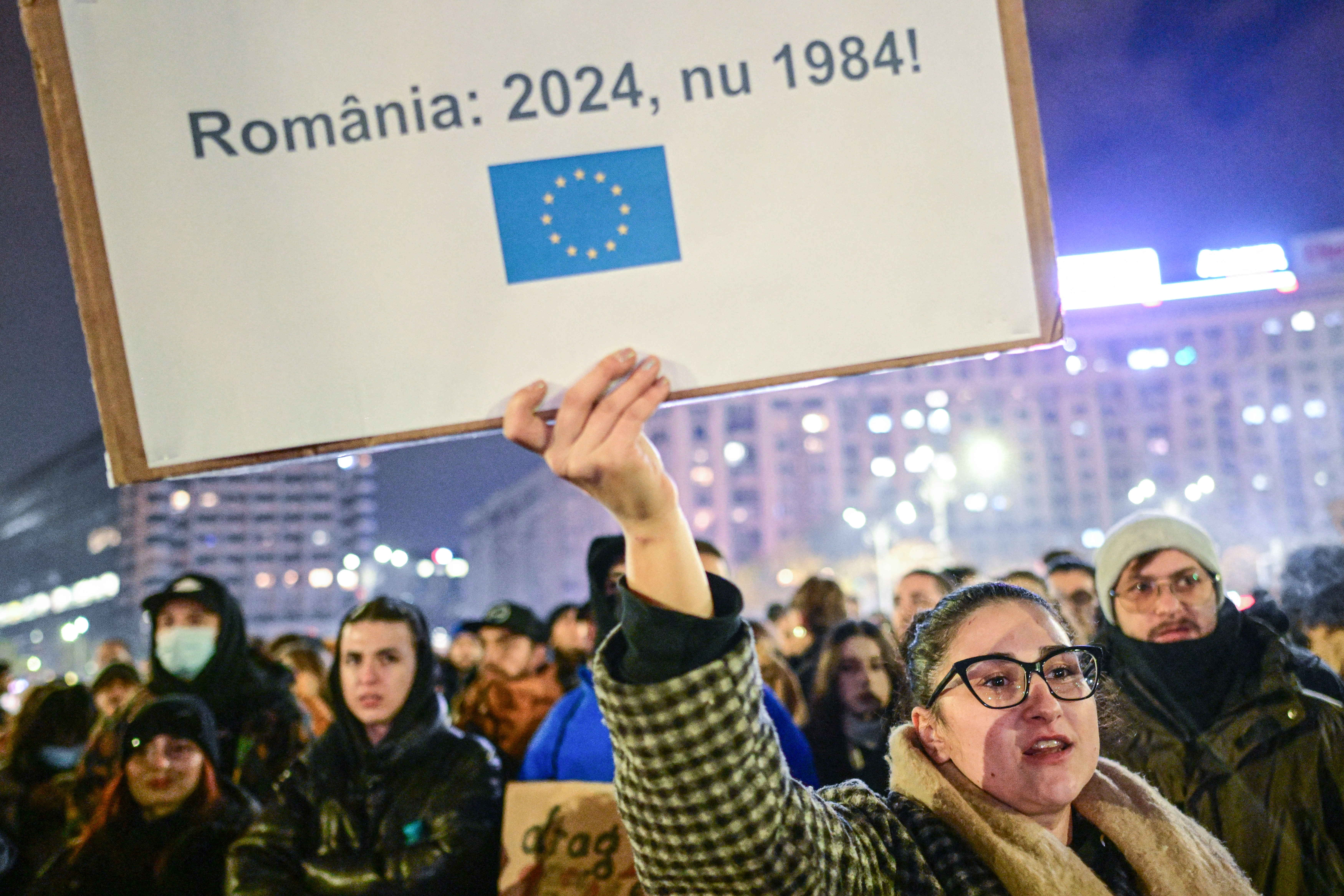
>> Two years ago, Romania nullified the results of an election surrounded in disinformation – read more in our report:
More
What Romania’s election turmoil reveals about TikTok’s political influence
The resilience of the Swiss population
“The Federal Council [the Swiss government] considers Swiss institutions and the population to be fundamentally resilient to such attempts at influence,” SEPOS has written. At the beginning of the vote campaign, Foreign Minister Ignazio Cassis also said the Swiss population was intelligent enough to see such Russian statements in their proper context.
For Eastern European studies expert Schmid, this approach is the right one. “Contextualising influence attempts and false information is part of life in Switzerland”, he says. While he considers this an important element in a democracy, he sees the situation differently in Germany, where there is “extreme filter bubble formation”. As such, “it is also correct that propaganda channels from Russia are regulated there”, he adds.
Russian state media are sanctioned by the EU, while sharing their content is also banned in the bloc. This is not the case in Switzerland, something which Schmid also considers correct “in the present situation”. Here, cable TV operators have voluntarily decided to no longer carry such channels.
Ruslan Trad also sees merit in the Swiss approach to Russian propaganda. The “market-driven partial restriction” helps to avoid “optics of state censorship”, while still enabling a restriction of the most obvious distribution channels.
RT is still accessible online in Switzerland. In one article, 10 days ahead of the vote, the Russian state media already declared that the neutrality initiative was a lost cause. Its backers had relied too little on digital channels in their campaign, but rather “on old models”, according to the propaganda text.
How anonymous propaganda can have a long-term effect
“The Kremlin’s aim is not necessarily to win an election or this referendum in Switzerland,” explains Garner, who spoke with Swissinfo before Sunday’s vote result was known. “Of course, if he won, Putin would go to bed satisfied, but they know how unlikely it is.” Russia is thus less concerned about winning and more about getting an argument across. When this succeeds, it’s already “a kind of victory” for the Kremlin. “The online sphere is where it can exert a direct influence on Western democracies. And there is a tendency towards polarisation there: me versus you,” Garner says.
Influence campaigns on referendum topics are thus not just aimed at vote day, but to have a lasting effect. For Garner, what’s more worrying than public statements are anonymous activities on social media – that is, coordinated, covert disinformation operations, such as those identified by Swiss authorities during the campaign on the neutrality initiative.
The Brexit example
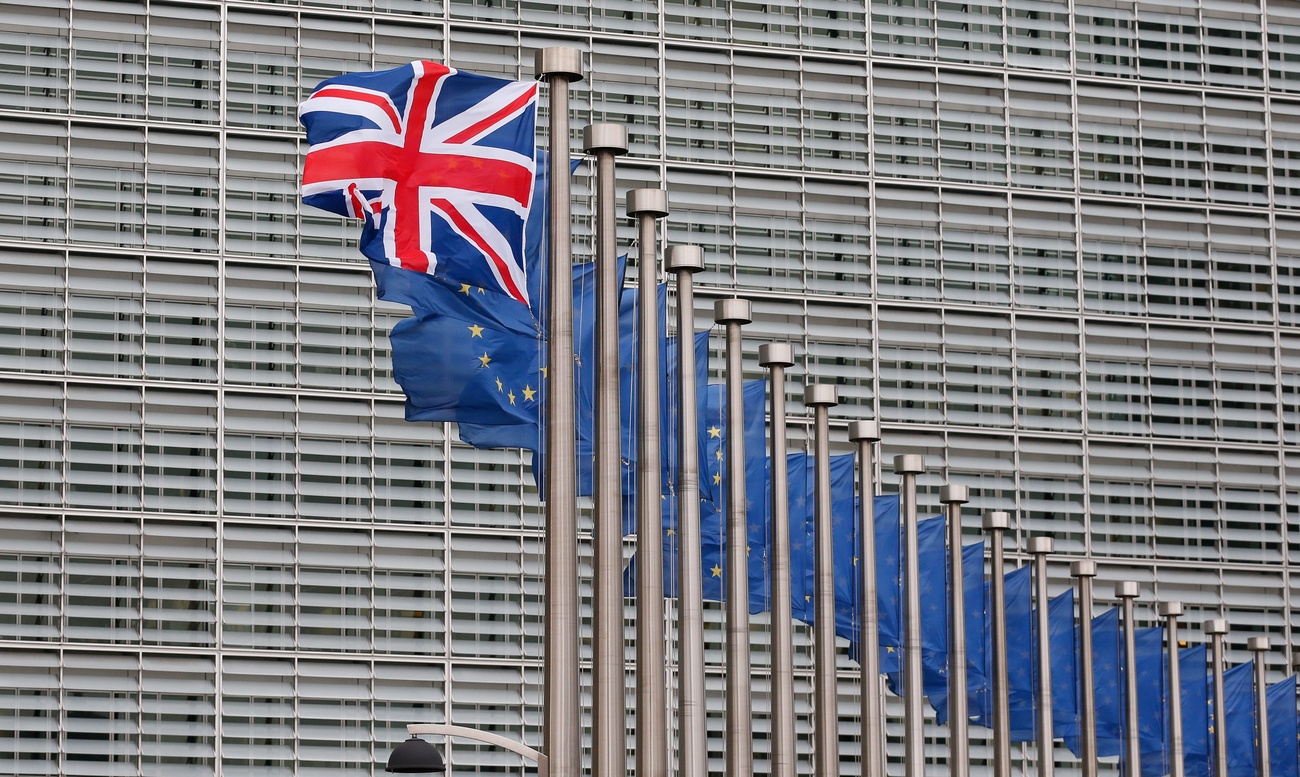
For Garner, Brexit is a good example of how Russian campaigns work on social media. “Russia’s interference did not necessarily lead to a majority of Britons voting to leave the EU. Russia did not invent the debates about money, sovereignty and European and British identity,” he says. But it noticed that these are sensitive questions within British democracy. “All Russia had to do was pour a little more fuel,” says Garner. “Ten years on, people are still arguing about Brexit.”
>> Read more about how Brexit and its aftermath is still drawing comparisons with Switzerland, ten years on:
More
Ten years after Brexit, the ‘Swiss model’ just keeps popping up
Russia’s propaganda approach is designed to elicit an emotional reaction, Garner adds – one that works even when it is clear that it is a lie and an attempt at manipulation. “The Kremlin has done its job if we constantly feel social tensions and hate the other side, the political opponent,” says Garner.
Swiss politicians are at least aware of the danger: a few days ahead of Sunday’s vote, parliament tasked the government with creating the foundations for “an effective analysis” of foreign attempts at influence.
Edited by David Eugster; translated from German, sub-edited by Domhnall O’Sullivan

In compliance with the JTI standards
More: SWI swissinfo.ch certified by the Journalism Trust Initiative

You can find an overview of ongoing debates with our journalists here . Please join us!
If you want to start a conversation about a topic raised in this article or want to report factual errors, email us at english@swissinfo.ch.