








Swiss geothermal drilling could resume in St Gallen
A study to assess the potential for exploiting deep geothermal energy in the Swiss canton of St Gallen concludes that the region is “geothermally attractive”.
Select your language
Generated with artificial intelligence.
Listening:
Swiss geothermal drilling could resume in St Gallen
Buchs, Ebnat-Kappel and Widnau/Diepoldsau are among the locations mentioned as potential sites for drilling.
Thirteen years after the failure of the geothermal project in the city of St Gallen, there could soon be a new push in the canton to harness deep geothermal energy.
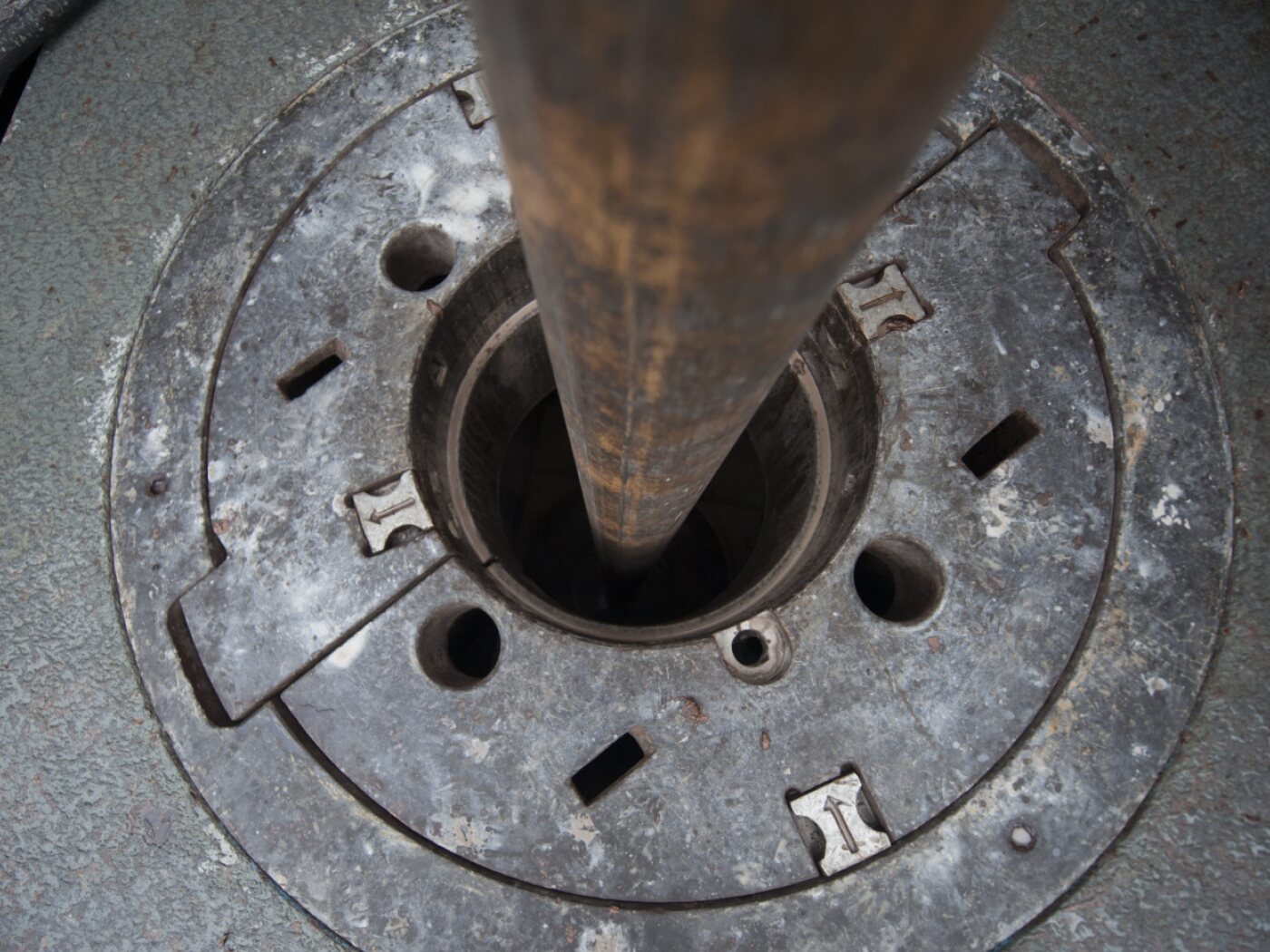
At the time, an earthquake brought an end to the cantonal capital’s pioneering role in harnessing energy from great depths. All that remained as a reminder was a 4,400-metre-deep borehole.
More
Can deep geothermal projects help secure Swiss energy independence?
That marked the end of the momentum for such ambitious large-scale projects – not just in St Gallen. Since then, there have been no major projects anywhere in eastern Switzerland.
+ St Gallen geothermal power project abandoned
In Thurgau, the legal framework was still being drawn up. But after that, not much happened. For example, a project by Geo-Energie Suisse in Etzwilen, Thurgau, has been ‘on hold’ for many years.
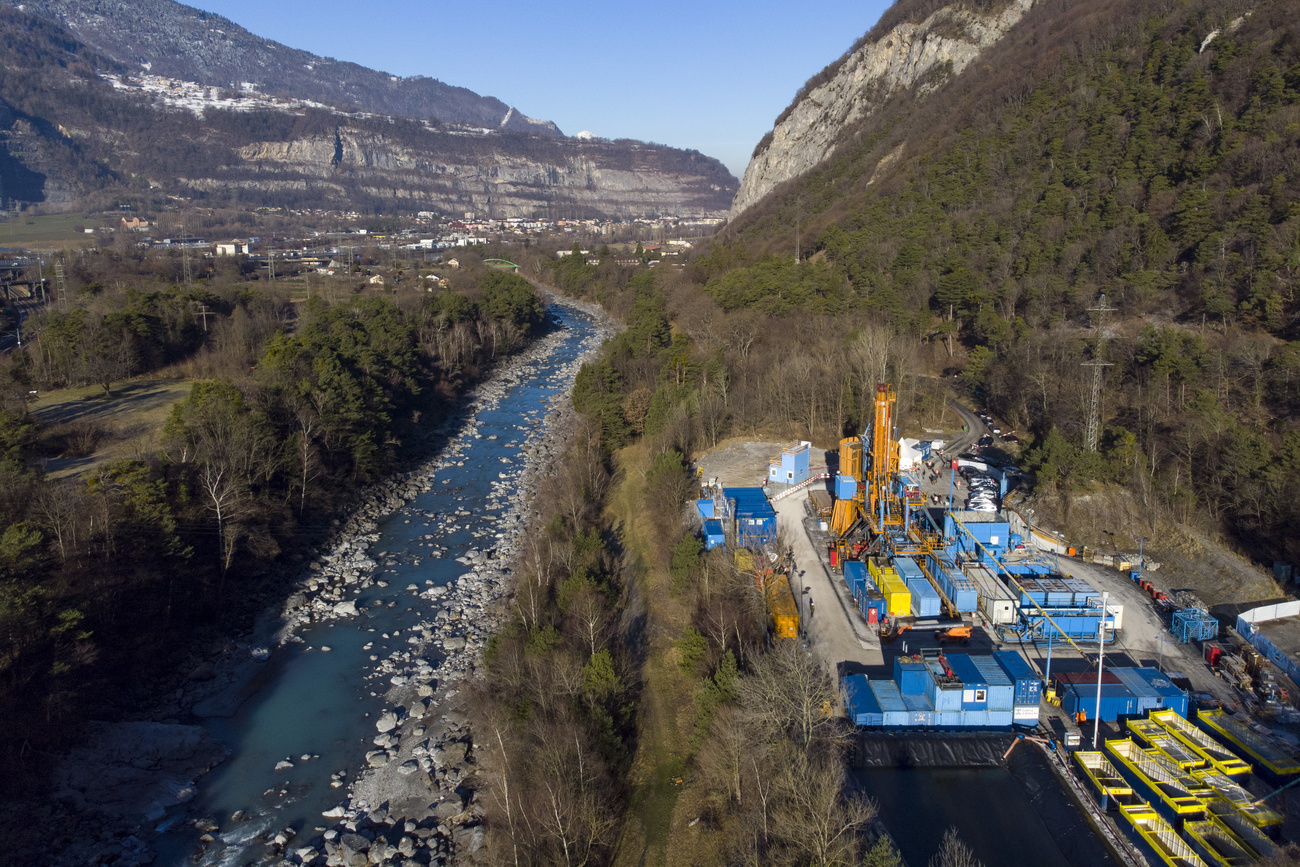
The company is instead pushing ahead with a geothermal project in Haute-Sorne in the canton of Jura.
Geothermal potential
This standstill in eastern Switzerland is not set to continue. The groundwork for a fresh start is already in place. The cantonal government commissioned a specialist consultancy to carry out extensive investigations.
The result is the 178-page final report “Potential of medium-depth and deep geothermal energy in the canton of St Gallen”, which can be found on the canton’s website.
One of the conclusions is that the area studied can be classified as “geothermally attractive”. This is due to “gravel deposits in the glacial channels”. In addition, there are large fault and fracture zones that are potentially permeable and aquiferous.

More
Heat from the ground, it’s there for the taking
The greatest chances of success lie where fracture or fault zones can be drilled through. During the last ice ages, channels around 300 to 600 metres deep were formed – for example in the Rhine Valley – which were filled with unconsolidated rock.
200 gigawatt-hour potential
If only the four most promising sites in the canton were developed, the estimated annual heat output could exceed 200 gigawatt-hours. This would cover around one-fifth of the target set out in the cantonal energy strategy for the production of renewable energy.
The study recommends a step-by-step approach. Due to drilling costs rising sharply with increasing depth, as well as the growing risks involved, testing should first be carried out in a ‘shallow play’. The term ‘play’ refers to an area with geothermal potential.
With drilling at great depths, knowledge of the subsurface remains limited. Although there are numerous boreholes in the canton of St Gallen, these are only for geothermal probes reaching depths of 200 to 300 metres.
The exception is the project in the city of St Gallen, which was ultimately halted. At the time, an area of 300 square kilometres between Gossau and Rorschach was surveyed using ‘3D seismic’ techniques.
Join the debate:
External Content
According to the report, the greatest fears amongst the public centre on earthquakes that could be triggered by drilling. Risk analyses and adapted procedures are therefore essential.
Communication must be “early and open”. The project in Haute-Sorne should now demonstrate that a geothermal project can be implemented without any noticeable earthquakes.
From the perspective of the report’s authors, the next step should be a “geothermal exploration strategy”. To this end, “specific sites, drilling targets, tests and investigations” should be defined.
The report lists particularly suitable sites. These include Buchs. The municipality lies both on the “western edge of the deep Quaternary Rhine Valley trough” and within the zone of the “scaled Helvetic”, to use the technical terminology of geologists.
What makes this site particularly interesting is the possibility of “storing thermal energy underground”.
In Benken, various deeper potential areas are being considered for exploration. These involve depths of more than 4.5 kilometres. In Ebnat-Kappel, the deeper “plays” at depths of over four kilometres are also suitable.
Other potential sites include Wildhaus, Walenstadt, Sargans/Mels and Widnau/Diepoldsau. How promising these opportunities actually are “can only be quantified through test drilling”, the report concludes.

More
Technical problems put Swiss geothermal project on ice


See more Swissinfo articles in your Google results. Learn more

In compliance with the JTI standards
More: SWI swissinfo.ch certified by the Journalism Trust Initiative

You can find an overview of ongoing debates with our journalists here . Please join us!
If you want to start a conversation about a topic raised in this article or want to report factual errors, email us at english@swissinfo.ch.