








Switzerland continues to miss secondary education target

According to the latest Swiss Education Report, 90.1% of 25‑year‑olds in Switzerland complete upper secondary education, short of the 95% target.
Select your language
Generated with artificial intelligence.
Listening:
Switzerland continues to miss secondary education target
+Get the most important news from Switzerland in your inbox
This figure has been stable for several years. In 2016, it stood at 91.5%, the Swiss federal government and the Swiss Conference of Cantonal Ministers of Education (EDK) said on Monday.
The number is important with regard to the employability of 25-year-olds. In Switzerland, upper secondary level encompasses post-compulsory education programmes such as grammar schools, which lead to the Matura [or A-level] qualification, specialised schools and vocational training programmes.

More
Apprenticeships in Switzerland
Vocational training less firmly established in French-speaking Switzerland
The Swiss Coordination Centre for Research in Education (SKBF) has produced the Swiss Education Report every four years since 2010. It does so on behalf of the federal authorities and EDK.
On Monday, Swiss President Guy Parmelin and Christophe Darbellay, the education minister of canton Valais, presented the most recent report to journalists in Bern. Parmelin is also Swiss education minister, while Darbellay chairs the EDK.
Darbellay explained the declining graduation rate by the fact that vocational training is less attractive in French-speaking Switzerland. In French-speaking cantons, the rate is between 85% and 92%, while in German-speaking regions it is higher: 92-96%.
The different value placed on vocational training is evident in canton Valais, Darbellay said. In French-speaking Monthey, 82% of 25-year-olds have an upper secondary diploma, while in Visp in the Upper Valais region is it 98%. There, vocational training is strong.
More
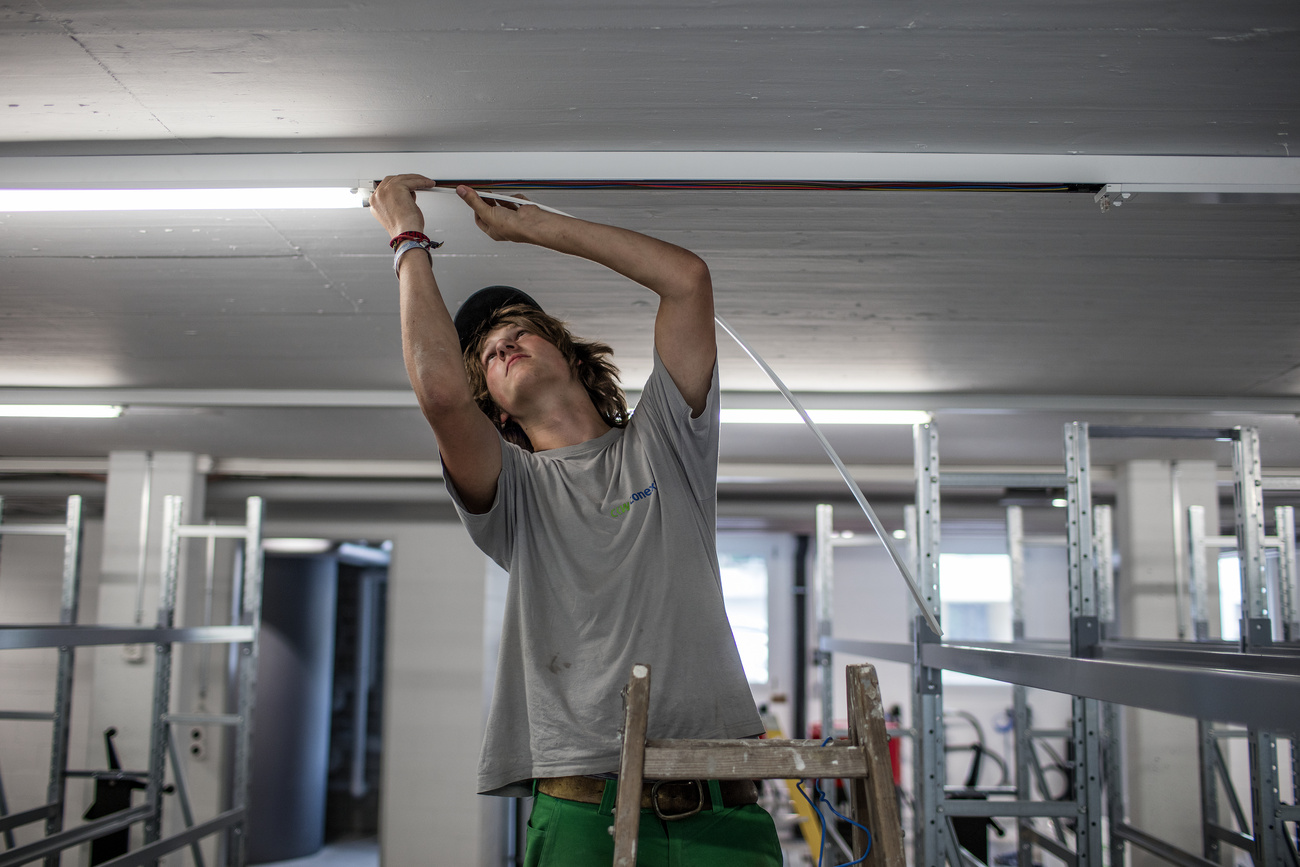
Learning from Switzerland: global delegates explore apprenticeship model
“We still have a lot of persuasion to do to make parents understand that vocational training may be the better path,” said Parmelin.
The federal authorities and cantons are also not happy about the number of students dropping out. “Currently, the rate remains at a consistently high level,” they say. “Around 24% of students starting their studies do not achieve a bachelor’s degree at a university within eight years of starting.”
More holidays for apprentices would be affordable
The number of apprenticeship contract terminations is also high. According to a statement by the Swiss Trade Union Federation (SGB), a quarter of apprentices terminate their apprenticeship contract prematurely. After termination, 20% do not re-enter training. This reveals a “massive quality problem” in SGB’s view, and the myth of “perfect vocational training” in Switzerland does not match reality.
More
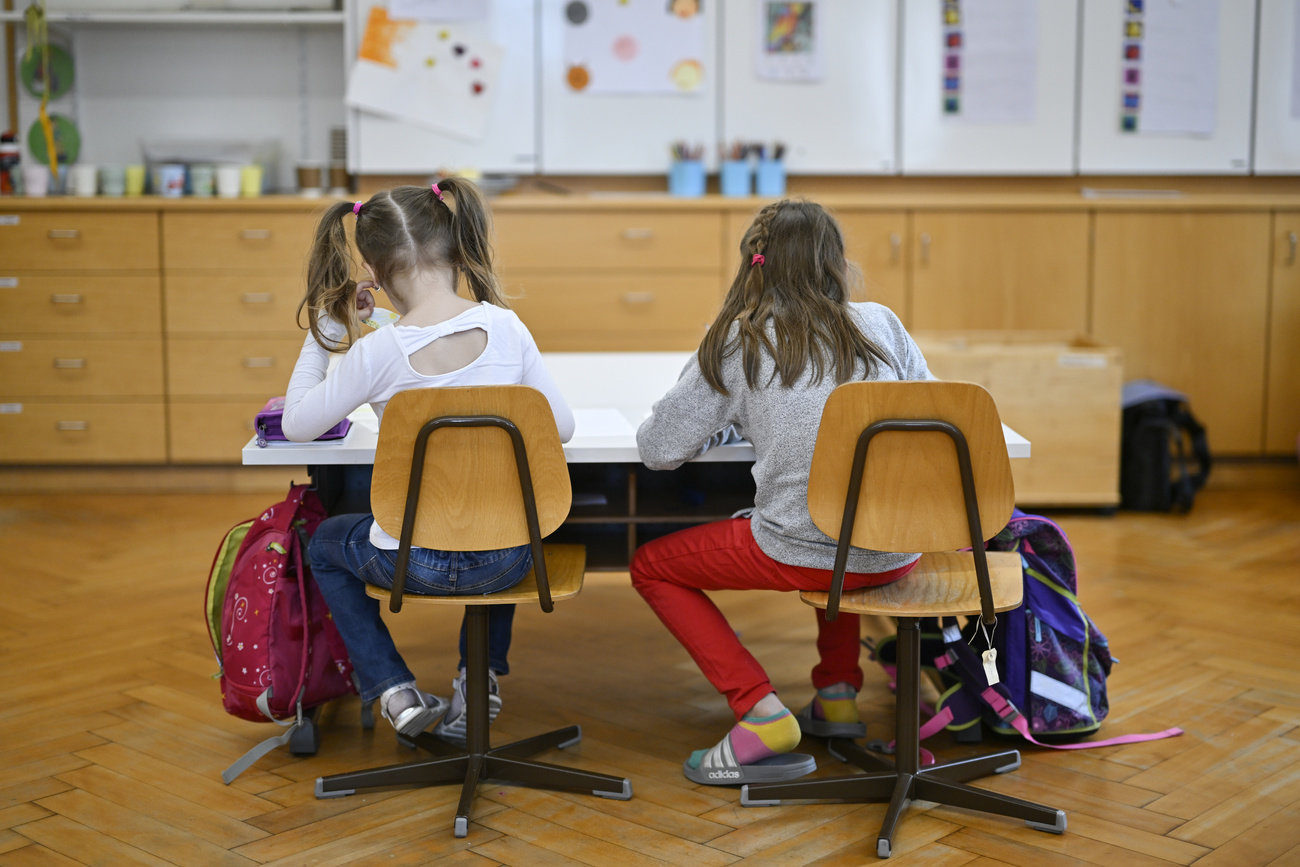
Why the Swiss school system is so successful
On Monday, the union called for specific improvements to be made for apprentices. These include more holidays and better health protection. In addition, the salaries of trainees should not be less than CHF5,000 ($6,350), according to SGB. It wants to hold training companies more accountable. The union says binding minimum standards and controls are needed, as well as measures to ensure sufficient apprenticeship places are offered.
Analysis of report to follow
In their initial assessment of the new education report, Parmelin and Darbellay stressed that the joint education objectives are long-term. They will now examine whether additional measures or new objectives are required.
The 400-page report consolidates current knowledge about the Swiss education system across all education levels. The federal authorities and cantons share responsibility for the Swiss education system. While compulsory schooling falls under cantonal jurisdiction, responsibilities in the post-compulsory sector are divided between the federal government and the cantons.

More
Why is Switzerland’s higher education so good?
Adapted from German by AI/sb
We select the most relevant news for an international audience and use automatic translation tools to translate them into English. A journalist then reviews the translation for clarity and accuracy before publication.
Providing you with automatically translated news gives us the time to write more in-depth articles. The news stories we select have been written and carefully fact-checked by an external editorial team from news agencies such as Bloomberg or Keystone.
If you have any questions about how we work, write to us at english@swissinfo.ch
External Content

In compliance with the JTI standards
More: SWI swissinfo.ch certified by the Journalism Trust Initiative

You can find an overview of ongoing debates with our journalists here . Please join us!
If you want to start a conversation about a topic raised in this article or want to report factual errors, email us at english@swissinfo.ch.