








Climate experts in Switzerland: 1.5°C target is out of reach

Series 10 years Paris Agreement, Episode 1:
Ten years after the Paris Agreement, a survey of climate scientists in Switzerland shows they no longer expect the world to limit warming to 1.5°C. On average, they expect warming of 2.5°C by 2100.
Select your language
Generated with artificial intelligence.
Listening:
Climate experts in Switzerland: 1.5°C target is out of reach


More than 80 researchers in Switzerland took part in Swissinfo’s survey about climate research and the state of the climate. Nearly all the respondents – 95% – do not believe it is realistic that the planet will meet the Paris Agreement’s ideal target of limiting global warming to 1.5°C.
In the series “10 Years of the Paris Agreement”, we highlight what has been done in terms of emissions, renewable energy, climate policies and climate research in Switzerland and around the world since 2015.
On October 22, United Nations Secretary-General António Guterres also stated that the 1.5°C threshold will inevitably be exceeded in the coming years.
External Content
On average, the researchers believe the Earth will warm by around 2.5°C by the end of this century. Harald Bugmann, professor of forest ecology at federal technology institute ETH Zurich, calls that figure “realistic”.
“We’ve already passed 1.5°C, and in the current geopolitical situation there’s little hope that the goals set earlier will be pursued,” he says. “This leads to a serious delay – if the path of global climate mitigation is reactivated at all.”
The scientists’ scepticism comes as global temperatures continue to break records. According to the World Meteorological Organization, 2024 was the first year when the average global temperature exceeded 1.5°C above pre-industrial levels, reaching +1.55°C.
External Content
And if the predictions of 2.5°C warming come true, it might be worse for Switzerland. The country is warming twice as fast as the global average, which means Switzerland could experience an increase of 4-4.5°C locally by the end of this century.
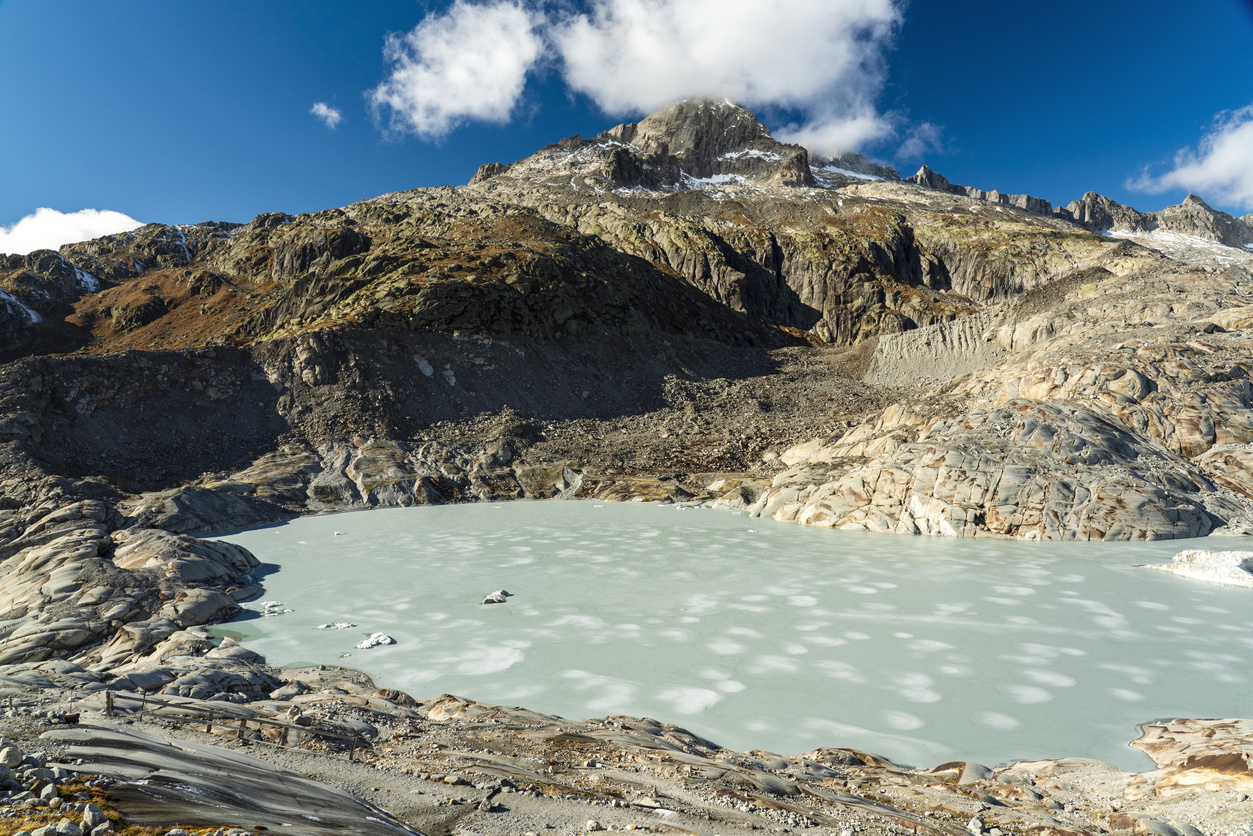
Such an increase would radically reshape the Alpine nation. More than 90% of Swiss glaciers are projected to disappear, altering river flows and threatening summer water supplies for agriculture, hydropower and households. Hot days in cities such as Zurich and Geneva could reach or exceed 40°C, and heatwaves like the one in 2022 could become almost annual.
Winters with reliable snow would retreat to higher elevations, rendering many low-altitude ski resorts unviable.
A clear majority of scientists also believe the climate crisis is moving faster than anticipated ten years ago. Two-thirds of respondents said global warming is progressing either much faster or slightly faster than expected at the time. Around 25% judged it to be unfolding “about as predicted”.
>> Switzerland is among the world’s fastest-warming nations. Here’s why:
More
Why Switzerland is among the ten fastest-warming countries in the world
Intense heat will affect Swiss residents
Researchers have become more pessimistic about the climate than they were a decade ago, when the Paris Agreement was adopted. Six out of ten climate scientists say they are now more pessimistic about politicians’ willingness to act than they were at the time.
Three out of four researchers expect that climate change will to a high or very high degree affect living conditions in Switzerland by 2050, warning of more frequent and intense heat, especially dangerous in cities and for vulnerable groups.
External Content
“Heatwaves will be more frequent and intense, affecting human health particularly in cities,” says Edouard Davin, a professor at the University of Bern focusing on land-atmosphere interactions, climate modelling, and the impacts of land use and land cover changes on climate.
He also points towards other major concerns including infrastructure damage from natural hazards such as floods, landslides and storms.
“There will likely be more instabilities (landslides, glacier collapses, avalanches) in the Alps due to permafrost melting and intense precipitation, more pronounced floods and droughts with consequences for humans and infrastructure, higher chances for ecosystem failures and reduction in crop productivity,” Davin said.
Swiss climate policy: still unresolved
Asked whether Switzerland’s climate commitment is stronger today than ten years ago, the largest group of respondents – around four in ten scientists – said they were neither optimistic nor pessimistic. Among those who expressed a view, slightly more agreed than disagreed that the country has made progress.
In September 2025, Swissinfo send out a survey asking scientists working on climate change in Switzerland 22 questions focused on the state of climate research, policy and global warming ten years after the landmark Paris Agreement on climate change.
The survey was sent to 108 climate scientists working at the following institutions: EPFL, ETH Zurich, University of Neuchâtel, University of Zurich, University of Bern, University of Basel, University of Geneva, University of Fribourg, University of Lausanne, Paul Scherrer Institute, Swiss federal Institute for Forest, Snow and Landscape Research (WSL), Swiss Federal Laboratories for Materials Science and Technology (EMPA) and MeteoSwiss.
Eighty researchers completed the survey. Find the results here.
However, independent assessments judge Switzerland’s overall climate policy as “insufficient”, pointing to gaps between ambition and action. Climate Action TrackerExternal link NGOs have expressed disappointment with the new Swiss emissions targets for 2035, arguing they lack the necessary ambition and rely too heavily on offsets rather than deep domestic cuts.
One key obstacle to stronger climate action in Switzerland named by the scientists surveyed is diminishing public pressure and focus on other crises.
”The long-term issue of climate change will always be relegated to lower political salience if there are [multiple] crises deemed immediately relevant. Without a re-emergence of societal pressure [like that exerted by the Fridays for Future movement], I’m pessimistic regarding Swiss climate policy,” says Axel Michaelowa, head of the research group for international climate policy at the University of Zurich.
Michaelowa adds that climate policy today tends to focus on “carrots”, such as unsustainable subsidies amid deficit pressure. Instead, he believes we need “sticks” in the form of carbon taxes, for example, which are outlined in Article 6 of the Paris Agreement.
“International carbon markets need to play a key role in ensuring that greenhouse gas mitigation will be done effectively throughout the world,” he says. “The Swiss leadership in this field should be expanded and made more stable in the long term.”
Switzerland’s responsibility
When asked whether Switzerland has a special responsibility to lead on climate action because of its wealth and emissions contributions, most researchers agreed that it does. More than 50 respondents said they strongly agree, while another ten said they somewhat agree. Only a handful disagreed.
External Content
For many respondents, this responsibility stems from Switzerland’s prosperity and ability to influence global debates. But Rolf Weingartner, professor emeritus of hydrology at the University of Bern, believes the country “lacks the political ambition to seriously engage with climate and environmental issues and to translate them into measures”.
“We are very good at observing and understanding the changes, but very poor at turning this knowledge into proactive action,” says Weingartner, whose research focuses on Alpine water systems and the impacts of climate change on hydrology.
“Yet Switzerland could play a pioneering role,” he believes.
It is the first international and legally binding climate agreement. It commits all countries to reducing greenhouse gas emissions. It was adopted on December 12, 2015, in Paris at the United Nations Climate Change Conference (COP21).
The goal of the Paris Agreement is to limit global warming to well below 2°C above pre-industrial levels, aiming for a maximum increase of 1.5°C. To achieve this, net-zero emissions (climate neutrality) must be reached by 2050.
The agreement was signed by 196 countries. Switzerland ratified it in 2017.
Edited by Gabe Bullard/ts


See more Swissinfo articles in your Google results. Learn more

In compliance with the JTI standards
More: SWI swissinfo.ch certified by the Journalism Trust Initiative

You can find an overview of ongoing debates with our journalists here . Please join us!
If you want to start a conversation about a topic raised in this article or want to report factual errors, email us at english@swissinfo.ch.