








Climate is a concern in Switzerland but no longer a priority
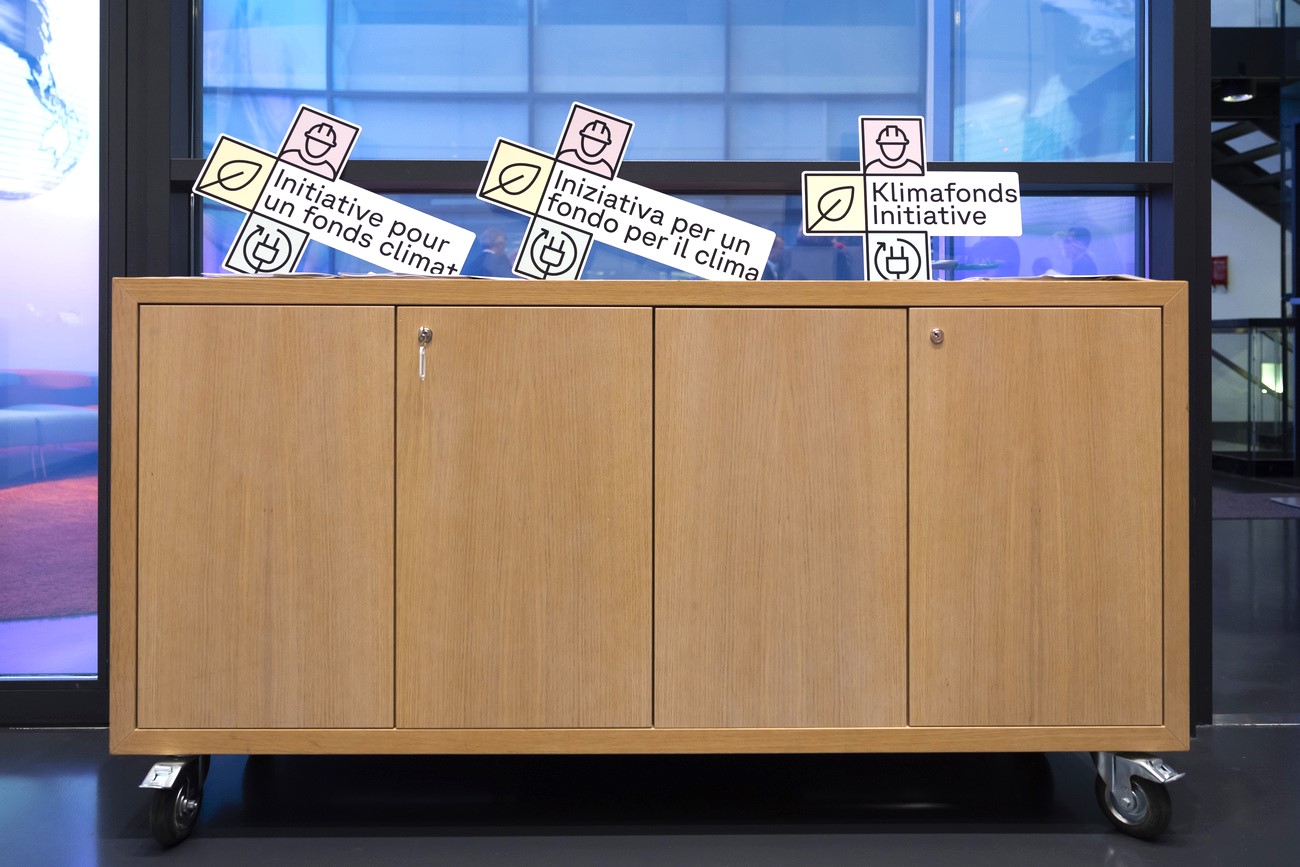
Climate change is one of the main concerns of the Swiss population. However, most citizens don’t want to invest more money in the ecological transition, as shown by their rejection of the climate fund initiative on Sunday. Why is this?
Select your language
Generated with artificial intelligence.
Listening:
Climate is a concern in Switzerland but no longer a priority

The outcome at the ballot box was clear: the Swiss do not want to increase public climate funding, or at least not in the form advocated by left-wing or green parties. On Sunday 71% of voters rejected the initiative calling for up to 1% of gross domestic product to be invested annually in measures to protect the climate and nature.
In the current context it is difficult to achieve consensus around a proposal that entails costs but which nobody knows how to finance, said Cloé Jans, political scientist at the gfs.bern institute. “People are more cautious today,” she told Swissinfo.
“Many people feared that they would have to pay out of their own pockets, for example through an increase in VAT.”
Cloé Jans, political scientist
Switzerland is currently debating the financing of the 13th monthly pension payment, approved by popular vote in 2024, and the increase in military spending. The initiative for a climate fund is the third proposal that lacked a precise definition of where the funds would come from, Jans said. “Many people feared they would have to pay out of their own pockets, for example through an increase in VAT.”
Lena Maria Schaffer, professor of political science at the University of Lucerne, also says that people are less inclined to accept ideas that involve additional costs or changes in their lifestyle.
“We see this in international pollsExternal link: 89% of people say governments need to do more to combat climate change, but when action touches the individual sphere, people are much more hesitant,” she told Swissinfo.
But it’s not only the specifics of the initiative and the financial aspects that played a role at the ballot box. At the moment there are issues considered more important than climate, such as the economic situation, the rising cost of living and security, says Jans. “Climate is not the main priority.”
>> The Swiss electorate has spoken out on numerous climate-related issues. Here are the main ones:

More
Ten years of Swiss climate votes since the Paris Agreement
Priorities are elsewhere
Climate is still very much in the public perception, Jans notes. According to the Worry BarometerExternal link published at the end of 2025, environmental protection and climate change are in second place among the concerns of the Swiss population. In first place are healthcare costs and rising health insurance premiums.
Climate is among the main concerns, but currently priorities are elsewhere, she says. “We’re in a crisis context, both economically and geopolitically, with the wars in Ukraine and the Middle East.”
Compared to a few years ago, we live in a different world today, says Jans. This can also be seen in other countries, for example in the United States, where the Trump administration has dismantled the climate policy of its predecessor and withdrawn the country from the Paris Climate Agreement.
For now, there is no indication that the US climate turnaround has influenced electoral behaviour in Switzerland, Jans says. “However, it’s clear that today it’s more acceptable to relegate climate to the background.”
More
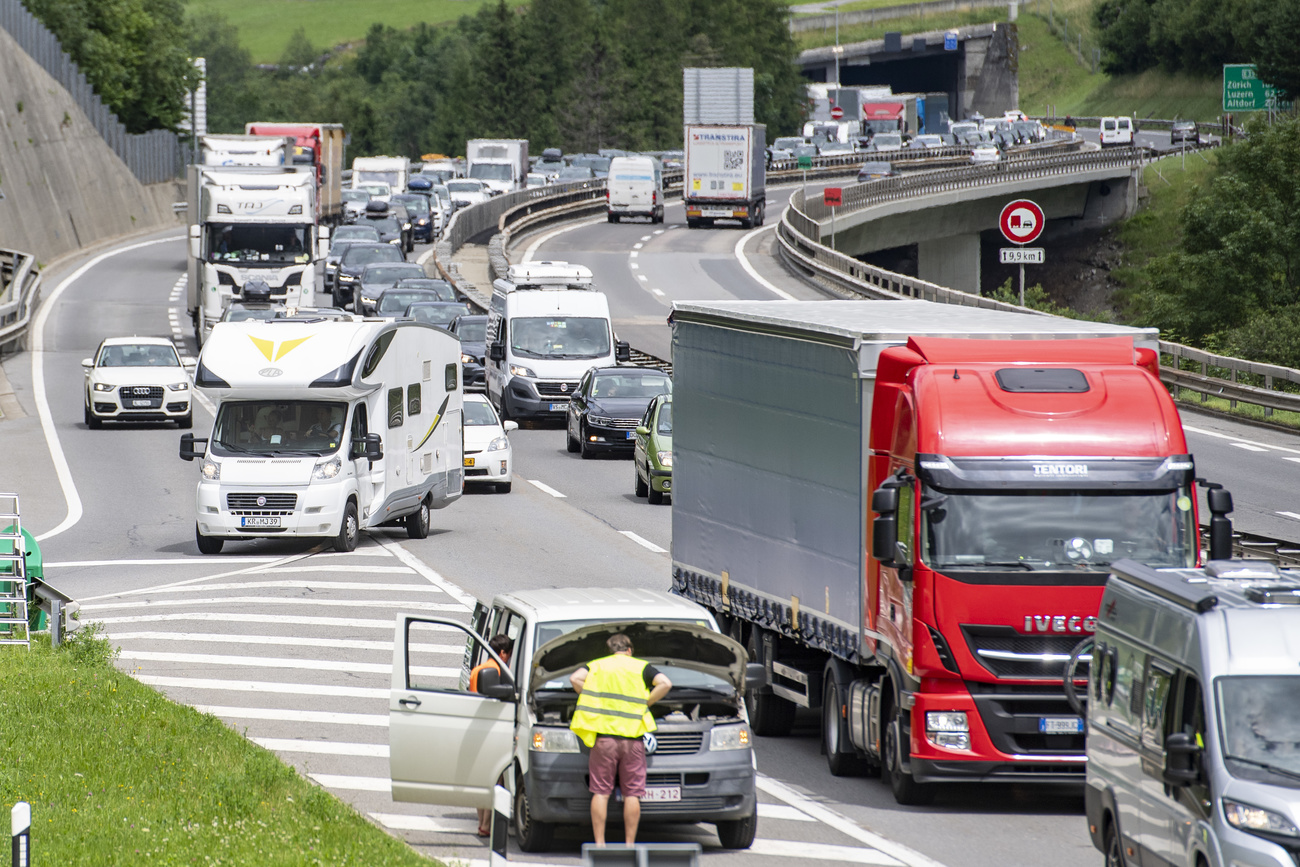
Swiss think it’s vital that other people reduce CO2 emissions
Decline in interest
The decline in interest in the climate issue was also evident in the run-up to Sunday’s vote. The climate fund initiative had a marginal presence in the public debate, which was dominated instead by the proposal to reduce the radio and television fee and the reform of individual taxation.
This is also confirmed by an analysis of the media coverage devoted to the issues on the ballot: the SBC licence fee initiative was the focus of 416 articles and television reports, compared to 229 on individual taxation and 124 on the climate initiative. The data come from media monitoring by fög, the Institute for Research on Public Opinion and Society at the University of Zurich, carried out between December 15 and February 15.
The funds invested in election campaigns also reflect the loss of popularity of climate change compared to issues perceived as more concrete and with immediate effects on the wallet. Campaigns for and against the climate initiative mobilised a total of around CHF2.3 million ($3 million), less than half of the financial means used for the SBC initiative (around CHF5.9 million).
For Cloé Jans, “climate is no longer as seductive as it was in 2019”. In that year, a strong popular mobilisation contributed to the Green Party’s success in federal elections. The climate, she explains, has entered the political agenda thanks to strong pressure from the public and civil society. “At the moment, this pressure no longer exists.”
Many people have the impression that enough has already been done for climate protection and that the existing instruments of Swiss climate policy are sufficient, Lukas Golder, also a political scientist at gfs.berne, told Swiss public broadcaster SRF.
>> Progress in reducing emissions in some sectors in Switzerland is too slow, according to an international report:

More
Switzerland climbs global climate ranking but progress is slow
Too abstract a concept
Cloé Jans emphasises another aspect. Although people are aware that action is needed now, climate – and its repercussions – remain too abstract a concept. “We realise that there are more intense floods and heatwaves, but the most serious consequences will only become apparent in about 20 years,” she said.
Delphine Klopfenstein Broggini, a parliamentarian for the Green Party, also notes that it is difficult to convince people when it comes to climate issues because the issues are long-term. “In this ‘everything and now’ society, people find it hard to understand that if we do not act now in the face of the climate crisis, the consequences will be even more serious,” she told the newspaper 24heures.
Also in 24heures, Liberal Green vice-president Céline Weber argues that it is wrong to think that it is enough to invest more money to solve the crisis. “We have to show the population that the fight against global warming is also an opportunity for Switzerland to focus on its energy independence and to create jobs,” she said.
Lena Maria Schaffer agrees: climate, and in particular the energy transition, is no longer an isolated issue on which we simply take sides for or against. Its repercussions now touch on many areas of everyday life and are also intertwined with major global geopolitical upheavals.
With the war in Iran, Schaffer notes, there is growing concern about rising energy prices. Issues such as dependence on oil and autocratic regimes are returning to the centre of the debate. “All this could give new impetus to the climate issue.”
Could the conflicts that have put the climate crisis in the background now bring it back into the spotlight? This will be seen soon, when the Swiss parliament debates the initiative to build new atomic power plants and the initiative to boost solar power in Switzerland.
External Content
Edited by Samuel Jaberg. Translated from Italian by AI/ts
How we translate with AI
We use automatic translation tools, such as DeepL and Google Translate, for some content.
Each translated article is carefully reviewed by a journalist for accuracy. Using translation tools gives us the time for more in-depth articles.
Learn more here about how we work with AI.

In compliance with the JTI standards
More: SWI swissinfo.ch certified by the Journalism Trust Initiative

You can find an overview of ongoing debates with our journalists here . Please join us!
If you want to start a conversation about a topic raised in this article or want to report factual errors, email us at english@swissinfo.ch.