








Ebola vaccine: ‘In an outbreak situation we’re racing against time’

Efforts to develop a vaccine against the current Ebola outbreak in the Democratic Republic of Congo (DRC) have already achieved initial successes thanks to an innovative funding strategy.
Select your language
Generated with artificial intelligence.
Listening:
Ebola vaccine: ‘In an outbreak situation we’re racing against time’
With no approved vaccine or treatment available for the Bundibugyo strain of Ebola, the outbreak in the Democratic Republic of Congo (DRC) has triggered an urgent scientific response. Researchers have compressed years of vaccine development into weeks, launching the first human trials as the Geneva-based World Health Organization (WHO) warns that the epidemic could reach unprecedented proportions.
“The search for a Bundibugyo Ebola vaccine is a race against time,” said Rachael Bonawitz, head of the Filovirus Disease Programme at the Coalition for Epidemic Preparedness Innovations (CEPI).
With thousands of infections already reported and the virus spreading rapidly across eastern Congo, scientists, global health organisations and vaccine manufacturers are moving at exceptional speed to develop, test and produce vaccine candidates before the outbreak expands further.
The Bundibugyo strain, responsible for the current epidemic, is both highly contagious and highly lethal. Unlike the Zaire strain of Ebola, for which licensed vaccines and treatments exist, there are currently no approved medical countermeasures against Bundibugyo.
According to Tedros Adhanom Ghebreyesus, director of the WHO, 4,449 cases had been reported in the DRC by August 12. A total of 2,061 people had died, while 886 patients recovered despite the absence of specific therapies and vaccines, several of which are now undergoing testing.
The highly infectious Ebola virus is transmitted through bodily fluids and can cause severe fever, internal and external bleeding, and organ failure. For health officials, containing the outbreak is not simply a national challenge but a regional priority. The longer transmission continues, the greater the risk of cases spreading across borders.
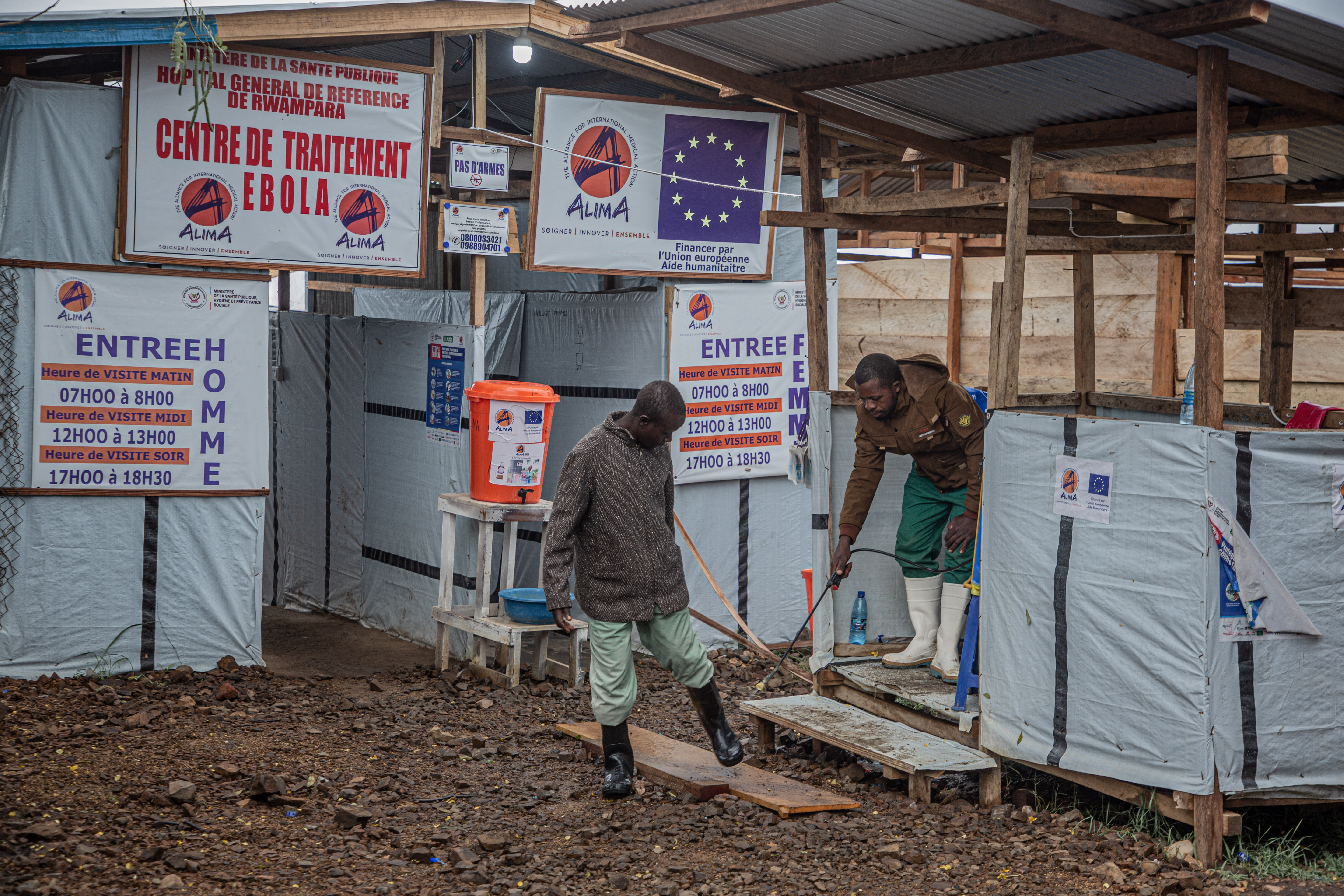
Vaccine challenges
Yet developing vaccines against emerging epidemic threats presents a fundamental challenge. Outbreaks are rare, unpredictable and often short-lived, leaving pharmaceutical companies with little commercial incentive to invest.
“Because outbreaks are rare and sporadic, vaccine developers do not have a reliable market,” Bonawitz told Swissinfo. “Given uncertain demand, a lack of guaranteed buyers and limited financial returns, this can create significant costs for developers.”
Without intervention, she warned, the world risks finding itself without a vaccine every time a new outbreak emerges. To address this market failure, CEPI, a non-profit organisation based in Oslo, and Gavi, the Vaccine Alliance, based in Geneva, launched an innovative financing strategy in June that combines so-called push and pull mechanisms.
CEPI provides the push funding, financing vaccine research and development. The organisation has committed more than $60 million to advance a portfolio of Bundibugyo vaccine candidates. CEPI is supported by private investors, philanthropy and states – Switzerland has committed $22.7 million (CHF18.2 million) between 2022 and 2026.

More
Inside Geneva Summer profile: tackling Ebola in DRC
“This early-stage funding is critical to reducing the scientific and technical risks for developers and moving a vaccine candidate from the laboratory into clinical trials,” Bonawitz explained.
Rather than backing a single vaccine, CEPI is supporting several candidates simultaneously. The portfolio approach increases the likelihood that at least one vaccine will prove safe and effective and can be deployed rapidly if the outbreak worsens.
Gavi’s contribution focuses on the commercial risks that often slow vaccine development even after promising results emerge. Through its First Response Fund, the alliance has approved up to $40 million to help manufacturers invest in production capacity before it is known whether a vaccine will ultimately succeed.
This is intended to ensure that vaccine doses can be made available quickly once clinical trials produce encouraging results.
“This emergency financing is about securing speed, capacity and access,” Emanuele Capobianco, Gavi’s Director of Global Health Security, said in a statement.
First clinical trials
The strategy is already producing results. The first vaccine candidate specifically targeting the Bundibugyo strain entered Phase 1 clinical testing in the United Kingdom on July 24. Developed by the University of Oxford and the Serum Institute of India (SII), the candidate, known as ChAdOx1 BDBV, is based on the same viral-vector technology used in the Oxford-AstraZeneca Covid-19 vaccine.
Oxford researchers developed the vaccine in just eight weeks, significantly faster than was possible during the Covid-19 pandemic. The first volunteer to receive the experimental vaccine was 37-year-old Briton Ed Hunt, who said he decided to participate after seeing reports about the deadly outbreak in the DRC. The trial will enrol 50 healthy volunteers aged 18-55 and is designed to assess the vaccine’s safety, tolerability and ability to generate an immune response.

A second vaccine candidate, Moderna’s mRNA-1469, entered Phase 1 testing in Canada on August 4. The vaccine uses the same mRNA platform that first gained prominence during the Covid-19 pandemic. Approximately 80 healthy volunteers are expected to participate in the study. Moderna announced that Susan Murray became the first participant to receive the vaccine candidate as part of the CEPI-funded trial.
Researchers hope to move rapidly from these early studies to larger Phase 2 and 3 trials if initial results are encouraging. Trial participants will be monitored for up to a year, but scientists expect to obtain preliminary information on immune responses and potential side effects much sooner.
At the same time, vaccine manufacturers are already producing doses before any candidate has been proven effective. The Serum Institute of India, the world’s largest vaccine manufacturer, has produced and stockpiled around 620,000 doses of the Oxford vaccine candidate within just two weeks. Around 4,000 doses have been allocated for use in the Phase 1 study.
CEPI financed the production of these doses in advance and at financial risk, ensuring supplies would be available immediately for larger trials or emergency deployment if the vaccine proves successful.
“If we manufacture doses ahead of time, no time is lost once we determine that a vaccine candidate can move to the next stage of testing and we can start immediately,” Bonawitz said. Referring to the stockpile already prepared by the Serum Institute of India, she added: “In an outbreak situation we’re racing against time.”
Meanwhile, the WHO is also exploring whether existing tools could help. In August it recommended that Ervebo, the only licensed Ebola vaccine currently available and originally developed against the Zaire strain, be included in a Phase 3 study against the current strain. The recommendation followed two animal studies that suggested the vaccine may offer some protection against the variant responsible for the current outbreak.
Edited by Virginie Mangin/ts
This article has been corrected on August 25, 2026, to clarify the role of CEPI.

In compliance with the JTI standards
More: SWI swissinfo.ch certified by the Journalism Trust Initiative

You can find an overview of ongoing debates with our journalists here . Please join us!
If you want to start a conversation about a topic raised in this article or want to report factual errors, email us at english@swissinfo.ch.