








Switzerland’s crackdown on dirty money has a blind spot

Switzerland freezes assets, returns illicit funds and provides legal assistance to foreign governments seeking to recover stolen wealth. Has Switzerland ceased to be a safe haven for the fortunes of corrupt heads of state and their families? Only partly. Here are the key facts.

Returning assets linked to corruption is a complex and often lengthy process. Switzerland holds a unique position in this field but has also acquired a somewhat dubious reputation. One reason lies in the sheer complexity of the individual cases.
Why doesn’t Switzerland require banks to return illicit funds directly to the countries concerned?
The main reason is the rule of law. In Switzerland, returning illicit assets is not a government decision but the outcome of a legal process that sometimes requires court proceedings, as is the case in most countries.
“An asset recovery process requires solid evidence of the funds’ illegal origin, international cooperation, court rulings and, in many cases, political agreements on how the funds should be used,” says Oscar Solórzano, head of Latin America at the International Centre for Asset Recovery (ICAR) at the Basel Institute on Governance.
From abroad, the situation may seem obvious. If a former state leader or a member of their family has bank accounts in Switzerland, it is often assumed that the money was stolen and should be returned to the country concerned as quickly as possible. In reality, however, proving that assets are illicit is not that easy. “Dirty money” is almost always disguised – otherwise it would never make its way into the Swiss financial system in the first place.
How do Swiss banks prevent corrupt funds from entering the system?
In recent decades, Switzerland has introduced a series of measures to prevent corrupt funds from entering the system. Although the government and financial authorities acknowledge that these measures are not 100% foolproof, they say the situation has improved significantly.
Banks in Switzerland typically check, among other things, their clients’ tax residence, profession and financial profile. If assets are held by a company, a foundation or another legal structure, anti-money laundering rules require banks to identify the person who ultimately controls the funds.
Under the law, clients must explain how they acquired their wealth, and the scrutiny does not end once a bank account is opened. Banks continue to monitor transactions to determine irregular activities and suspicious movements. They also check whether clients hold, or have held, a prominent public position abroad or whether they have family or business ties to people who do. If so, stricter due diligence rules apply.
What happens when banks suspect money laundering?
If a bank has sufficient evidence to suspect money laundering or another illegal origin of assets, it must alert the Swiss Money Laundering Reporting Office (MROS).
External Content
The MROS analyses the information it receives, supplements it with its own data and, if there are sufficient grounds for suspicion, refers the case to the relevant cantonal or federal law enforcement authorities.
The snag is that the offences are usually committed outside Switzerland, which means that Swiss prosecutors cannot investigate them directly. They rely on international legal assistance.
This is where a mechanism comes into play which, as Solórzano explains, was pioneered by Switzerland and was the first of its kind.
More
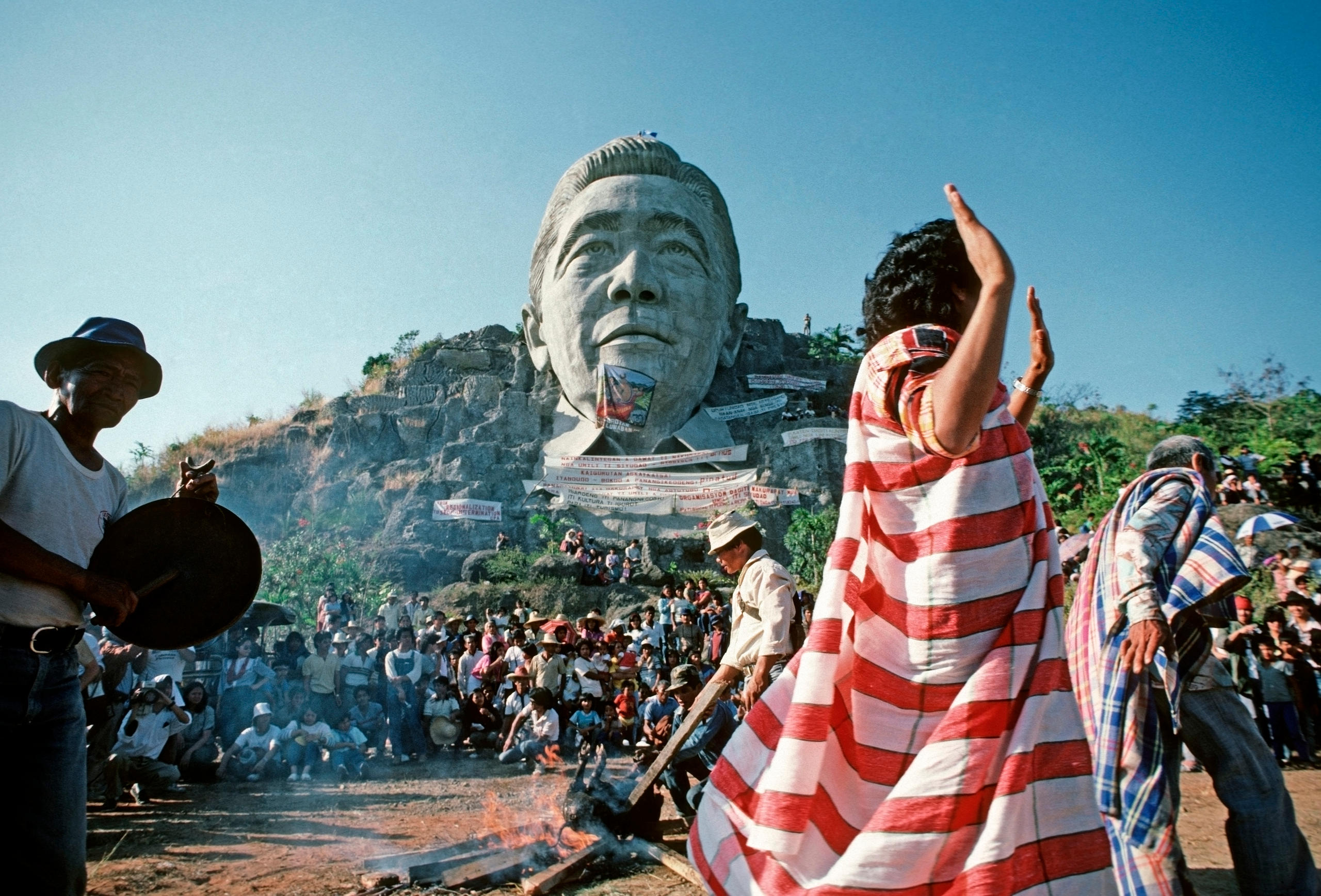
Dictators’ funds in Switzerland – the biggest scandals
“Former Zurich prosecutor Cornelia Cova initiated the first case of spontaneous legal assistance in the history of asset recovery,” he says. “In 2000, Switzerland took the unprecedented step of sharing bank information with Peru on suspicious accounts held by Vladimiro Montesinos, the right-hand man of then-President Alberto Fujimori.”
This mechanism, says Solórzano, has since become an internationally recognised best practice. Spontaneous information sharing was later incorporated into international frameworks, such as the UN Convention against CorruptionExternal link (UNCAC), and is now regularly used in asset recovery cases.
However, not all information can be shared spontaneously. Confidentiality rules or legal regulations sometimes stand in the way. Authorities may share limited information to enable another state to submit a formal request for legal assistanceExternal link.
As one of the world’s leading hubs for cross-border asset management, Switzerland receives hundreds of such requests from abroad each year. In 2025 alone, at least 20 requests were made in connection with asset recovery while another 33 dealt with the international distribution of confiscated assets, according to Switzerland’s statistics on international legal assistance.
Why does it take so long to return dirty money?
International legal assistance depends on cooperation between both sides and is primarily the responsibility of the country seeking the assets. It must provide the Swiss authorities with the evidence needed to prove that the assets were acquired illegally. If that country is grappling with instability and corruption, returning funds can be delayed by decades or fail altogether.
Asset recovery generally consists of several stages: identifying, freezing, seizing or confiscating the assets, and ultimately returning them to the country of origin or the victims concerned.
In corruption cases, Switzerland can agree on special arrangements with the country seeking to recover assets to ensure that the returned funds will benefit the population and are used transparently.
One striking example of the complexities of asset recovery dates back to the early 2000s when Switzerland returned about $92 million (CHF74 million) to Peru. The money came from bribes that the former head of Peru’s National Intelligence Service (SIN), Vladimiro Montesinos, had received from arms dealers who benefited from preferential treatment in the awarding of government contracts.
Peru created a fund to manage the recovered assets and ensure their transparent and appropriate useExternal link. However, it later emerged that some of the money had been spent on recreational activities for public officials.
These and other cases led Switzerland to reconsider how assets stolen from state coffers could be returned in a way that ensures they genuinely benefit the population. It has since introduced several measures: return agreements, clearly defined rules on how the funds may be used, and releasing payments in instalments.
In 2016, Switzerland adopted – on its own initiative and in line with the UNCAC – the Federal Act on Freezing and Restitution of Illicit Assets Held by Foreign Politically Exposed Persons (PEPs).
The law allows assets to be frozen after revolutions or the fall of a regime if there are reasonable grounds to suspect that they were acquired illegally and that institutions in the country of origin have been weakened.
More
With US in retreat, can Switzerland maintain fight against kleptocracy?
What’s behind the claim that Switzerland still benefits from dirty money?
Although some assets remain frozen, Switzerland has generally been successful in recovering and returning corrupt funds in recent years. To date, it has confiscated and returned more than $2 billion (CHF1.6 billion) in illicit funds paid to foreign officials.
However, there is a blind spot in Switzerland’s fight against corruption: bribes paid abroad by Swiss companies.
A well-known example is the bribery scandal in the Democratic Republic of Congo involving Swiss commodities giant Glencore. In 2024, Switzerland’s Office of the Attorney General fined Glencore CHF2 million for “organisational shortcomings” and ordered the company to hand over a further $150 million in unlawfully obtained profits. This payment represented the surrender of profits obtained through illegal activities.
As a result, 14 Congolese NGOs called on Switzerland to use the money to compensate the Congolese population. But Swiss law does not provide for such a solution, as neither the Congolese population nor any of the NGOs were recognised as damaged parties in Swiss proceedings. As a result, the millions remain in Switzerland’s state coffers to this day.

More
Switzerland orders freezing of Maduro assets
In an opinion piece for Swissinfo, Andrew Dronbierer, author of the book Illicit Enrichment, reached a similar conclusion: Switzerland is undoubtedly still benefitting from at least one form of international corruption.
He writes that between 2011 and 2024, the Swiss federal authorities concluded 14 foreign bribery cases involving Swiss companies or international companies operating in Switzerland.
The cases were settled out of court, with the companies required to hand over a total of about CHF730 million in illicit gains to the Swiss treasury.
How effective is Switzerland’s fight against money laundering?
The fact that banks themselves are initially examining whether funds are legitimate or not, with no external oversight, has repeatedly sparked criticism, including from abroad.
The financial sector’s partial self-policing, however, is only one of the problems in the fight against money laundering. This became clear in 2020 when Daniel Thelesklaf stepped down as director of MROS.

More
Switzerland keeps profits derived from foreign bribery. It shouldn’t.
In an interview with the German-language newspaper Tages-AnzeigerExternal link, Thelesklaf did not mince words: “When it comes to money laundering, Switzerland usually implements only the absolute minimum required under international pressure.”
He explained that since 2016, banks had reported between CHF12 billion and CHF17 billion in suspicious assets each year. “Only a tiny fraction of this money is ever confiscated,” he said, stressing that those behind these financial flows often get away without criminal prosecution.
“For an autocrat who can block international legal assistance, Switzerland is one of the safest countries in which to keep their money,” said Thelesklaf.
Edited by Marc Leutenegger. Adapted from German by Billi Bierling/gw

More
Our newsletter on geopolitics

In compliance with the JTI standards
More: SWI swissinfo.ch certified by the Journalism Trust Initiative

You can find an overview of ongoing debates with our journalists here . Please join us!
If you want to start a conversation about a topic raised in this article or want to report factual errors, email us at english@swissinfo.ch.