








How much water is left under Switzerland? Nobody can say yet
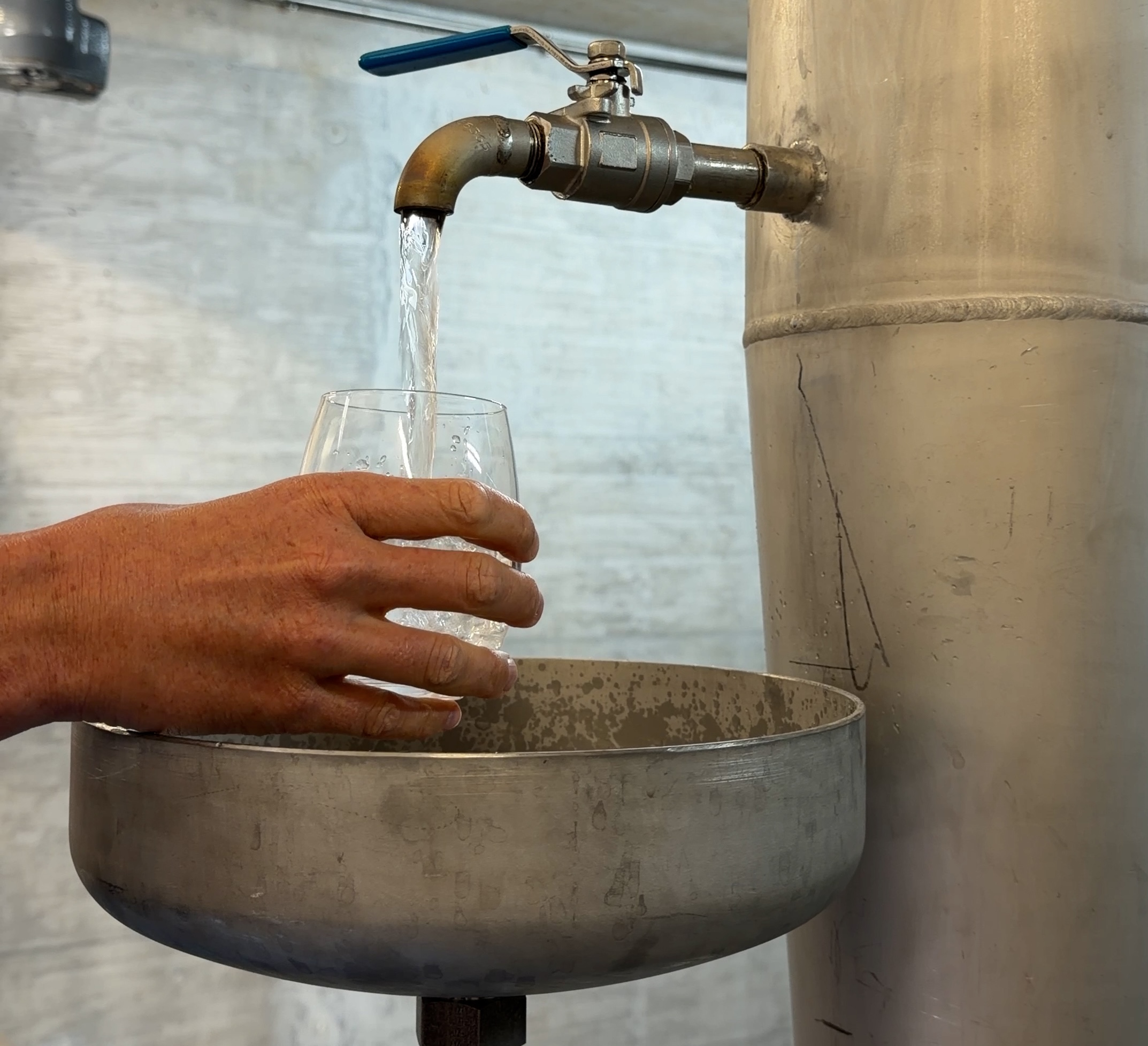
A visit to a vital Swiss water source during a record-setting drought reveals a spring holding steady on the surface but a water supply picture that’s shifting in ways the country is only beginning to understand.
Select your language
Generated with artificial intelligence.
Listening:
How much water is left under Switzerland? Nobody can say yet


In a corner of canton Fribourg, western Switzerland, Julie Boillat peers into a spring burbling 1,100 litres of clear water every minute.
“I think we could drink it,” says Boillat, a hydrogeologist with the canton’s environment office.
She and her team have come to gather data for something the canton does not yet have: a model of how well this source survives a drought.
The findings are reassuring. The flow is a little under the long-term average but, as Boillat puts it, “kind of normal for July”. On the national drought map, this corner of Switzerland is still green.
Not far away though, a small stream has run dry.
“I consider it a visual witness of the spring’s flow,” says Guillaume Balmat, who looks after the village’s water supply. “Today it is dry, a correct sign that our catchment’s water production is falling, because of the lack of rain these past months.”

More
Sparse rainfall and heatwaves have put Switzerland on drought alert
Two water sources, side by side, tell opposite stories. This is the dichotomy of Switzerland’s water supply. Small, shallow groundwater and sources fed by small streams are hit early by drought, while large aquifers, which store water throughout winter and spring, hold on much longer. The water Boillat measured fell as rain or snow in February.
More than 80% of Swiss drinking water comes from the larger underground sources – like this one. Only a small share of the water is extracted each year. But even these deeper water sources, which are unevenly distributed around the country, aren’t guaranteed to stay so well-supplied. While they seem healthy at a glance, a more complete set of data that could examine their overall health is only now coming into existence. Officials can’t say with confidence which water sources are in trouble, because almost nobody is looking.
Six sensors examine the groundwater
Canton Fribourg, home to more than 300,000 people, has six sensors watching its groundwater. These were installed over the past two years. Four have gathered more than a year’s worth of data. Two of those are showing water levels that are about a metre lower than last summer, but there is not enough data to reach any firm conclusions, Boillat says.
The federal monitoring network does not fill the gap because it covers just two springs in the entire canton, enough for a rough impression but not a detailed picture, Boillat says.
The data that does exist often answers the wrong question. To assess droughts, the canton needs to measure a spring’s entire output, not just what arrives in the reservoir. This is what Boillat and her team are doing, with 30 more sensors going into the ground this year.
Swiss cantons are not required to take such measures. No law requires one canton’s monitoring system to match another’s, or to contribute to national data-gathering. The country’s water utilities want to change that, with the industry association calling for a national water law that sets out who must measure what, and how.
The gap between total spring output and reservoir collection can hide a long-term supply problem. At one large catchment in canton Fribourg, water flow has declined steadily over 20 years, yet reservoirs have remained adequately supplied so far. Boillat cannot say why less water is flowing.
“Is this a consequence of less groundwater recharge in winter, of longer dry periods in summer and autumn, of longer phases of strong [water transfer into the atmosphere], or simply of a change in the catchment itself, a blocked screen? At this point we have no answer.”
External Content
Water supply questions across Switzerland
Fribourg’s blind spot is part of a trend seen across Switzerland. The Alpine country has 42 monitored springs, alongside a wider network of wells. Several national measuring stations recorded their lowest June levels ever this year, the federal environment office told Swissinfo, and levels have been falling nationwide during this exceptionally dry summer.
The longer-term record shows a more mixed picture. The environment office sees opposite trends side by side: spring-fed stations in the northern Prealps are in sustained decline as the snowpack shrinks, while stations in some river valleys are rising, because snow now melts earlier and pushes more river water into the valley aquifers more quickly. Those opposing trends are visible only at the handful of stations with records long enough to show them. Elsewhere, nobody can say which way the water is moving.
Based on this spotty evidence, climate change is redistributing Swiss groundwater, moving it away from small, high, spring-fed places and toward the large valley floors.
The same shift is likely to happen anywhere water comes off a mountain, from Austria and northern Italy to the Andes and the Himalayas. Switzerland’s snow and ice feed the Rhine and the Rhône rivers, and much of the European continent drinks, irrigates and ships goods using water that originates in the Alps.
Why the rain that comes will not fix it
Switzerland is in the grips of a historic drought driven by concurrent heatwaves and lack of rainfall.
“A challenge in times of heatwaves and drought is the sharp rise in demand for drinking water,” says Boillat, “which further amplifies the effects of the missing recharge from rainfall.”
On August 6, the federal drought platform put the whole country at its highest danger level, with no sustained rain in the forecast. Groundwater levels and water output from springs remain low and mostly still falling: a thunderstorm can nudge a fast-reacting aquifer up briefly, the bulletin notes, but nowhere near enough to raise it in the long-term. Deep aquifers need months of above-average rainfall before they recover, according to the federal environment office.
That makes winter precipitation more vital. Roughly 40% of Swiss annual runoff comes from snowmelt, and last winter had below-average snowfall, so the reserve that normally tops up rivers and aquifers in early summer was never properly filled. A good winter can overcome the effects of a single dry summer, but repeated drought years mean the aquifers will never be fully replenished.
What worries the canton
Boillat says a single low spring is not much of a danger, since municipalities are interconnected, but she worries about problems piling up. For instance, pollution could make one source unusable, while another runs dry.
Balmat also worries about a sustained cycle of more water drainage and less replenishment. He says that, according to the Swiss meteorological authority MeteoSwiss, the same amount of rain still falls over a calendar year as previously. “But I have the impression that the rainfall has shifted between the seasons, more in autumn, or heavier, while the dry spells in summer are longer. That’s our problem.” So the rain still comes, but less of it arrives when the springs most need it.
Cantonal projections show the same trend, and they add a new complication: as temperatures rise, growing seasons lengthen, which leads to plants drawing more water over longer periods.
Warmer, longer summers also mean that more of the rain that falls is used or lost before it can sink deep enough to reach an aquifer.
The situation will probably grow more acute, Boillat says, with more frequent and longer dry periods. It’s something that Swiss municipalities and cantons have begun planning for, mainly by connecting water sources to one another.
While Switzerland is not running out of water, it is only beginning to monitor what parts of the country are relying on borrowed or dwindling reserves and which of its villages are relying on borrowed reserves. As rainfall patterns change due to climate change, it will become more essential to understand whether and how water supplies are running dry, or simply moving somewhere else.
More


In compliance with the JTI standards
More: SWI swissinfo.ch certified by the Journalism Trust Initiative

You can find an overview of ongoing debates with our journalists here . Please join us!
If you want to start a conversation about a topic raised in this article or want to report factual errors, email us at english@swissinfo.ch.