








‘Energy independence day’ highlights Swiss reliance on imports
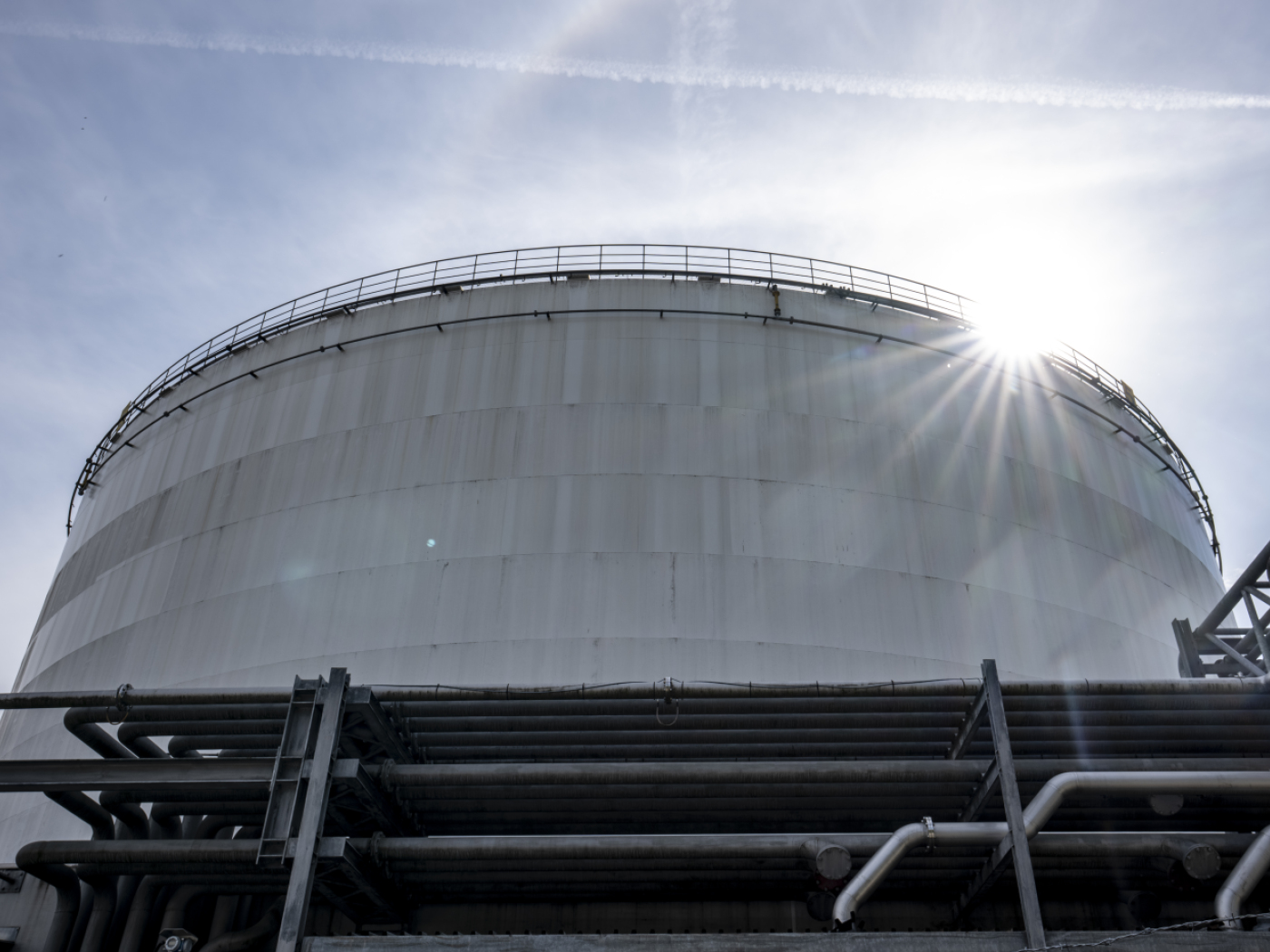
Until Monday, local resources were sufficient to cover Switzerland's energy needs. For the rest of the year, Switzerland will be dependent on imported energy sources, in particular oil, gas and uranium.
Select your language
Generated with artificial intelligence.
Listening:
‘Energy independence day’ highlights Swiss reliance on imports
+ Get the most important news from Switzerland in your inbox
This is shown by the latest calculation from the Energy Foundation. Today, Switzerland meets almost two-thirds of its energy needs through imports, the foundation said on Monday. This includes all petroleum products, natural gas and nuclear fuels, at a cost of CHF7 billion ($8.9 billion) each year.
The Day of Energy Independence illustrates this reliance: it corresponds to the point at which, from a purely mathematical point of view, Switzerland is entirely dependent on imported energy.
With an estimated energy independence rate of 32% in 2026, Switzerland is in the middle of the league table compared with countries in the European Union. Estonia comes out well ahead, with domestic production of over 97%. Latvia, Romania and Sweden also source more than 50% of their energy locally. France stands at 18%, making March 9 its Energy Independence Day.

More
Swiss oil traders anticipate high prices and strong profits
Geopolitical risk
A large proportion of imported fossil fuels comes from politically unstable regions such as the Middle East, North Asia and the former Soviet Union, and transit through EU countries on their way to Switzerland. The current tensions in the Middle East show just how vulnerable this system is, said the Energy Foundation.
In order to guarantee long-term supplies and reduce Switzerland’s dependence on authoritarian states, it is essential to develop renewable energies consistently at national level and to establish close cooperation within Europe, the foundation added.
It called on parliament to push ahead with the energy transition, adopt the electricity agreement with the EU and abandon nuclear adventures, which would lead to new dependencies on uranium, in reference to the “Stop the blackout” initiative and the Federal Council’s counter-proposal.

More
Switzerland-EU electricity agreement: the key issues it must tackle
Call for five measures
Along with the Energy Foundation, six other associations have signed an appeal to the government to mark Energy Independence Day. They include the Swiss Association for Climate Protection, the WWF, Alliance Sud, the Swiss Catholic Lenten Fund, HabitatDurable Switzerland, and Protect our Winters. The groups are calling on federal authorities to move rapidly away fromdependence on oil and gas.
They expect the federal and cantonal officials to take five measures to reduce this dependence, including action on subsidies for the renovation of buildings, speeding up the transition to renewable heating systems, and improving access to electric charging stations. In their appeal, launched on Monday, they also called for an end to price hikes on public transport and better use of solar potential on roofs and façades.
Join the debate:
External Content
Translated from French with AI/gw
This news story has been written and carefully fact-checked by an external editorial team. At SWI swissinfo.ch we select the most relevant news for an international audience and use automatic translation tools such as DeepL to translate it into English. Providing you with automatically translated news gives us the time to write more in-depth articles.
If you want to know more about how we work, have a look here, if you want to learn more about how we use technology, click here, and if you have feedback on this news story please write to english@swissinfo.ch.
External Content

In compliance with the JTI standards
More: SWI swissinfo.ch certified by the Journalism Trust Initiative

You can find an overview of ongoing debates with our journalists here . Please join us!
If you want to start a conversation about a topic raised in this article or want to report factual errors, email us at english@swissinfo.ch.