








UN Refugee Convention turns 75 amid rising political pressures
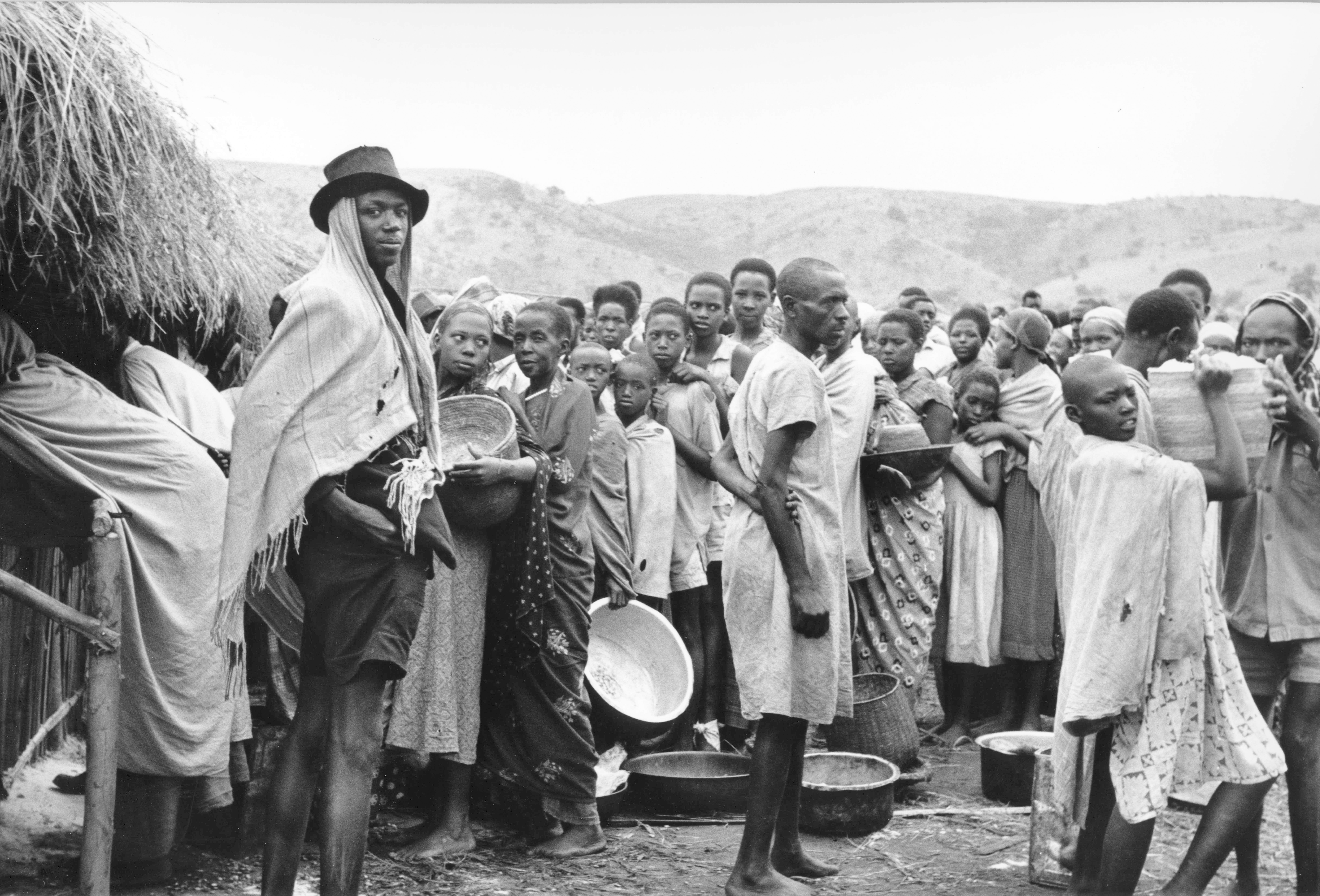
The UN Convention on Refugees is marking its 75th anniversary this week, at a time when migration and asylum are increasingly divisive issues.
Select your language
Generated with artificial intelligence.
Listening:
UN Refugee Convention turns 75 amid rising political pressures

The UN refugee agency (UNHCR), insists the convention remains relevant. “Refugee protection remains just as important today as it was 75 years ago,” Elisabeth Tan, the agency’s director of international protection told Swissinfo.
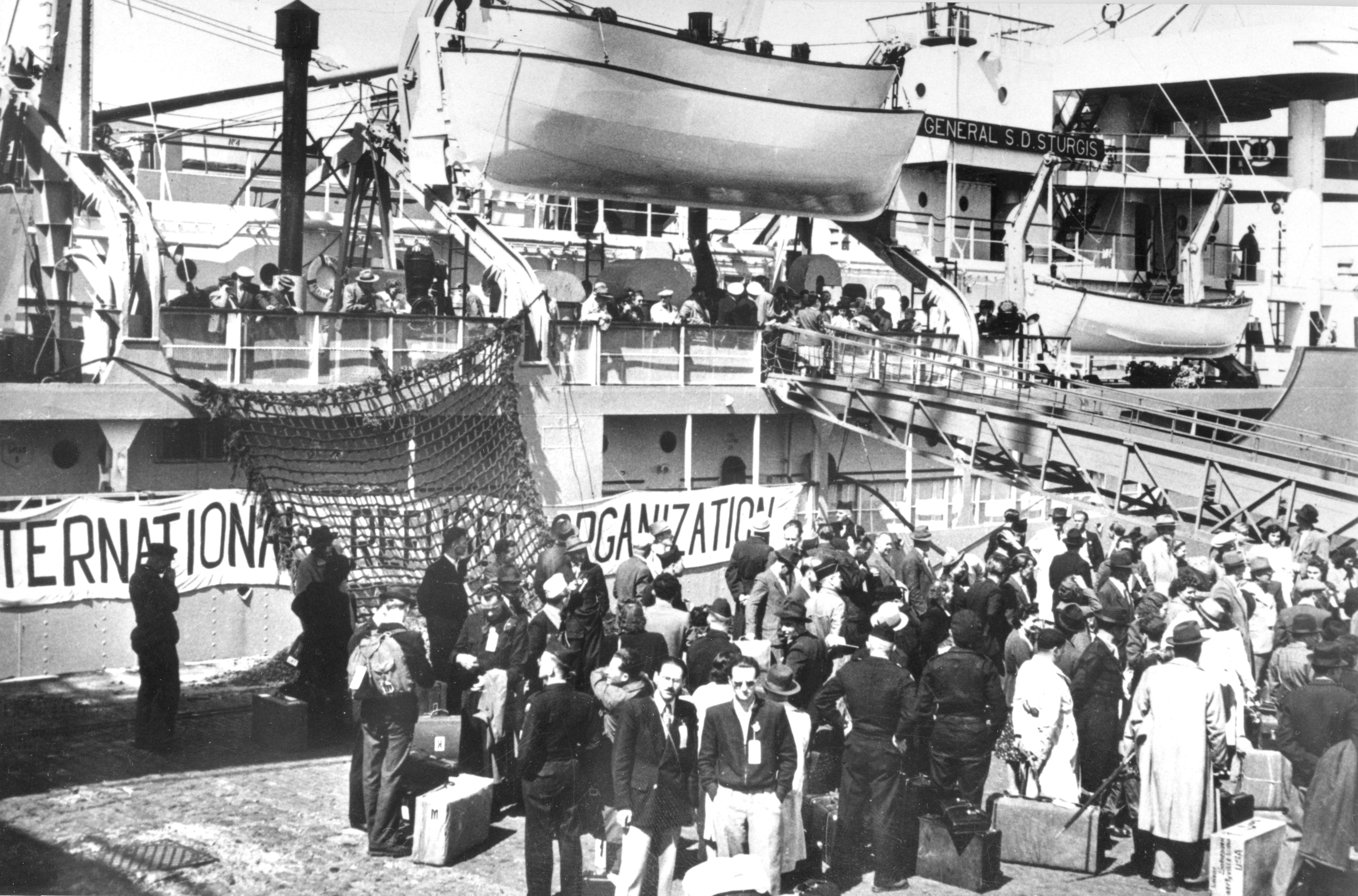
The UN Convention on Refugees was drafted in 1951 in response to the horrors of the Second World War. It defined a refugee as a person who needed international protection because of feared persecution, or because “of serious threats to their life, physical integrity, or freedom resulting from persecution, armed conflict, violence, or serious public disorder”.
Millions of Europeans had been forcibly displaced, millions had been persecuted and then killed in Nazi concentration camps, many of those fighting had been taken prisoner. Those who survived often returned to find their homes destroyed.
With that suffering firmly in mind, the original convention was designed specifically to help people who had become refugees due to events that had happened before 1951, and more specifically still, to help Europeans. The convention did not initially apply to everyone.
“It was actually a treaty that was meant to disappear,” says Vincent Chetail, who is director of the Global Migration Centre at the Geneva Graduate Institute. “It was a convention applied to the past.”
In fact, like much of the international law introduced after the war, it was a collective effort to ensure that the brutality of that conflict never happened again.
Never again was short lived
However, events over the past 75 years have shown the world failing over and over again to live up to that “never again” promise.
In 1956, within five years of the convention coming into force, the Soviet Union invaded Hungary. Fleeing Hungarians were not covered under the strict terms of the fledgling convention, forcing Hungary’s neighbours in western Europe to swiftly adapt. The events of 1956, they reasoned, were directly linked to the Soviet occupation and takeover of Hungary in 1944 and 1945 – therefore the thousands of fleeing Hungarians could be eligible for protection under the convention.
The 1950’s and 1960’s also saw multiple conflicts outside of Europe, as former colonies gained their independence. This raised the question of why people fleeing war in Africa were not worthy of protection too? In 1967 the restrictions on time (pre-1951) and place (Europe) were finally lifted, making the protection offered by the convention universal.
Fast forward to the 21st century, and millions of people have found safety thanks to the convention; from conflicts in Afghanistan, former Yugoslavia, Syria, Ukraine, and many more.
By the end of 2025, the UNHCR had recorded 41.6 million refugees – recognised under the convention – worldwide. “It has saved millions of lives,” says Tan.

New migration patterns
But the 21st century also presents us with very different migration patterns overall. Huge income gaps remain between the global north and the global south. It is much easier to move across the world, and millions of people are doing so, legally and illegally, in the hope of a better standard of living.
These people, however skilled and willing to work they may be, are not refugees, though some may claim to be. At the same time, the terms illegal immigrants and asylum seekers are regularly used interchangeably, by the media, by governments, and by right-wing populist parties seeking to dominate the debate over immigration.
At the same time, both legal migration, and applying for asylum have become more difficult in recent years, with some countries automatically rejecting asylum claims from those who have crossed their borders illegally. The UNHCR continues to urge governments to allow safe and legal pathways for asylum seekers, and for migrants seeking work.
Illegal immigrant: a foreign-born person who enters or resides in a country without official government authorisation or in violation of its immigration laws, such as by crossing a border without inspection or overstaying a valid visa
Asylum seeker: an individual who has fled their home country, crossed an international border, and formally applied for sanctuary and protection in another country, but is still waiting for a legal decision on their status. All refugees start as asylum seekers, but not all asylum seekers become recognised refugees.
Legal immigrant: a person who has been granted official, authorised permission by a sovereign state to enter, reside, and-in many cases-work or study within its borders
At the Swiss Refugee Council, Lionel Walter fears the basic principles of the convention are getting lost in what he describes as a “political attack,” Walter argues that the convention’s commitment to protect those fleeing persecution remains entirely relevant. “Its significance is greater than ever at a time when the number of people fleeing war and persecution worldwide is at an all-time high.”
The International Committee of the Red Cross currently counts 130 conflicts worldwide, the UNHCR estimates that more than 117 million people remain forcibly displaced, most within their own countries.
Third country outsourcing
Despite its increasingly heated debate over migration and asylum, Europe’s refugee numbers are comparatively low and dropped in 2025 due to a sharp fall in applications from Syrian nationals.
Switzerland currently hosts around 200,000 refugees and asylum seekers, but like several of its European neighbours, is now looking at outsourcing asylum seekers to third countries.
The idea of “return hubs” is to send asylum seekers whose initial claims have been rejected to a third country, pending return to their home countries. Rumoured venues for the hubs are Ethiopia, Tunisia, Rwanda, Uganda and Uzbekistan.
Walter of the Swiss Refugee Council warns these “carry an enormous risk of fundamental rights violations,” and adds that they would be very likely to “generate high costs and inefficiencies.”
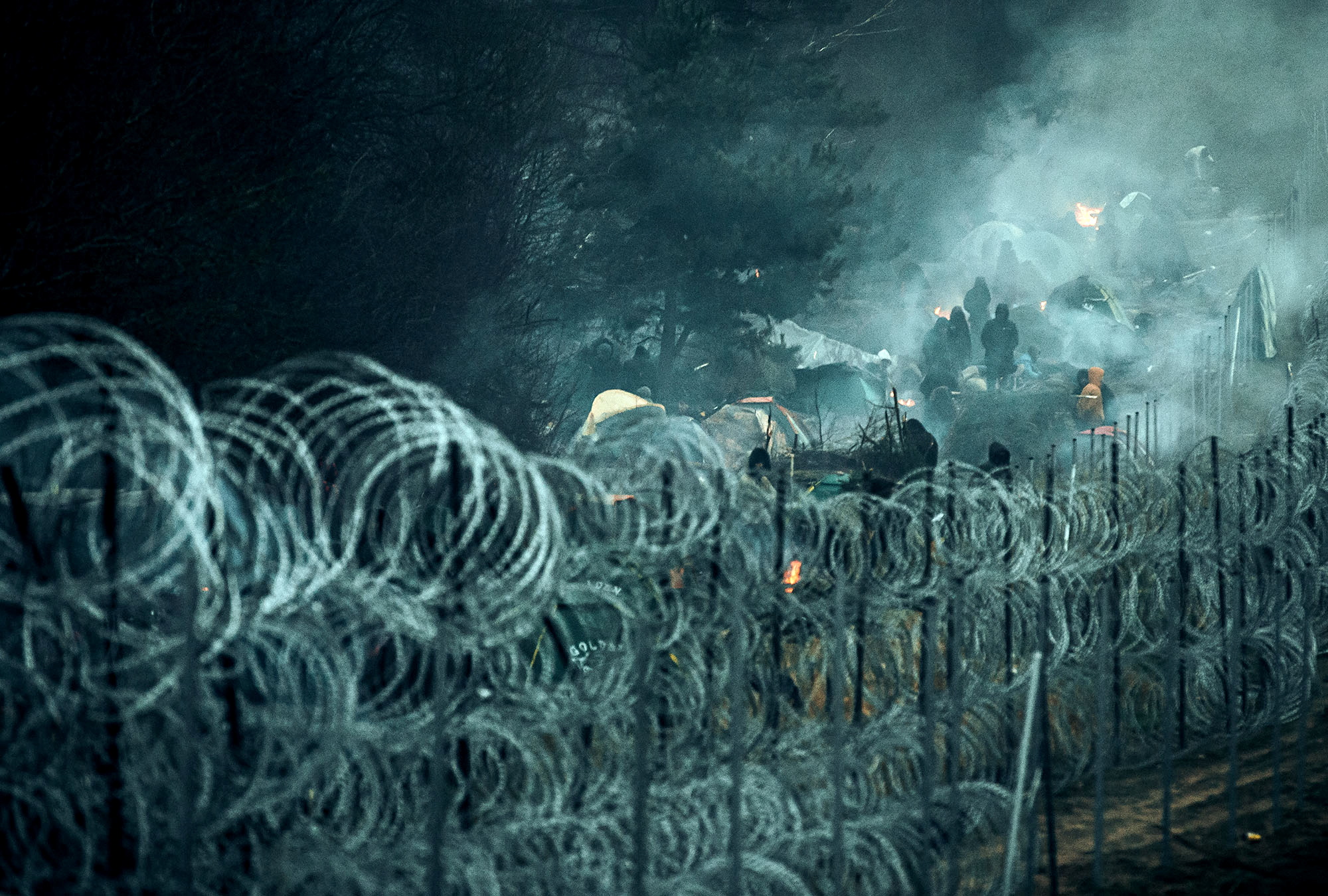
Chetail from the Geneva Graduate Institute, also queries Europe’s current strategy, pointing out that “push backs {at borders} and forced returns” show that “states are developing ways to undermine refugee protection.”
Tan is more cautious, suggesting the UNHCR is not against return hubs, as long as claims for asylum are “heard properly”, and that the hubs “respect people’s human rights.”
The UNHCR does share the concerns about forced returns, warning in a statement that it is witnessing “practices that restrict access to asylum, including pushbacks, denial of access to territory, and forced returns.”
More
Report finds no link between Swiss funds and EU border pushbacks
Return to basics
The UNHCR is urging UN member states to return to the convention’s core protection principles. If only governments would apply them correctly, argues Tan, they would find the convention an ideal instrument to “manage borders while protecting people with a well-defined need for international protection.”
Tan points to a recent polExternal linkl suggesting that, despite the heated debate, two thirds of voters support the right of those fleeing war or persecution to seek refuge.
But hanging over the entire debate is the financial squeeze on the UN as a whole, and the unpredictable behaviour of the United States. In September last year, UN Secretary General Antonio Guterres said he would shrink the UN regular budget by 15% in 2026.
For 2026, the UNHCR approved a budget of $8.50 billion (nearly CHF7 billion), $2.1 billion less than the previous year. Operations to support refugees have been reduced, and thousands of staff laid off.
Under President Trump, the US has stopped accepting most refugees, with a very few exceptions, notably white South Africans, who Washington claims, without evidence. are the victims of systemic race-based persecution.
Just this month, rumours swirled that the US was considering pulling out of the UNHCR altogether, as it has the World Health Organisation (WHO), and the UN Human Rights Council. For decades the US has been the refugee agency’s biggest donor. Leaving would be, says Chetail “totally irresponsible, extremely dangerous … a pure catastrophe. It will create an existential risk for the UNHCR.”
Tan does not want to be drawn on something so serious on the 75th anniversary, telling a UN briefing only “we would regret any withdrawal, we are of course in discussions with US, and we will continue to engage.”
More
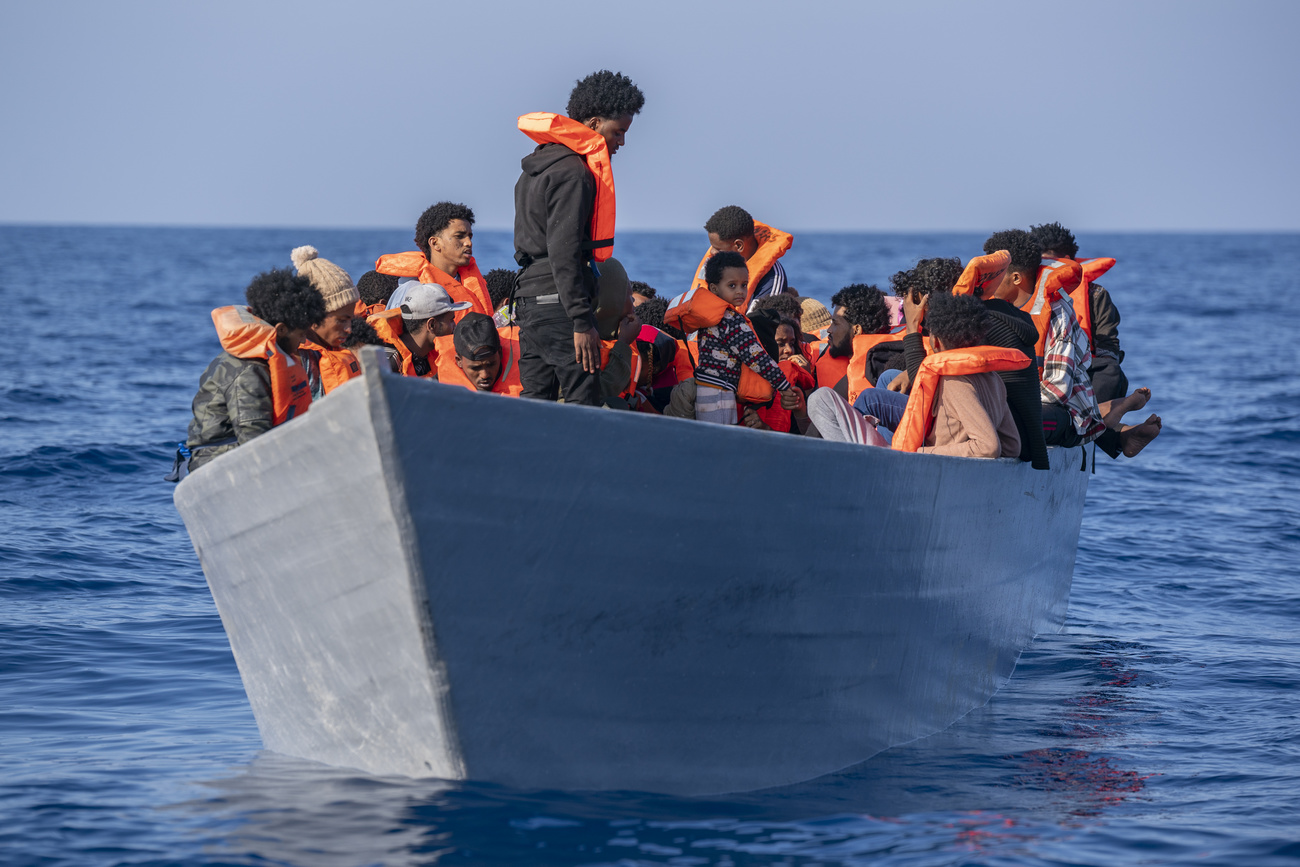
Europe chips away at refugee law as migrant deaths soar
Big challenges ahead
US disengagement is not the only challenge. Increasingly, populations are moving because they lack food and water – with the shortages caused not by conflict, but by climate change.
At the moment climate change alone, like famine or natural disaster, is not a reason to be granted asylum, but the UNCHR estimates that, over the last decade, weather-related disasters caused around 250 million internal displacements worldwide.
But fleeing war is a reason to be granted asylum, and, increasingly, conflicts are erupting precisely because vital resources like water are becoming scarce due to climate change.
This summer, drought and crop failure have extended to Europe. Wildfires are forcing hundreds of thousands to flee their homes in Spain and France.
Rather than opening the convention to include new reasons to grant refugee protection — Tan fears given the current polarised debate “almost certainly protection would suffer”– , the UNHCR would like to see states living up to their other humanitarian commitments; supporting countries suffering natural disasters, and those displaced by them.
Meanwhile there are new forms of warfare to which all European citizens may be exposed in the future.
Residents in Ukraine’s eastern cities may never see a Russian soldier, but they are fleeing from armed Russian drones on a daily basis. Drones, thought to be Russian, are also being seen increasingly over western Europe, including over Switzerland.
This raises the question of whether European citizens, as they did during the second world war, and like their Ukrainian neighbours since 2022, may need the protection of the refugee convention again themselves.
“We never know when we might need this convention,” says Chetail. “Life can change so quickly. This convention is for all of us.
Among the 41.6 million official refugees, 70% are hosted in countries neighbouring conflict; Turkey and Iran each host upwards of 3 million refugees, Bangladesh has around a million Rohingya refugees from Myanmar, Colombia has welcomed over 700,000 people from Venezuela.
Edited by Virginie Mangin/ds

In compliance with the JTI standards
More: SWI swissinfo.ch certified by the Journalism Trust Initiative

You can find an overview of ongoing debates with our journalists here . Please join us!
If you want to start a conversation about a topic raised in this article or want to report factual errors, email us at english@swissinfo.ch.