








Thailand tightens visa policy, much to the dismay of Swiss seasonal retirees
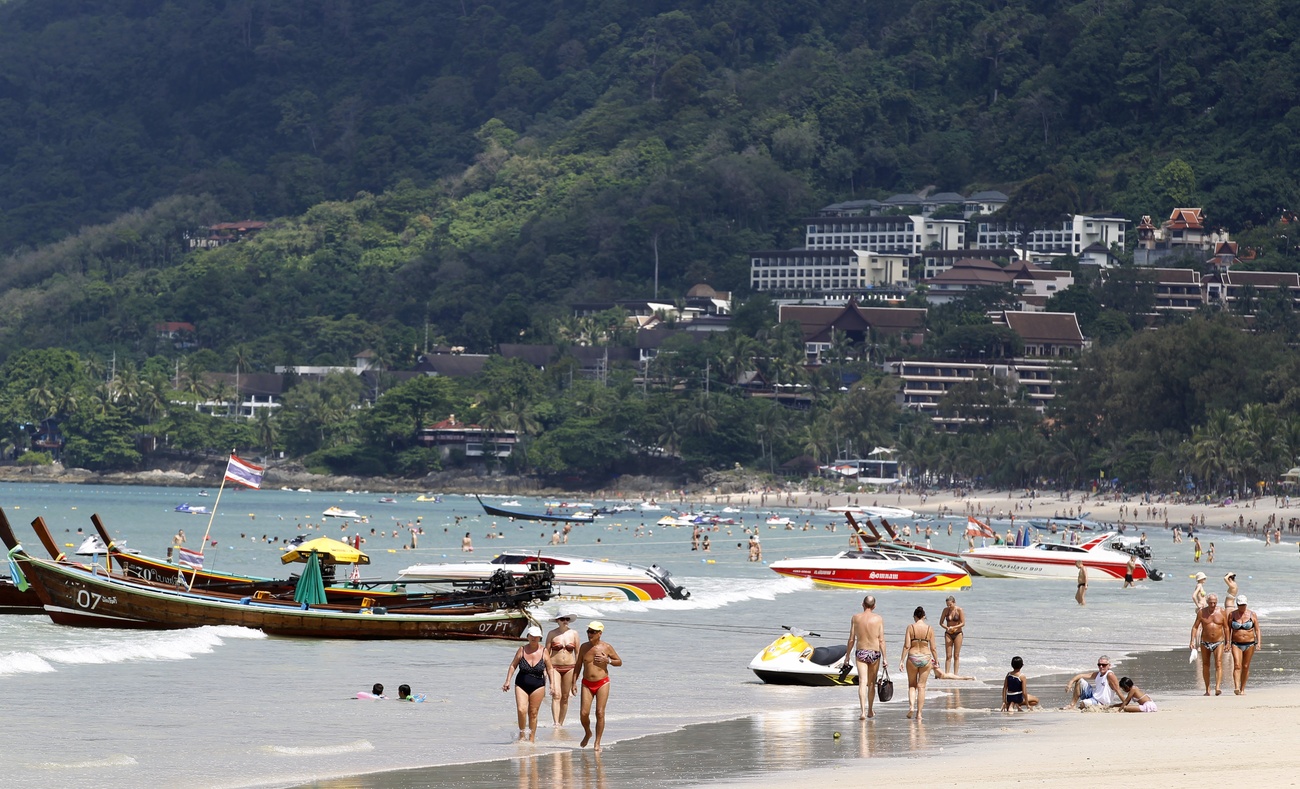
Thailand is a popular destination for pensioners from Switzerland, with many spending several months each year there, especially during winter. But a tightening of visa exemption rules, recently decided by the government, could make life more difficult for them.
Select your language
Generated with artificial intelligence.
Listening:
Thailand tightens visa policy, much to the dismay of Swiss seasonal retirees

“Some pensioners who are not comfortable with digital processes will not want to apply for a visa online and are likely to be affected by the measure,” says Frank Dumoulin, a Swiss national who spends several months a year in Thailand.
The Valais native is referring to the country’s decision last May to reduce the length of visa-free stays from 60 to 30 days for nationals of 54 countries, including Switzerland.
The announced changes were published in the Royal Gazette, Thailand’s official journal, on August 31, 2026. They will enter into force 15 days after publication, on September 15, 2026.
Every year, hundreds of thousands of Swiss tourists travel to Thailand. Tourism professionals estimate that the vast majority make use of the visa exemption granted to Swiss citizens.
External Content
Among them are seasonal retirees who spend part of the winter in the Thai sunshine. Since July 2024, they have benefited from a 60-day visa exemption, with the option of extending it by a further 30 days locally, allowing them to stay for up to three months with very few administrative formalities.
Source of uncertainty
“This change is causing uncertainty within the community,” says Frank Dumoulin. While the Swiss foreign ministry says it has received only a few enquiries so far, “some people are finding it difficult to obtain informationExternal link about the new rules”, says spokesperson Pierre-Alain Eltschinger.
According to Pascale Thibaud, a Swiss woman who has lived in Thailand for just over two years, “these constant regulatory changes mean you have to keep yourself informed all the time”. She adds that it is possible to use agencies, “but you need to be able to afford it”.
>>The tax reform that came into force in January 2024 had also caused considerable uncertainty:

More
Swiss Abroad: fog clears on tax reform in Thailand
Tackling abuse
Before the Covid-19 pandemic, direct tourism revenue accounted for nearly 20% of Thailand’s GDP.
“The ensuing collapse in tourism dealt a severe blow to the country. As a result, Thailand sought to revive the sector through various measures. Relaxing visa requirements was part of this effort,” says Josef Schnyder, representative of the Swiss community in Thailand on the Council of the Swiss Abroad.
The change in visa exemption policy comes as the Thai authorities seek to curb abuses. Several incidents involving foreign nationals have received widespread media coverage in Thailand in recent months, including cases of unauthorised work and people quietly extending their stays.
According to figures from the Thai Ministry of Tourism and Sports, foreign visitors currently spend an average of around nine days in the country. Policymakers have concluded that shortening the visa exemption period is unlikely to have a significant impact on overall tourist demand.
Stricter conditions and checks
In addition to these administrative changes, Thailand has generally tightened its entry requirements.
For example, a person travelling alone must have at least 20,000 baht (approximately CHF480) with them, while a family must have 40,000 baht (approximately CHF970). According to Josef Schnyder, Thai media have reported that by 2025, nearly 30,000 people had already been turned away at the border. “A figure significantly higher than in previous years,” he says.
At the end of the 30-day visa-free period, it will still be possible to extend a stay once for a further 30 days at a cost of 1,900 baht (around CHF46). “Ultimately, however, the decision rests with the immigration officers. So there is always a risk that an application will be refused,” warns Frank Dumoulin.
As administrator of the Facebook group Suisse Romande-Thailand, he says he has received several enquiries from Swiss seasonal retirees. “The fine for overstaying is low (500 baht per day, or CHF12), but it’s better to pay the 1,900-baht extension fee and maintain a compliant immigration record to avoid possible complications when entering the country or applying for future visas,” he advises.
More

No more ‘border runs’
Many expatriates who are not officially registered as permanent residents use the visa exemption to live in Thailand for much of the year by making quick trips across the border, commonly known as “border runs” or “visa runs”. With the move to a 30-day visa-free stay, the need to leave and re-enter the country will double.
“People who do not meet the financial requirements for a proper visa often rely on border runs. For them, the situation is set to become much more complicated,” says Pascale Thibaud. She also believes that “it is partly because of these expatriates operating in a grey area that Thailand is taking a tougher stance”.
The opposite effect
For several years, Thailand has pursued a strategy of positioning itself as an attractive destination for wealthy tourists and expatriates. To that end, it has introduced several visa categories.
“This strategy could also have unintended consequences, notably the risk that some visitors or potential residents may choose other destinations,” suggests Pascale Thibaud. For Frank Dumoulin, however, the chances of seasonal retirees leaving the country are slim. “After the announcement of this change to the visa exemption, some claimed they would move to a neighbouring country. But those countries are nowhere near offering the same quality of life. And those who actually take the plunge usually return to Thailand fairly quickly.”
Review of all visas
The Thai foreign ministry plans to review the entire visa framework, not just tourist visas. It announced this in May.
This has raised concerns among the Swiss community that the rules for obtaining visas will become stricter. “We fear that changes to the conditions attached to certain visas, including the retirement visaExternal link, may require specific insurance cover,” says Frank Dumoulin. This refers to expensive health insurance policies, which often exclude retired people because of their age and are a well-known problem for the Swiss diaspora.
Originally published on July 13, 2026, this article was updated on September 9, 2026, with new information on the entry into force of the new visa exemption rules.
Edited by Samuel Jaberg. Translated from French, sub-edited by Alexandra MV Andrist

In compliance with the JTI standards
More: SWI swissinfo.ch certified by the Journalism Trust Initiative

You can find an overview of ongoing debates with our journalists here . Please join us!
If you want to start a conversation about a topic raised in this article or want to report factual errors, email us at english@swissinfo.ch.