








Kunstmuseum Bern renovation setback shadows director’s tenure

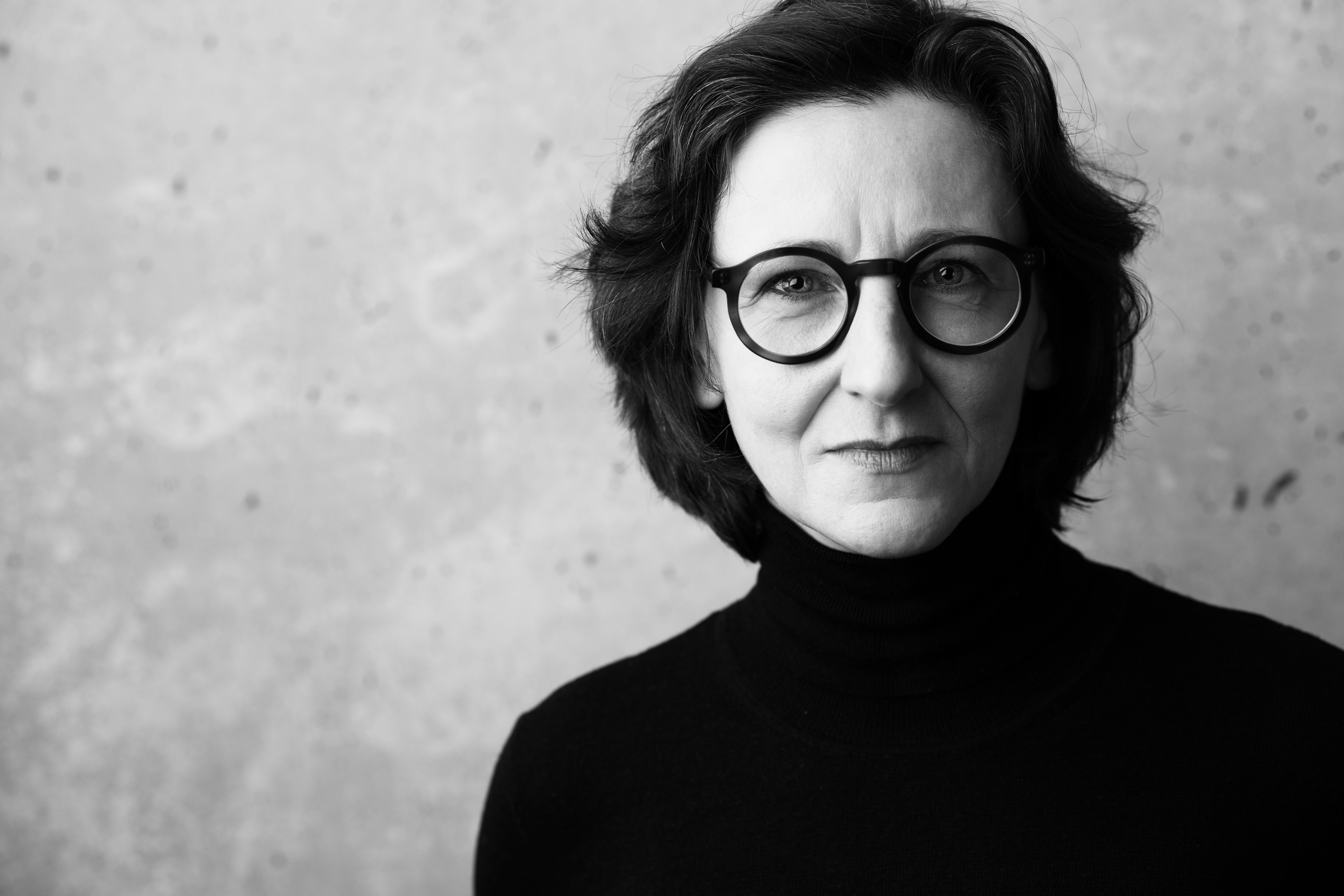
As voters reject financing for a major overhaul of the Kunstmuseum Bern, the Swiss capital’s fine art museum, departing director Nina Zimmer reflects on her future role as director of Vienna’s Galerie Belvedere and on her role in reshaping Switzerland’s approach to Nazi-looted art.
Select your language
Generated with artificial intelligence.
Listening:
Kunstmuseum Bern renovation setback shadows director’s tenure
Towards the end of Zimmer’s eventful and high-profile ten-year term at the Kunstmuseum Bern and Zentrum Paul Klee in the same city, the museum encountered a setback. On June 14, 51.8% of voters in canton Bern rejected the financing of a major renovation and reconstruction project at the Kunstmuseum in a referendum.
The proposed project, costing an estimated at CHF147 million ($181 million), envisages replacing the existing 1983 extension to the Kunstmuseum, which currently houses exhibition space, offices and the café, with a freestanding sandstone building. It also proposed a complete renovation of the original building, known as the Stettler Building.
At issue in the referendum was a credit financing of CHF15.7 million approved by the cantonal parliament in September. A cross-party group of opponentsExternal link gathered the necessary 10,000 signatures to challenge it in a referendum. These opponents recognised that the Kunstmuseum needs renovating but advocated a more modest project.

“We had hoped for a different result,” Zimmer says. “At the same time, we respect the decision of the Bern electorate. The task now is to build on the outcome of the vote and find a new way forward.” The decision, she says, doesn’t mean the end of the project, but “we must now explore new ways of financing it”.
Zimmer’s departure was announced in March, long before the referendum. She is leaving to run Vienna’s illustrious Galerie Belvedere, an appointment the foundation that runs the Kunstmuseum and Zentrum Paul Klee described as an “accolade that honours Nina Zimmer’s previous work”.
The Kunstmuseum said its trustees would conduct a comprehensive review of the renovation project’s financing before deciding how to proceed. So Zimmer has plenty to do over the coming months – there are also four new exhibitions to open before her departure.
Gurlitt collection
But the task that has defined her tenure is complete – at least for the time being. When Zimmer arrived at the Kunstmuseum in 2016, it had recently accepted Cornelius Gurlitt’s bequest – including about 1,600 artworks, many of them works on paper. Gurlitt had inherited the art from his father, Hildebrand Gurlitt, a dealer who had purchased art in Nazi-occupied territories for Adolf Hitler’s planned “Führermuseum” in Linz, which was never built.

In 2012, when Cornelius Gurlitt was still alive, German customs authorities raided his Munich apartment and seized more than 1,200 artworks (he kept more in his home in Salzburg). After the haul became public in 2013, it created an international uproar – and led to a deluge of claims from the heirs of Jewish collectors whose art had been looted by the Nazis.
On his death in 2014, Gurlitt bequeathed all his possessions to the Kunstmuseum Bern: an inheritance the trustees described at the time as “magnificent”, though it entailed “a considerable burden of responsibility and a wealth of questions of the most difficult and sensitive kind”.

It also piqued Zimmer’s curiosity. “I applied in full awareness of the Gurlitt bequest,” she says in an interview at the Kunstmuseum. “It did particularly interest me and was one of the reasons for my application. It was a challenge I wanted to take on.”
The most difficult part of that challenge, she says, proved to be juggling many different aspects of the bequest simultaneously all while “operating under massive media observation from the first second. We had to do everything with a great deal of reflection but communicate it immediately. It was important to be transparent, but it was also challenging”.
Immediate tasks, she says, included coordinating with the German authorities and provenance researchers already investigating the collection, organising its transport from depots in Germany and Austria to Bern, documenting the art and setting up a website and a database, and organising exhibitions – which also required restoring the art, some of which was damaged because of the conditions under which it had been kept. The Kunstmuseum also became the first museum in Switzerland to set up a dedicated provenance research department.

More
Gurlitt at the Kunstmuseum Bern
Challenge but also opportunity
While all this was happening in the background, a clamour of commentators with differing political views opined on public platforms about how the legacy should be handled. “The media attention which was there from the first minute was a challenge but also an opportunity,” Zimmer says. “The attention and the public space that the debate took up meant we could address these concerns, engage with the different political perspectives and convince people of the path we had chosen for the Kunstmuseum Bern – and that found acceptance.”
Since then, the Kunstmuseum has reached agreements with the heirs of Jewish collectors on several works in the collection. It has also had a major impact on how Switzerland addresses the question of Nazi-looted art in public collections. A new Commission for Historically Problematic Cultural Heritage established by the Swiss government took up work on March 1 this year. Many more Swiss museums now have provenance research departments.

“In this whole debate about Nazi-looted art, there’s a ‘before Gurlitt’ and an ‘after Gurlitt’,” Zimmer says. “It changed this whole field. The most important change is that it’s a widely understood subject now – it’s on the agenda. As a public museum, you can no longer decline to take a position on this.”
The Kunstmuseum’s provenance research team is now focused on the museum’s other holdings having completed, at least for now, its work on Gurlitt’s estate. In the bequest, “there is a small group of works, which are not significant works, where decisions still need to be made and further research is needed”, Zimmer says. “As soon as there are new findings, we will re-open the cases. Provenance research is never definitively finished. New material from private archives becomes available, and we can take up cases we thought closed. That has become routine for the Gurlitt research.”
More
Looted art: the woman tackling Switzerland’s historical burden
‘New biographical chapter’
The issue of Nazi-looted art will certainly follow Zimmer to the Galerie Belvedere, which has restituted more than 60 worksExternal link to the heirs of Jewish collectors – including, most famously, Gustav Klimt’s Woman in Gold, the subject of a 2015 film starring Helen Mirren.
“In Austria it’s very different because there’s a restitution law and national structures have been created,” Zimmer says. “In Switzerland, these structures and a law didn’t exist and we had to develop our own structures in Bern. I’m looking forward to getting to know my colleagues there and their working methods.”
The Belvedere, the custodian of several masterpieces by Klimt including the world-famous Kiss, welcomed two million visitors last year – about ten times as many as the Kunstmuseum and Zentrum Paul Klee combined. The Austrian culture minister, Andreas Babler, said Zimmer’s “many years of museum leadership and her ability to handle complex structures and diverse stakeholders with aplomb” had won the selection committee over.

“This is a new biographical chapter for me: to work in this fantastic museum with a collection of huge importance for the whole country,” Zimmer says. She mentions its tradition of digital innovation and the huge diversity of its audience as major attractions.
But after 20 years – during which, as a Munich native, she has adopted Swiss citizenship – she says she will miss Switzerland.
“I admire the political system, the interaction of public and private entities in the culture scene,” she says. “There’s a strong culture of philanthropic foundations in Switzerland, there’s a deeply rooted sense of aestheticism and modernity, and there is broad interest in culture.”
Edited by Virginie Mangin. Sub-edited by ts

In compliance with the JTI standards
More: SWI swissinfo.ch certified by the Journalism Trust Initiative

You can find an overview of ongoing debates with our journalists here . Please join us!
If you want to start a conversation about a topic raised in this article or want to report factual errors, email us at english@swissinfo.ch.