








Jiajia Zhang’s art turns Shanghai into a mirror of modern urban life
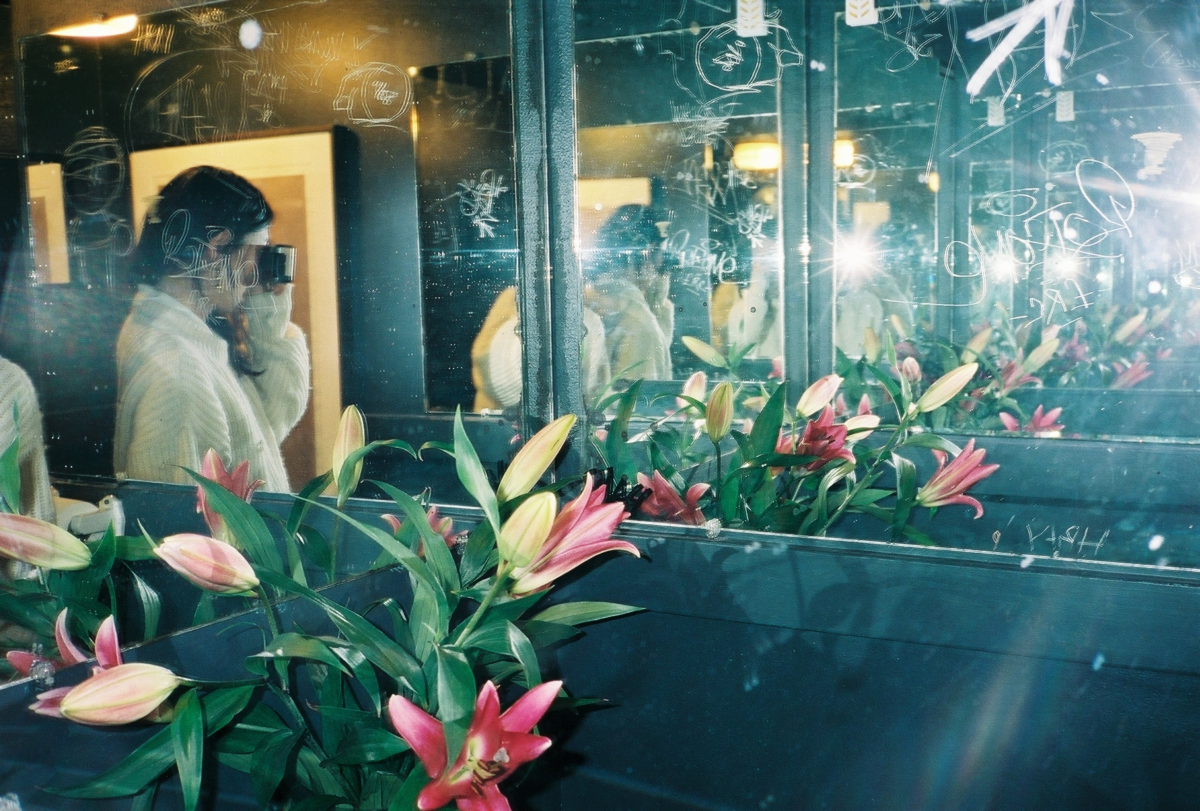
Jiajia Zhang’s ambitious, kaleidoscopic installation
uses video, mirrors, audio narration and song to explore public and private spaces and how technology and architecture shape cities. The Chinese-born, Zurich-based artist showed her Domestic News at the Swiss Institute in New York.
Select your language
Generated with artificial intelligence.
Listening:
Jiajia Zhang’s art turns Shanghai into a mirror of modern urban life
Visitors descending into the Swiss Institute’s lower-level gallery in New York first hear the intermittent clicking of a mechanical billboard echoing through the concrete stairwell. It cycles between colorful flower arrangements and a blank black screen.
The changing images draw on stories the artist, Jiajia Zhang, read in her grandmother’s memoir about the Japanese occupation of China during the Second Sino-Japanese War. In her grandmother’s account, flowers on a windowsill signaled the house was safe for covert political organising meetings. No flowers meant it was not.


The framed display serves as the entry point to Domestic News, Zhang’s first solo institutional exhibition in the United States. Downstairs, the gallery opens into a rounded mirrored chamber where scenes of Shanghai play across five screens, accompanied by a disjointed soundtrack of songs and voices.
Rather than offering a straightforward portrait of the city, Zhang explores how spectacle, infrastructure, and everyday life converge in the contemporary city.
The exhibition’s title, Zhang explained in an interview to Swissinfo, refers in part to the ways people communicate through coded language in public space and its potential to lead to change.
“I think domestic news within the genre of newspapers is a very specific section,” she says. “I was more interested in how these words are composed of the domestic and then the news, as in something more private and news as more public. I think sometimes these domains get blurred.”
Monumental and intimate
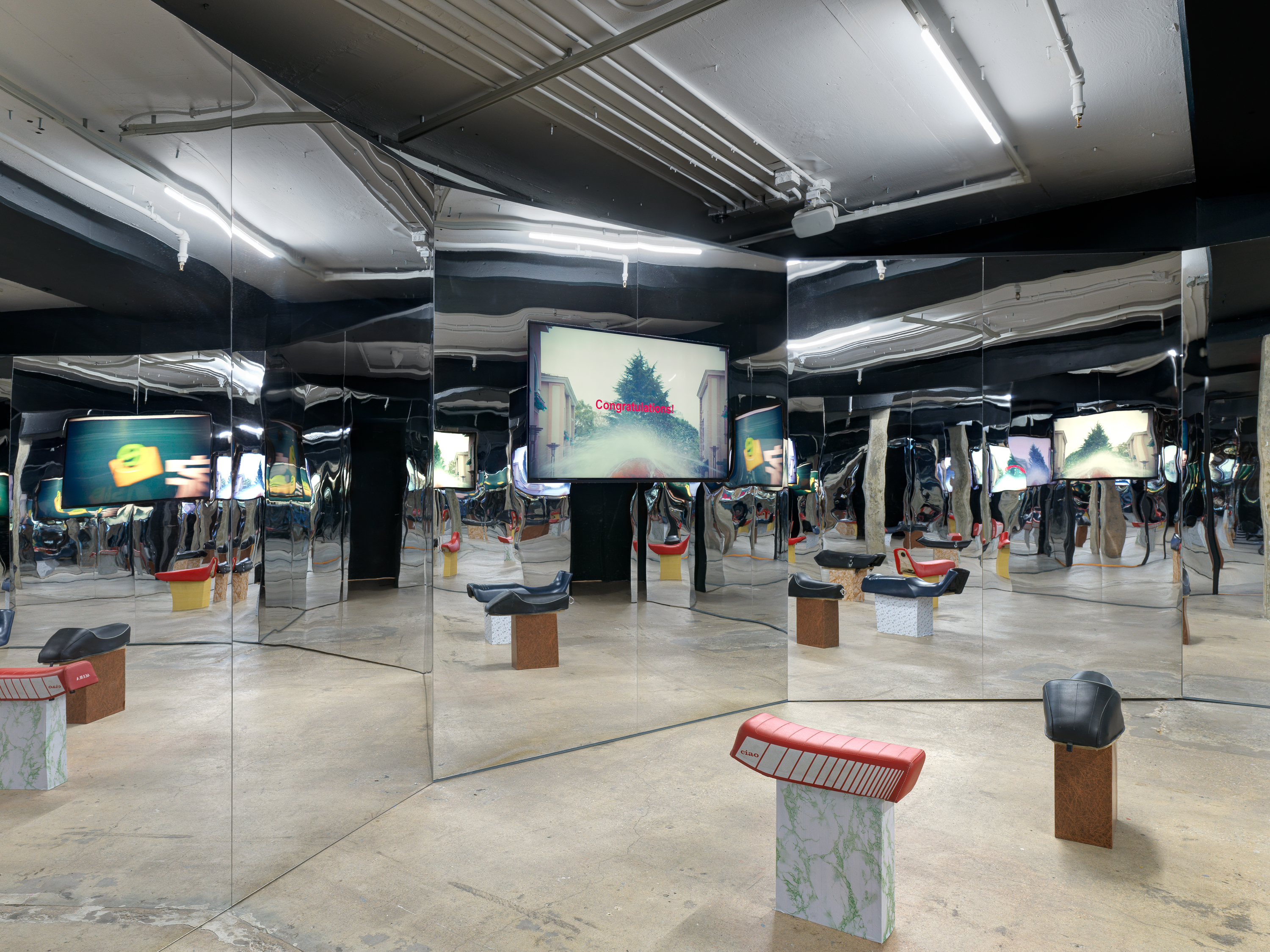
The newly commissioned installation combines video, sound, and architectural elements to provide a kaleidoscopic view of modern-day Shanghai.
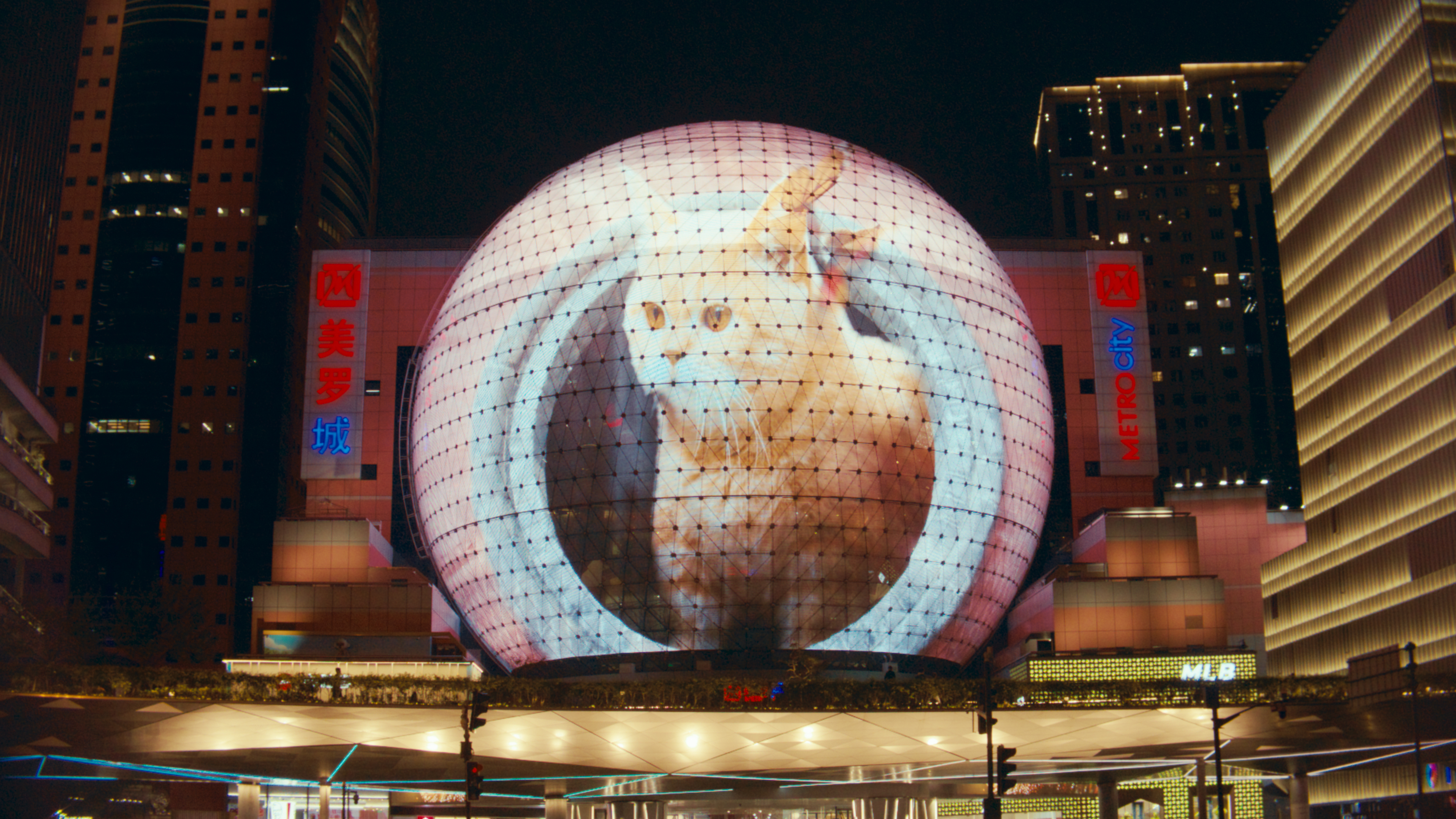
As visitors settle onto motorcycle-saddle stools, inspired partly by the city’s delivery bike drivers, a 22-minute film loop reveals Shanghai in close-ups and sweeping cityscapes: revolving restaurants, the tops of skyscrapers gleaming at night, couples posing for wedding photos, street cleaners at work, people navigating traffic, and an endless parade of LED screens and digital billboards. Reflecting across the mirrored surfaces, the fragmented scenes form a shifting image of Shanghai that feels both monumental and intimate.
The mirrors reflect both the digital screens and the gallery itself, creating what Alison Coplan, chief curator at the Swiss Institute, describes as a layered environment. Like the people featured in the film, viewers become “kind of encased by the architecture and the machines and the information flow of the city.” At the same time, she adds, windows, doors and reflections suggest “ways in and out of it.”

The footage, shot by Swiss photographer Jiří Makovec, is paired with an audio script by London-based writer Aurelia Guo. Using text from various sources, including travelogs, news reports, and legal documents, the narration recounts floods, diasporic experiences, marriage markets, and revolutionary dreams.
Instead of describing the footage directly, the soundtrack runs parallel to it, shifting between Mandarin and English. Zhang said that while she has made numerous videos in recent years, this project feels more ambitious because of its spatial form and its integration with the exhibition environment.
Mirrored cities
The work is part of a larger, three-chapter film Zhang is developing , tentatively titled Tables, Doors, Songs, which will also include pieces on New York and Zurich, two other cities that have been formative for the artist. Born in China, Zhang moved with her family to Switzerland aged six. After studying architecture, she went to New York to pursue photography. She now lives and works in Zurich.
Zhang’s architectural background surfaces throughout the exhibit, particularly in its focus on the built environment, the up-and-down movement in cities, and the boundaries between public and private spaces. The show also prompts reflections on the relationship between Shanghai and New York, architecturally, culturally, and in other areas. This includes the juxtaposition of the polish and shininess of Shanghai’s newer urban environment on display in the basement gallery with the streetscape upstairs just outside the Swiss Institute’s front doors.

Like the surfaces throughout the installation, Zhang said New York and Shanghai reflect one another, sometimes making it difficult to tell which city is influencing the other. “The city is really a place where everything happens,” she says. “Especially with New York as this other site, it immediately opened up this mirroring of these two places, not only architectonically, but also in what they are aspiring to, who can participate in this kind of structure, and who is excluded from it.”
She takes the city as the framework and explores what is happening structurally. The exhibition also draws attention to how technology shapes these urban landscapes and the people moving through them, including the way text, signage, ads, and digital interfaces dominate the environment.
“One thing I think is really special to Jiajia’s work, and I would love other people to see, is the way that digital technologies and machines and advertisements are functioning in the video and shaping so much of the human experience…in ways that are, for them and I think for all of us, conscious or not,” Coplan says. “From the vantage of New York, it might look foreign as something in China, but maybe it could cause one to reflect on their own relationship to these things.”
Good wishes
The installation ends where it begins, with an illuminated fountain and a return to the song Gong Xi Gong Xi (Good Wishes, Good Wishes). Composed in 1945 during the second Sino- Japanese War to celebrate the end of the occupation, survival through the winter, and the arrival of spring, the song has since been recast in mainland China as a New Year anthem.
The tune, Zhang said, is a reminder of the cyclical nature of seasons, years, cities, nations, and lives, and echoes many of the exhibition’s themes. Because the work is so fragmentary and moves in different directions, she added, the song may be what holds it together.
“It is this New Year song that is very common and everybody knows it,” she says. “Its familiarity creates a communal space in which distinctions between high and low are temporarily suspended. It’s also about the circular movements within the year and what kinds of stories get buried, what stories get accentuated, what is visible, and what is drowned within the cycle. The song aspect is quite important. It’s an element that we will repeat in the other chapters.”

Edited by Catherine Hickley and Eduardo Simantob/ds


See more Swissinfo articles in your Google results. Learn more

In compliance with the JTI standards
More: SWI swissinfo.ch certified by the Journalism Trust Initiative

You can find an overview of ongoing debates with our journalists here . Please join us!
If you want to start a conversation about a topic raised in this article or want to report factual errors, email us at english@swissinfo.ch.