








As Switzerland shakes up its foreign aid, will it stay committed to democracy?

The Swiss government plans to revamp its foreign aid approach, shifting money away from longer-term development cooperation and towards short-term humanitarian funding. This could be bad news for its democracy promotion efforts, our analysis shows.
Select your language
Generated with artificial intelligence.
Listening:
As Switzerland shakes up its foreign aid, will it stay committed to democracy?

In May 2025, Switzerland made a foreign policy declaration that ran against the global grain. With the Trump Administration slashing US commitments to democracy promotion globally, and Europe reluctant to fill the gap, Bern put its hand up. It would streamline democracy support across its aid and diplomacy, and work to prevent further declines in freedom where possible, the foreign ministry said in its first-ever “democracy guidelinesExternal link”.
A year on, the pledge still sounds lofty. But the global situation is also still very much in flux. Trump’s sidelining of USAID – the world’s biggest democracy funder pre-2025 – left a gaping hole of $3 billion (CHF2.42 billion) which is still not filled. Other US bodies like the Congress-backed National Endowment for Democracy have survived, but are under pressure. And private philanthropy often fails to focus enough on freedoms and civil liberties, an article in the American quarterly Journal of Democracy recently arguedExternal link.
That leaves a shrinking pool of democracy backers including some European states, Australia, Canada, or Japan. But “while these actors have maintained many of their commitments to democracy aid and democratic values, they have not substantially expanded their pro-democracy engagement to meet the moment”, the Washington-based Carnegie Endowment for International Peace wrote in JuneExternal link. With many European governments more worried about their own defence (or their own democracies), France, Germany, the Netherlands and Sweden have even cut foreign aid. As for the EU, it looks set to boost development funding next year, but without a dedicated budget for democracy.
Switzerland has had a constitutional mandate to back democracy globally since 2000 – how does it do it?
More
A delicate export: how Swiss foreign policy promotes democracy
Nice ideas, unclear funding
And Switzerland? For Carnegie, it is a rare example of a somewhat positive case, having made a “notably prioritised commitment to democracy support in 2025” – largely thanks to the new guidelines. However, there is the usual financial caveat. Like other countries, Switzerland has been cutting foreign aid generally in recent years, citing budget pressures. The question, Carnegie wrote, is how this will affect democracy funding.
A more recent announcement about the future of Swiss aid could offer clues if not clarity. On June 24, the government outlined its plansExternal link: by 2030, the focus will shift more towards short-term humanitarian aid and away from development cooperation – i.e. the type of long-term projects where democracy promotion often happens. The shift in priorities was spurred by budget constraints and global “realities”, Foreign Minister Ignazio Cassis told media at the time – more crises, more wars, more emergency needs.
So far, Cassis’ foreign ministry has not given details about what the revamp means for democracy specifically. Despite the big numbers involved – Swiss development cooperation will drop by almost 23%, or CHF300 million ($372 million) by 2030, while humanitarian aid will jump by 61%, or CHF330 million – it is still “too early to determine” how this will affect democracy promotion programmes, it told Swissinfo. The impact is “currently being assessed”.
External Content
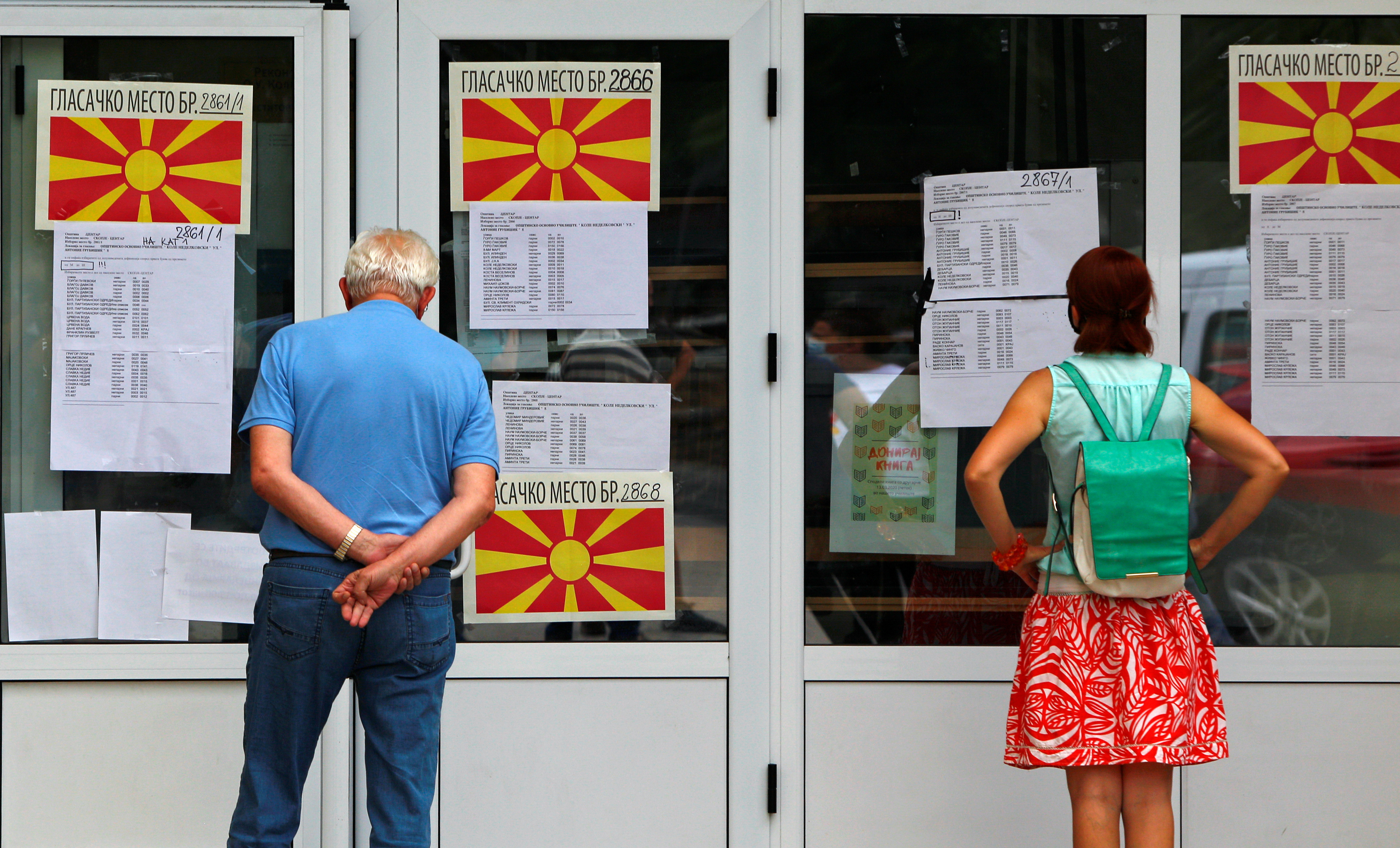
It’s not hard to imagine negative spillover. Swiss democracy support is often embedded in development cooperation projects: backing parliamentary independence in Macedonia, decentralised governance in Kosovo, or woman’s literacy in Arab countries, for example. Some CHF250 million was allocated for such work in 2024 – around 10% of the total Swiss international cooperation budget. With funds shifting towards humanitarian aid, the pot shrinks.
Read more about how Switzerland is ending its development projects – including democracy promotion – in Bangladesh:

More
Switzerland withdraws from democracy support in Bangladesh
Latin America withdrawal
New geographic priorities also might not be kind to regions under authoritarian pressure. Bern will finally phase out all development cooperation in Latin America, for example: “Switzerland can’t be everywhere”, as Cassis said in June. Yet this comes as the continent has been facing anti-democratic trends for decades; it also jars with the repeated mentions of the importance of democracy in the Swiss government’s Americas Strategy for 2026-2029.
A departmental overhaul in aid management could also have effects. Previously, projects were sometimes run by the foreign ministry, sometimes by the State Secretariat for Economic Cooperation (SECO), with some overlap. In future, the policy is “one country, one department”: the foreign ministry will take care of low-income regions like Africa, with SECO taking the EU, Western Balkans, and some of Asia. The justification is that certain regions are now more suited to SECO’s trade-and-investment approach, rather than development cooperation. What will this mean for governance-based projects in places like Kosovo, which may not bring tangible economic benefits?
Read how USAID’s withdrawal from North Macedonia has highlighted the importance of other democracy supporters:

More
What USAID’s withdrawal means for North Macedonia
Fighting fires and preventing them
That said, not all Swiss democracy promotion is tied to development aid. The 2025 guidelines list another approach: “diplomacy for democracy”, or using bilateral and multilateral dialogue to push democracy as an attractive model. On this front, budget specifics are also hard to predict, but cuts could loom: the government plans to save CHF11 million annually by 2030 in the area of “peace and security”. Here, the foreign ministry’s peace and human rights division might well be affected – the division responsible for “diplomacy for democracy”.
Meanwhile the overall shift in approach – which means 100 lost jobs, mainly outside Switzerland – has come in for criticism. The left-wing Social Democrats slammed a “razing of development cooperation”. Some 27 foundations, including those funded by heavyweights like tennis star Roger Federer or reinsurance company Swiss Re, urged the government to reconsider, fearing damage to Swiss values – not to mention stability and security globally. And Alliance Sud, an umbrella organisation for aid NGOs, said the new humanitarian focus was like beefing up the fire brigade to the detriment of fire prevention.
A somewhat similar logic underpins Swiss democracy promotion. Here too, the goal is less about long-term promotion than shorter-term protection. “In the context of the global democratic recession, our goal has never been, and cannot be, to expand the democratic world. Rather, we must secure it,” the foreign ministry’s Tim Enderlin said last yearExternal link when introducing the guidelines.
Whether this reflects a lack of ambition or a pragmatic response to a hostile world depends partly on political perspective. Yet what is clear is that even the more modest goal of shoring up democracy needs funding. And with less available in future for development cooperation in general, it remains to be seen how much will be left for democracy.
Edited by Benjamin von Wyl/ds

In compliance with the JTI standards
More: SWI swissinfo.ch certified by the Journalism Trust Initiative

You can find an overview of ongoing debates with our journalists here . Please join us!
If you want to start a conversation about a topic raised in this article or want to report factual errors, email us at english@swissinfo.ch.