








Switzerland’s role in Tajikistan’s controversial mega-dam

Tajikistan’s authoritarian government is building the world’s highest dam with World Bank financing. Critics say there may have been irregularities in the project. Tajikistan belongs to the World Bank voting constituency led by Switzerland.
Select your language
Generated with artificial intelligence.
Listening:
Switzerland’s role in Tajikistan’s controversial mega-dam
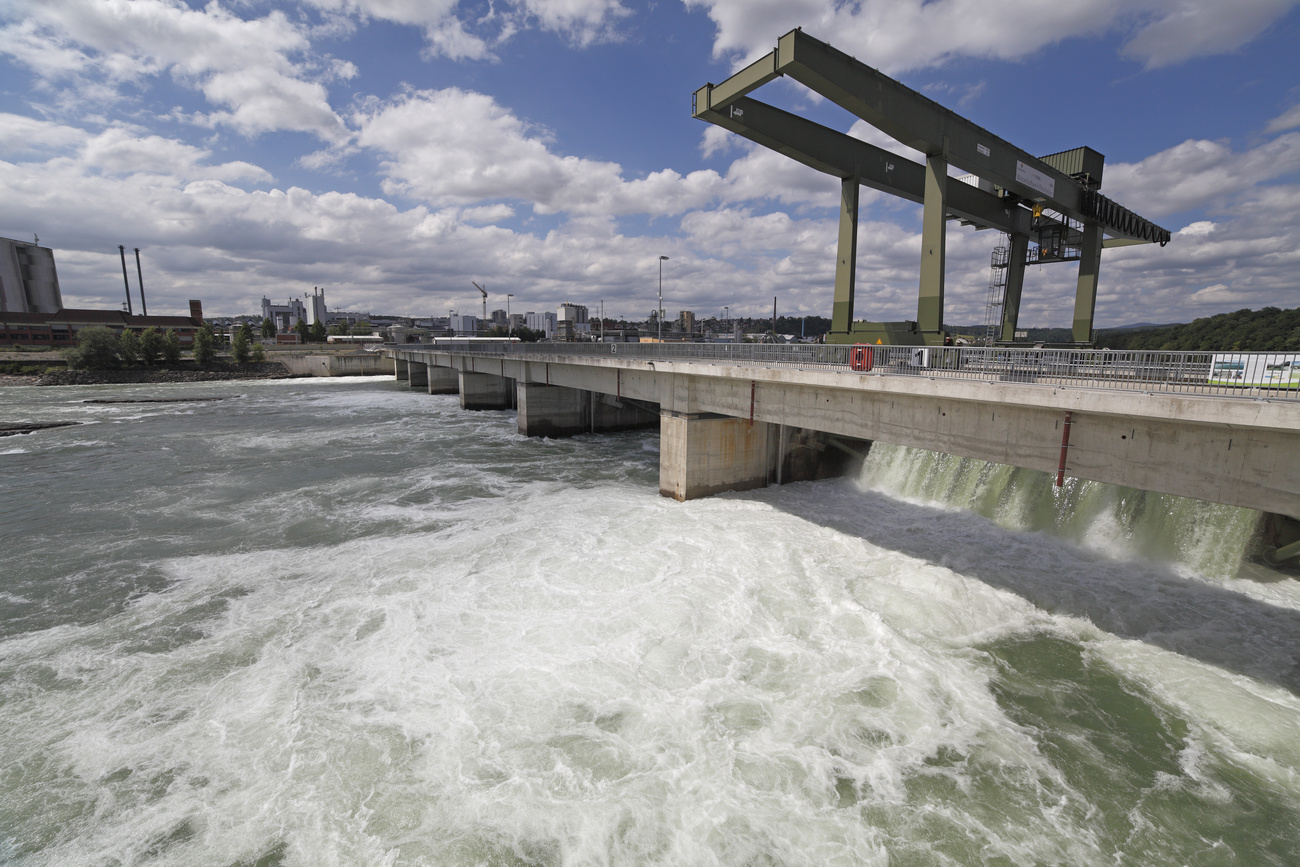
When completed, the Rogun Dam in Tajikistan is set to stand 335 metres high. It would be the world’s highest hydroelectric dam, and the government is presenting it as a national symbolExternal link. Tajikistan’s long-serving ruler, Emomali Rahmon, has even cast the project as a matter of “life and death”External link. The government promisesExternal link that Rogun will solve the country’s electricity shortages, especially during the cold winter monthsExternal link.
The $6.29 billion (CHF5.09 billion) mega-project is being financed by international lenders led by the World Bank – a notable shiftExternal link for the institution. The bank funded countless dams in the 20th century, but between 2014 and 2024 it financed only one large project of this kind. Dams often bring drawbacks. They can take decades to come online. They disrupt river systems, and often affect ecosystems and local communities.
Why Rogun is controversial
At the World Bank, Tajikistan belongs to “Helvetistan”, a voting bloc led by Switzerland. Switzerland created the constituency in 1992 when it joined the International Monetary Fund and the World Bank after the end of the Cold War. The group brought together several former Eastern Bloc states in Central Asia and Eastern Europe, whose interests are represented on the World Bank’s board of executive directors (the Board)External link by the Swiss executive director. The Board decides whether to finance individual projects, including Rogun.
What is the so-called Helvetistan Group and what does it do? Find out in our video:
In 2024, the World Bank approved an initial $350 millionExternal link loan to Tajikistan’s authoritarian government. The bank says the dam will improve access to electricity for ten million people. Other development banks and international institutions are also helping to finance the project, including the European Bank for Reconstruction and Development and the EU. The State Secretariat for Economic Affairs (SECO) told Swissinfo that Switzerland recognised “great potential” in Rogun and “its strategic importance for regional energy security and integration”.
Despite the dam’s promised benefits, there are still longstanding concerns. At least 40,000 people face resettlement as part of its construction. In 2014, Human Rights WatchExternal link documented human rights violations linked to resettlements that had already taken place.

Environmentalists warn that the Rogun Dam could threaten the Tigrovaya Balka Nature ReserveExternal link, a UNESCO World Heritage Site, and damage biodiversity in the Amu Darya River, especially rare fish speciesExternal link. The region is also highly prone to earthquakesExternal link. In 1949, an earthquake close to where the dam is being built triggered a landslide that buried two villages.
Critics say the current design for the dam is not the only optionExternal link. Lowering the height of the dam would mean resettling far fewer people. Also, wind and solar power are becoming more affordable alternatives to hydropower, especially as Rogun is unlikely to become operational before 2033External link.
Switzerland is actively involved in what is known as ‘water diplomacy’ – read more about it here:

More
What Switzerland is doing to prevent disputes over water
The Rogun Dam’s powerful backers
“International observers agreed that the project was madness,” says Filippo Menga, a researcher at the University of Bergamo who has published several studies on the Rogun Dam and nationalism in Tajikistan. “So the question is, why are the World Bank and the EU still supporting it?”
The Soviet Union began building the dam in 1959. After the Soviet Union’s collapse, work stalled and was not resumed by the Tajik government until 2008. Today, the dam is around 30% completeExternal link.

In 2015, Menga arguedExternal link that the dam carries major symbolic significance for President Rahmon. One sign of this was the government’s insistence on a height of 335 metres, despite international experts saying the optimal design would be around 50 metres lower.
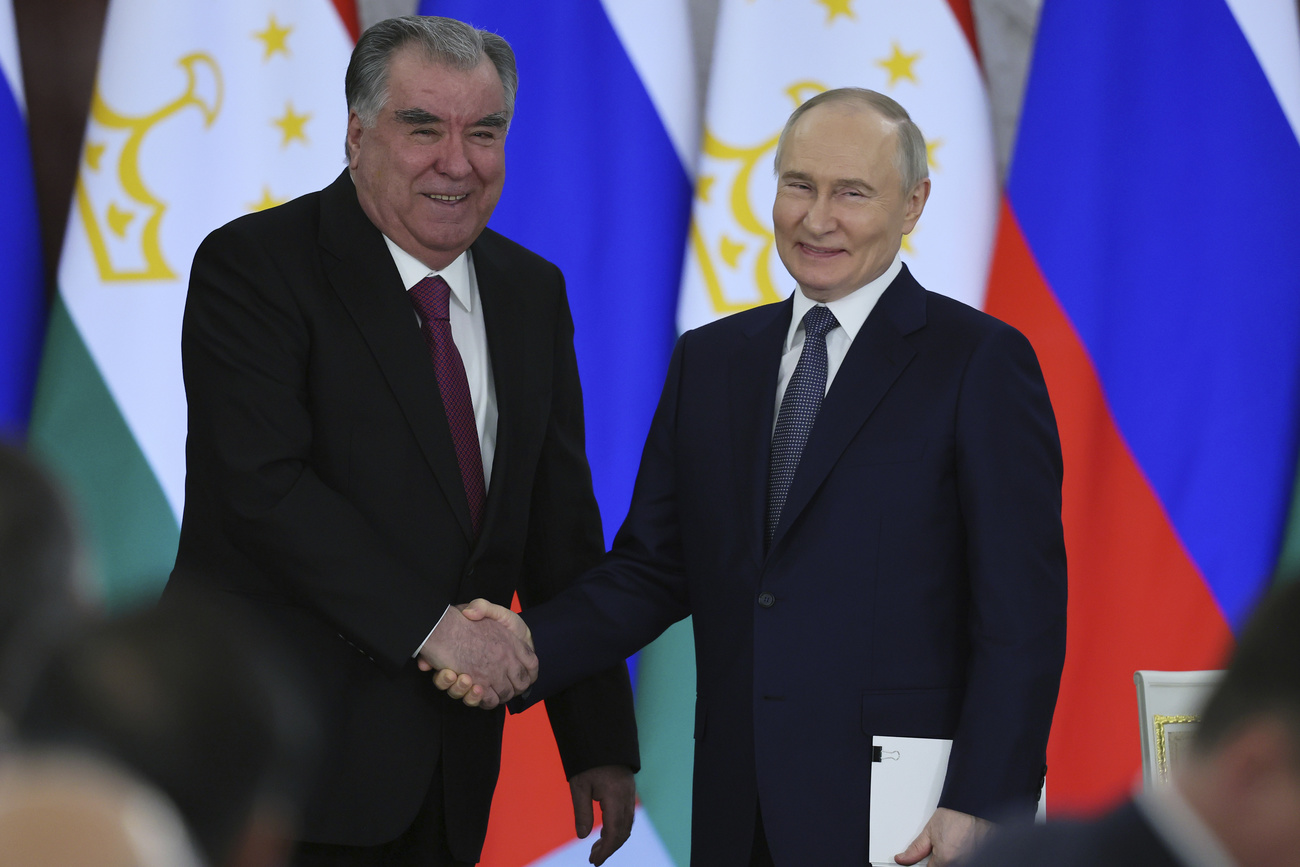
Read more here about relations between Tajikistan and Switzerland:
More
Promoting democracy in authoritarian Tajikistan – is Switzerland making a difference?
The Rogun dam has now seen a major surge in international support. “Today numerous institutions and governments absolutely want to build this dam. The discourse has shifted.” In Menga’s view, this is the result of “years of relentless diplomatic work by the Tajik government”.
Some observers suspect geopolitics is also driving the World Bank’s support for the dam. By backing the project, Western governments may be seeking to strengthen their influence in Central Asia. Russia, for exampleExternal link, is not involved in financing Rogun, while the EU has pledged more money than it has for any other hydropower project. “It is realistic to assume that part of the World Bank’s motivation was to keep Russia out,” Artemy Kalinowsky, a history professor at Temple University in the United States, told EuractivExternal link.
Fritz Brugger of ETH Zurich’s NADEL institute says big infrastructure projects are never purely technical. They can shape politics within a country and across a region. “A financing decision by the World Bank can therefore also affect political dynamics,” he says. That may also be a factor in the Rogun dam project.

Can anyone file a complaint?
The World Bank faced criticism after its decision in February 2025 to finance the controversial project. Two people from Uzbekistan and Turkmenistan filed a complaintExternal link with the bank’s independent oversight body, known as the Inspection Panel. The panel reviews complaints and recommends what action the World Bank’s executive board should take.
The complaint argued that the World Bank’s social end environmental assessment of the Rogun project was inadequate. According to the two applicants, the bank relied on outdated data and failed to address key concerns, including the risk that reduced downstream water flows could have irreversible consequences for an already fragile ecosystem. The also argued that the dam would seriously harm at risk wildlife and local communities.
The complaint also alleged the World Bank had failed to ensure effective environmental and social safeguards for the project. “Because of the factors mentioned, we believe that the current project proposal does not meet the World Bank’s requirements, and that the World Bank is not doing enough to ensure that it does,” it states. The two applicants said they had repeatedly drawn attention to these issues before the financing decision, but that management had failed to engage seriously with their concerns.
In a statementExternal link, the World Bank’s management rejected the complaint on procedural grounds. The complaint was considered inadmissible because the two applicants were from Uzbekistan and Turkmenistan, rather than Tajikistan, the country receiving the project financing. It maintained that only people from the borrowing country were eligible to file a complaint.
The bank noted that it had already looked closely at the issues in question and would continue to monitor potential risks during the project’s implementation. Tajikistan’s government pledged to honour the water flow agreements with its neighbours. The World Bank said it had applied its standards and procedures “correctly and thoroughly”.
The Inspection Panel, however, disagreed. In its responseExternal link, it said the complaint was admissible. “[The complainants] refer to possible impacts of the project in Tajikistan on downstream water volumes in Uzbekistan and Turkmenistan,” the panel wrote. Based on previous cases, the panel says people in other countries can bring a complaint if they are directly harmed by a project. It also noted that the World Bank’s executive directors had accepted cross-border cases before, including one involving the Yacyretá hydropower plant between Paraguay and Argentina.
According to the Inspection Panel, only a comprehensive investigation into due diligence and monitoring could determine whether the World Bank had met its own standards. The panel therefore recommended that an investigation be opened.
Read more here about development banks and their roles:

More
What are development banks and what do they do?
A decision under scrutiny
At a meetingExternal link in November 2025, the World Bank executive directors rejected the call for an investigation. “Normally, when the Inspection Panel recommends an investigation, the Boards accept it without objection,” says Eugene Simonov, an adviser to the complainants and coordinator of the NGO network Rivers without Boundaries International Coalition.
But not in this case. Why did the World Bank’s Boards decide not to act on the panel’s recommendation, when it had accepted cross-border complaints in comparable cases? Why is the World Bank supporting a project that is so controversial? And where does Switzerland fit into the picture?
Fritz Brugger of ETH Zurich’s NADEL institute says Switzerland’s legal responsibility is no greater than that of other members of the World Bank’s Boards. But leading the Helvetistan constituency gives Switzerland influence and creates possible conflicts of interest.
“It has to coordinate its position with the other members of the group,” Brugger says. That gives Bern access to the bloc’s representatives and allows issues to be discussed in greater depth. At the same time, Switzerland has an incentive to accommodate other members, because they depend on one another’s votes on other issues.
SECO said it was aware of the criticism set out in the complaint.
Tajikistan has a strong interest in preventing further scrutiny of the Rogun project. But what happened behind closed doors at the World Bank’s Boards and within the Helvetistan group remains unclear, including whether Tajikistan sought to sway the group’s decision in its favour.
Because votes on the World Bank’s Boards are confidential, SECO would not say how Switzerland voted. “Switzerland and its voting constituency at the World Bank attach great importance to the World Bank’s independent accountability mechanisms. They therefore analysed in detail the Rogun complaint and the recommendation of the Inspection Panel,” SECO stated. It noted the case is now closed following the World Bank executive board’s rejection of an investigation.
Some observers see a wider problem in the World Bank’s complaints procedure. If the Board must approve an investigation before the Inspection Panel can act, it limits the panel’s independence, says someone familiar with the process who asked to remain anonymous. The African Development Bank took a different pathExternal link in 2021, changing its rules so that its accountability mechanism has sole authority to decide whether an investigation goes ahead.
For Menga, the World Bank’s backing for the Rogun Dam could come at the cost of its credibility.
Edited by Benjamin von Wyl. Adapted from German by David Kelso Kaufher/ds

More
Our newsletter on geopolitics

In compliance with the JTI standards
More: SWI swissinfo.ch certified by the Journalism Trust Initiative

You can find an overview of ongoing debates with our journalists here . Please join us!
If you want to start a conversation about a topic raised in this article or want to report factual errors, email us at english@swissinfo.ch.