








Swiss public backs development aid even as politicians cut budgets

Select your language
Generated with artificial intelligence.

Listening:
Swiss public backs development aid even as politicians cut budgets
Many countries are cutting development aid despite public support for maintaining it. Economists Dina Pomeranz and Deborah Kistler explain what the data reveal.

A large majority of Swiss voters support funding for development cooperation, and many would like to see that funding increased. Only 14% favour cuts. Figures also point to the importance voters attach to Switzerland’s humanitarian tradition. This support is much stronger than in other countries.
Despite today’s uncertain economic and geopolitical climate, Swiss voters still see fighting global poverty and supporting development cooperation as important. Two recent representative surveys from the federal technology institute ETH Zurich confirm this. The studies were conducted separately by the Military Academy at ETH Zurich with the Center for Security Studies, and by the Center for Global Cooperation and Sustainable Development (NADEL). Both surveys found that a narrow majority would even like public spending in this area to be increased.
Only about one in three voters wants Switzerland to spend more on the army and defence. Yet parliament has approved increases to military spending while cutting development cooperation.
The NADEL survey also examined voters’ specific priorities for development cooperation. While in current budget debates, politicians often argue that it should bring direct benefits for Switzerland, the study shows that voters appear to take a broader view. They put global security first, followed by addressing climate change, and reducing global inequality. Securing economic advantages for Switzerland ranks much lower.
Respondents are also very clear about what they want development aid funds to be used for. Basic needs such as education, health, food security and agriculture topped the list.
More
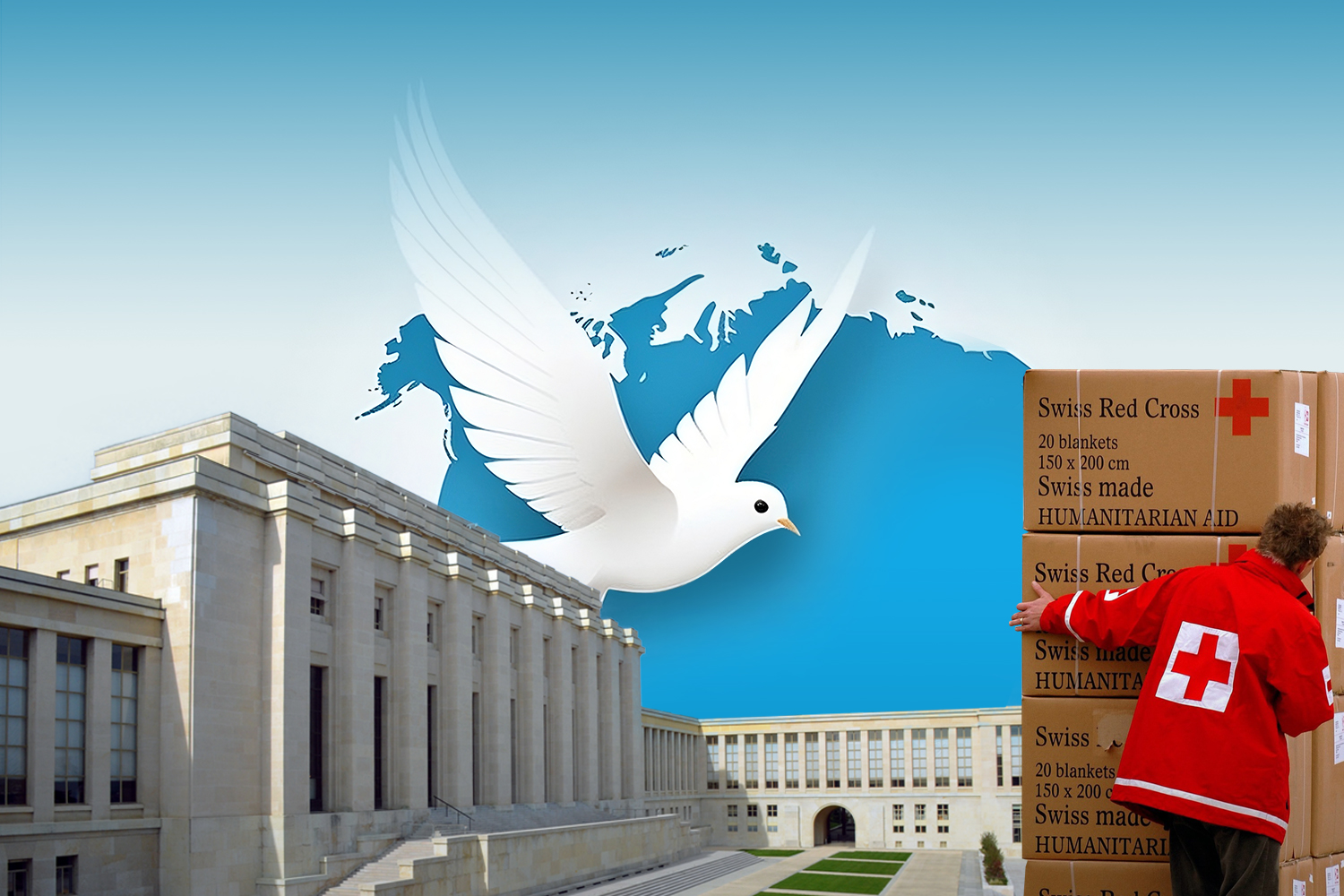
Inside Geneva: what’s the point of foreign aid?
Swiss backing of aid stands out internationally
People in many developed countries are in favour of development aid. Studies from 2025 show that majorities in Germany, France, the UK and the US also want development spending to be maintained or increased. But support is much stronger in Switzerland, where it is 86%. This compares with 64% in the US and France, 59% in Germany and 51% in the UK.
In many countries, a gap is opening between what the public wants and what governments and parliaments decide. Across OECD countries, development cooperation spending has fallen by almost 30% since 2023 – a record decline.
In Switzerland, cuts began earlier. The country spent 0.45% of gross national income (GNI) on development cooperation in 2021, but the share had fallen to 0.36% by 2025. In December that year parliament approved further reductions, pushing Switzerland even further below the internationally agreed target of 0.7% of GNI.
Development aid delivers measurable results
Supporters of the cuts often argue that development cooperation has little effect or may even be counterproductive. Research clearly shows that when well targeted, it can produce measurable results. Better data and scientific methods such as randomised field studies now make these effects much easier to measure.
In the area of healthcare, for example, vaccinations, malaria prevention programmes and better access to basic services sharply reduce child and maternal mortality. In education, school meals, deworming tablets and scholarships raise school attendance and, in turn, future earnings. Infrastructure projects, from clean water to roads and bridges, can also increase incomes and improve access to markets, healthcare and education.
Switzerland now has a rare chance to build on these positive outcomes. Esther Duflo and Abhijit Banerjee, two Nobel prize winners in economics whose work has made a decisive contribution to research on the impact of development cooperation, are moving from the Massachusetts Institute of Technology to the University of Zurich in summer 2026.
Budget cuts with severe consequences
Given the clear benefits of development aid, it is not surprising that the enormous cuts are already having massive consequences. One study on the closure of the US development agency USAID estimates that between 500,000 and one million people died in 2025 due to the abrupt end of healthcare and humanitarian aid programmes.

More
Five charts to explain the world’s food crises
In Yemen, cuts to the World Food Programme left 2.4 million people, including 100,000 children, without food aid. In East Africa, the Ebola crisis shows the devastating consequences of shrinking development funding. The outbreak was detected late after infections had already spread. There is now a shortage of medicines, protective equipment and vaccines needed to stop it from spreading further.
Cuts to development cooperation have concrete consequences and can be a matter of life and death. Once projects are stopped, relationships and programmes built up over many years cannot be quickly replaced.
For Switzerland, the stakes are particularly high. Its development cooperation has long rested on a reputation for reliability, trust and long-term commitment. Abrupt project cancellations risk damaging that reputation. Considering the broad public backing for aid, political decisions about it need to be weighed carefully. Cutting it will have far-reaching consequences.
The views expressed here are those of the authors and do not necessarily reflect those of Swissinfo.
Edited by Benjamin von Wyl. Adapted from German by David Kelso Kaufher/ts

More
Our newsletter on geopolitics

In compliance with the JTI standards
More: SWI swissinfo.ch certified by the Journalism Trust Initiative

You can find an overview of ongoing debates with our journalists here . Please join us!
If you want to start a conversation about a topic raised in this article or want to report factual errors, email us at english@swissinfo.ch.