








Report shows anti-Semitic character of Wagner’s years in Lucerne
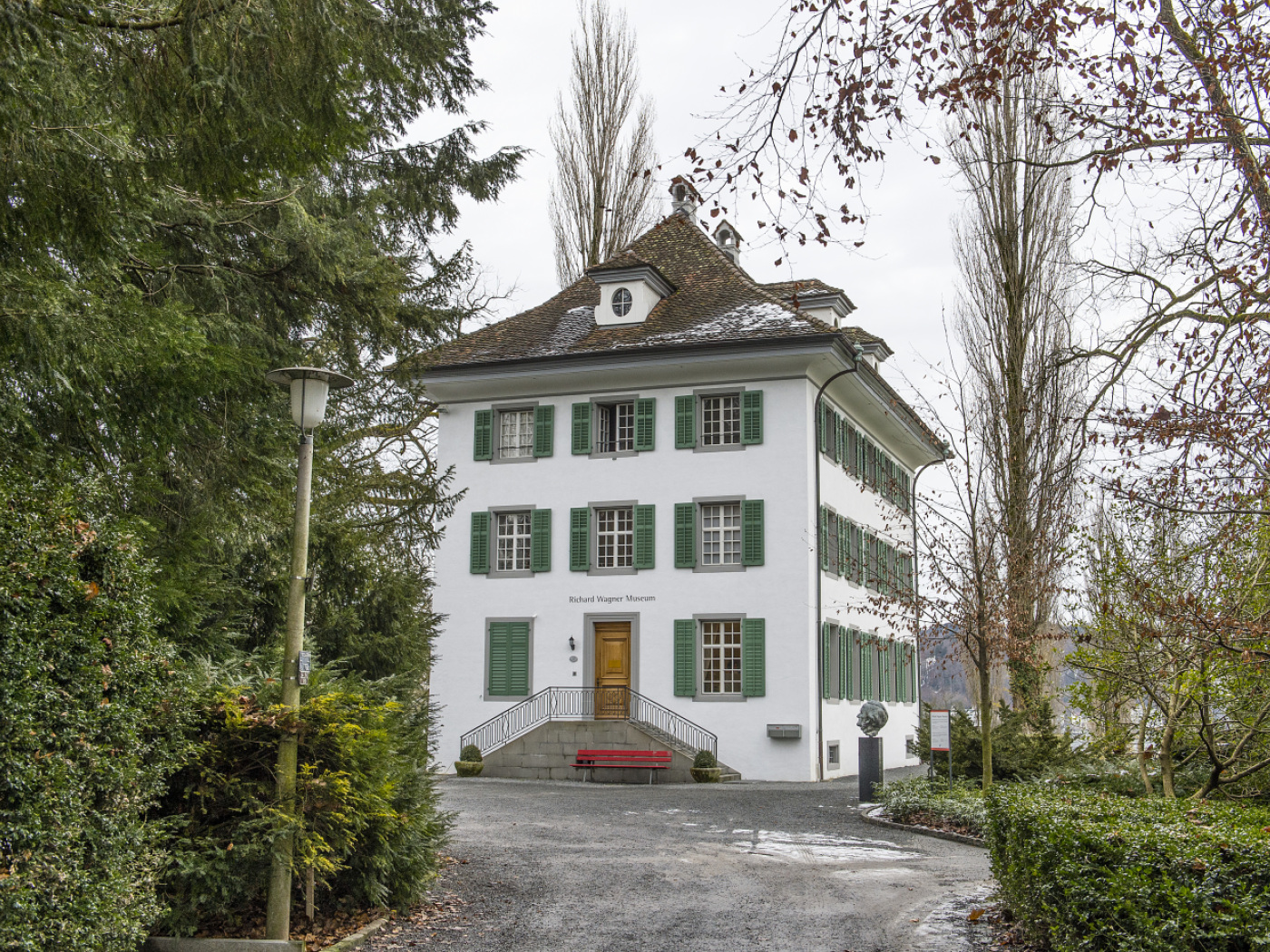
The city of Lucerne and the Richard Wagner Museum have commissioned a scientific investigation into the history of Wagner in Lucerne for anti-Semitic references. A 58-page report shows that the composer's anti-Semitism was "very clear and unmistakable".
+Get the most important news from Switzerland in your inbox
The founding of the museum in the 1930s also took place in a contaminated environment, the city announced in a press release on Tuesday.
The investigation was triggered by a postulate from the left-wing Social Democratic Party and the Green Party in the city parliament in 2023, which called for a critical review of the permanent exhibition. The Swiss Society for History then investigated Wagner’s time in Tribschen and the creation of the museum between 1931 and 1956. A scientific advisory board accompanied and scrutinised the project.
+ Anti-Semitism in Switzerland: ‘You’re insulted but you’re not supposed to feel it’
Richard Wagner (1813-1883) lived on the Tribschen peninsula in Lucerne from 1866 to 1872. He completed the operas Die Meistersinger von Nürnberg and Siegfried there, worked on Götterdämmerung and composed the Siegfried Idyll.
The report by historian Patrik Süess states that Wagner further consolidated key parts of his “anti-Semitic” and “radical nationalist stance” during his years in Lucerne. The study also points to links between individual players involved in founding the museum and Nazi circles.
In the press release, the city of Lucerne emphasises that anti-Semitism is “incompatible” with its principles. The Richard Wagner Museum therefore deliberately addresses Wagner’s anti-Semitic statements “transparently, critically and without whitewashing”. Both the city government and the museum would “consistently” distance themselves from Wagner’s anti-Semitism, it said.
According to the press release, the findings of the research report will be incorporated into a special exhibition, new educational programmes for schools, guided tours and a new museum book from 2027.
Adapted from German by AI/ts
We select the most relevant news for an international audience and use automatic translation tools to translate them into English. A journalist then reviews the translation for clarity and accuracy before publication.
Providing you with automatically translated news gives us the time to write more in-depth articles. The news stories we select have been written and carefully fact-checked by an external editorial team from news agencies such as Bloomberg or Keystone.
If you have any questions about how we work, write to us at english@swissinfo.ch
External Content

In compliance with the JTI standards
More: SWI swissinfo.ch certified by the Journalism Trust Initiative

You can find an overview of ongoing debates with our journalists here . Please join us!
If you want to start a conversation about a topic raised in this article or want to report factual errors, email us at english@swissinfo.ch.