








Inside Geneva: who controls landmines and drones?
On Inside Geneva, we are discussing weapons contamination and the harm it causes.
Select your language
Generated with artificial intelligence.

Listening:
Inside Geneva: who controls landmines and drones?

Inside Geneva
Subscribe to
-
 Apple PodcastsExternal link
-
 SpotifyExternal link
-
 YouTubeExternal link
-
 Amazon MusicExternal link
-
 iHeartRadioExternal link
-
 Podcast IndexExternal link
-
 CastboxExternal link
-
 OvercastExternal link
-
 Pocket CastsExternal link
-
 Podcast AddictExternal link
-
 DeezerExternal link
-
 Listen NotesExternal link
-
 PodchaserExternal link
-
 Player FMExternal link
-
 CastroExternal link
-
 GoodpodsExternal link
-
 True FansExternal link
-
 PandoraExternal link
- Buzzsprout RSS Feed External link
External Content
“We have at least one casualty every single day in Afghanistan – someone killed or injured –and it is most likely a child,” says Nick Pond, the Chief of Mine Action Section in the United Nations Assistance Mission in Afghanistan (UNAMA).
More
‘Ukraine can be a tipping point’ for ridding the world of landmines
From old conflicts to new.
“Ukraine is the breadbasket of Europe and billions of square metres of land are suspected to be contaminated, which means the land can’t be farmed,” says Paul Heslop, from the UN Mine Action, Ukraine.
And from old weapons to new.
“This is proliferating well beyond Ukraine. Ukraine and Russia are the two leaders in drone technology, but the level of proliferation is scary,” says Sean Moorhouse, technical adviser for mine action, at the UN Development Programme.

More
Inside Geneva: the laws that changed the world, and the people who fought for them
In response to Russian aggression, the Baltic states are pulling out of the Mine Ban Treaty.
“We did not say yes to landmines; we said no to unilateral disarmament constructs,” says Jonatan Vseviov, Secretary General of the Estonian Ministry of Foreign Affairs.
But others are joining.
“We heard that Lebanon will be joining the convention. This is a massive achievement and a massive push for the convention itself,” says Rana Elias, from the Geneva International Centre for Humanitarian Demining.
More
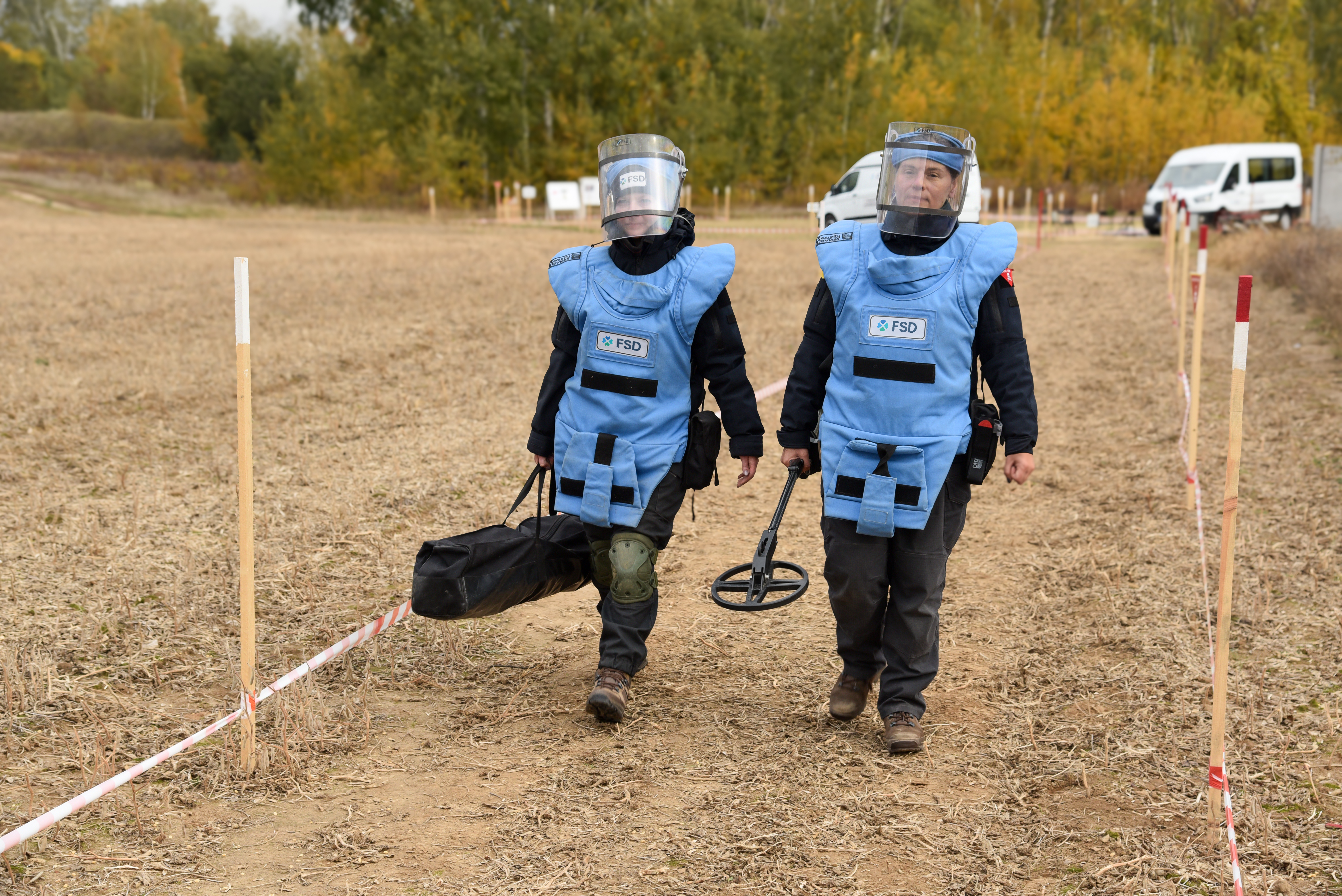
Key facts about Switzerland’s demining conference for Ukraine
As warfare changes, weapons contamination becomes more complicated. Who is responsible when a weapon fails to hit its target and harms someone years later? Who should pay for the clean‑up? And are we turning away from our opposition to indiscriminate weapons?
Join host Imogen Foulkes on Inside Geneva to listen to the full episode.
Find out more about the ‘Inside Geneva’ podcast and our other Swiss podcasts in English here.
Subscribe below to the ‘Inside Geneva’ newsletter to make sure you never miss a new episode.
External Content

In compliance with the JTI standards
More: SWI swissinfo.ch certified by the Journalism Trust Initiative

You can find an overview of ongoing debates with our journalists here . Please join us!
If you want to start a conversation about a topic raised in this article or want to report factual errors, email us at english@swissinfo.ch.