








Climate change ‘shifting Europe’s wine-growing regions’
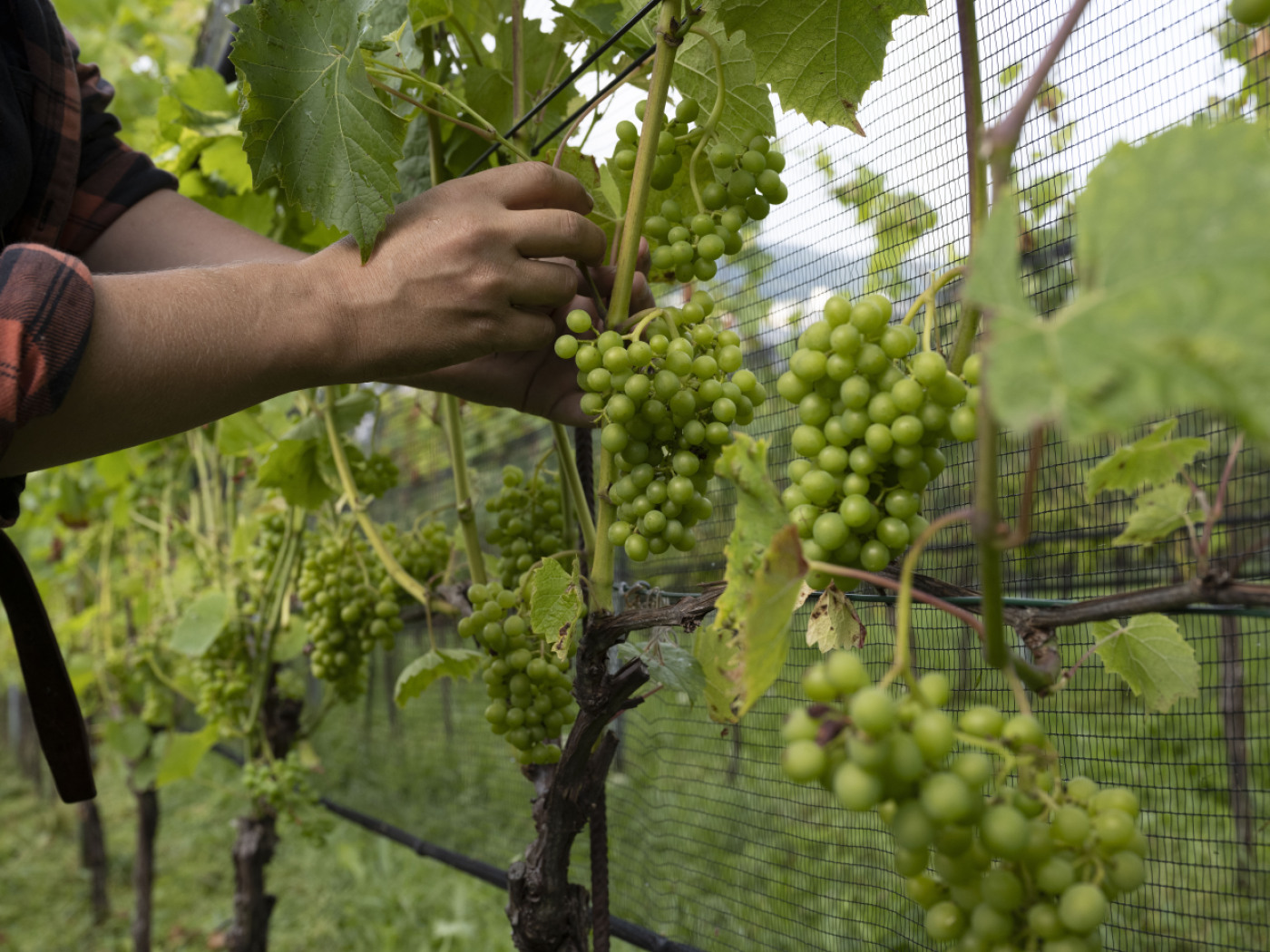
Climate change is fundamentally altering the conditions for wine growing in Europe. According to a Swiss study, suitable areas are shifting northwards and to higher altitudes.
Select your language
Generated with artificial intelligence.
Listening:
Climate change ‘shifting Europe’s wine-growing regions’
At the same time, the increasing risk of disease is likely to limit the potential of new growing regions.
The study, carried out in collaboration with researchers from the University of Geneva, examined the future development of European viticulture using so-called climate analogues, as the authors wrote in the journal Agricultural and Forest Meteorology. Using this approach, the researchers compared the future climate of wine-growing regions with existing areas that currently have similar conditions.
The study was based on six bioclimatic indices that reflect both the growing conditions for vines and the risks posed by plant diseases such as downy and powdery mildew, as well as gold yellowing.
The results revealed contrasting trends: as temperatures rise, areas suitable for viticulture tend to shift northwards and to higher altitudes.
Numerous regions in southern Europe could become too hot and too dry for cultivation in future. At the same time, moisture-related diseases led to shifts towards the east or west, depending on local conditions.
Diseases may limit potential
According to the researchers, the risks posed by plant diseases are likely to increase in many regions. For instance, the occurrence of downy and powdery mildew in central and northern Europe is expected to become more frequent. Flavescence dorée could spread to new areas.
Even if cooler, more northerly regions were to become climatically more suitable for viticulture, increasing disease pressure could severely limit their potential.
Although mountainous areas offer more balanced climatic conditions, cultivating them is labour-intensive and costly. Adaptation to the new conditions will therefore have to take place primarily through the selection of suitable grape varieties and adapted cultivation methods. In some cases, relocating growing areas is also an option.
Join the debate:
External Content
+ How we produce English news
Translated from German, reviewed by an English Department journalist.
External Content

In compliance with the JTI standards
More: SWI swissinfo.ch certified by the Journalism Trust Initiative

You can find an overview of ongoing debates with our journalists here . Please join us!
If you want to start a conversation about a topic raised in this article or want to report factual errors, email us at english@swissinfo.ch.