








Swiss reservoir water levels lowest in 20 years
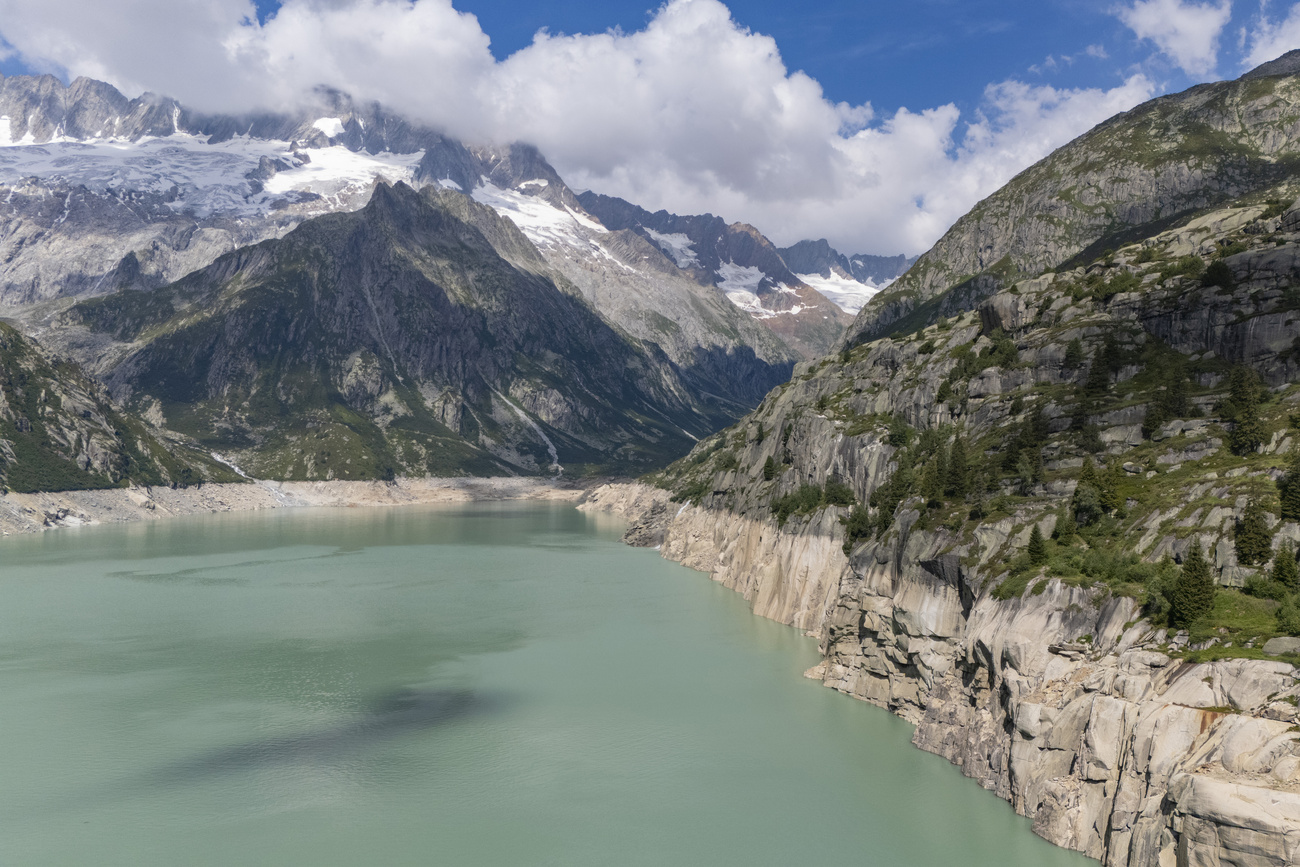
Swiss reservoirs have significantly less water than usual for this time of year. They have not been this empty at any point in the last 20 years.
Select your language
Generated with artificial intelligence.
Listening:
Swiss reservoir water levels lowest in 20 years
But the government sees no short or long-term threat to Switzerland’s energy security.
The reservoir lakes are currently 46% full, according to the Federal Office of Energy’s weekly report. Water levels are therefore 16.4 percentage points below the average for the same time of year over the past 20 years.
The low levels are due in part to limited snowfall during the winter and the current drought. According to federal data, 2026 was among the driest springs nationwide since measurements began in 1864.
Reservoir lakes can generally cover about 20% of electricity demand during the winter half of the year. Despite the low levels, Andreas Jöckel of the Federal Electricity Commission (ElCom) says no electricity supply bottlenecks are expected. However, he notes that it is still relatively early to make firm forecasts, as much depends on precipitation in the coming months.
Electricity is generated by releasing stored water from reservoirs. The more water they contain, the more electricity can be produced. Reservoir fill levels are therefore an important indicator of Switzerland’s hydropower reserves.
Less glacier water in future
Hydropower is the backbone of Swiss electricity production. More than half of the country’s electricity comes from hydropower, and roughly half of that is generated by storage hydropower plants fed by reservoirs.
Energy company Alpiq also expects reservoir levels to rise further. The company holds interests in reservoirs including Grand Dixence, Emosson, and Gougra in the canton of Valais. According to Alpiq, a recent hot period actually helped refill these reservoirs because they receive substantial inflows from glaciers.
At present, reservoirs in regions such as Valais still benefit from glacier meltwater. However, as glaciers continue to shrink, this water source could gradually disappear.
Glaciologist Matthias Huss of the Federal Institute of Technology ETH Zurich warns that the situation could become critical in the coming decades:
“In ten, 20, or 30 years, during heatwaves like the current one, we will have significantly less water flowing from glaciers.”
German gas storage below average
German gas storage facilities, which are also important for Swiss energy security, are currently 44.7% full, according to data from Gas Infrastructure Europe. This is below the long-term average; over the past ten years, the average level at this time of year was 69.8%.
Nevertheless, Jöckel says this does not pose a threat to energy security. Since reservoir lakes account for only about 20% of winter electricity demand, it is not crucial if they are no longer filled completely in future years.
+ How we produce English news
Translated from German, reviewed by an English Department journalist.
External Content


See more Swissinfo articles in your Google results. Learn more

In compliance with the JTI standards
More: SWI swissinfo.ch certified by the Journalism Trust Initiative

You can find an overview of ongoing debates with our journalists here . Please join us!
If you want to start a conversation about a topic raised in this article or want to report factual errors, email us at english@swissinfo.ch.