








Bührle’s troubled art collection is squashed together in new Zurich show

Swiss industrialist Emil G. Bührle’s art collection, on loan to Zurich’s Museum of Fine Arts, has been the cause of one uproar after another. As Switzerland's biggest art museum takes on responsibility for researching the ownership history of these paintings, many of which once belonged to Jewish collectors persecuted by the Nazis, it has also opened a new exhibition – the third since the museum first put the artworks on display in 2021.
Select your language
Generated with artificial intelligence.
Listening:
Bührle’s troubled art collection is squashed together in new Zurich show
In a transparent white gown that leaves little to the imagination, Édouard Manet’s La Sultane, painted around 1871, is displayed at Zurich’s Museum of Fine Arts (Kunsthaus) on a crowded wall, squeezed between other, equally valuable paintings.
There are no labels informing visitors of the name of the artist, title and date of these paintings, let alone any ownership history in this exhibition, which opened in April. A console in the first gallery is more informative: there visitors can swipe the screen a few times to discover that La Sultane was once owned by the German Jewish industrialist Max Silberberg, who was deported in 1942 and is presumed to have been murdered at Auschwitz.

Silberberg sold the painting in 1937 to the dealer Paul Rosenberg, from whom Emil Bührle purchased it in 1953. The richest man in Switzerland at the time, Bührle built his fortune by selling the anti-aircraft cannons his factories produced to Nazi Germany. He amassed a vast and valuable art collection that first went on show in a vast new extension at the Kunsthaus in 2021. Some of the paintings he bought are known to have been looted from Jews.
In the case of La Sultane, the E. G. Bührle Collection Foundation reached a confidential settlement last year with Silberberg’s heirs, who argued that he had sold the painting as a consequence of Nazi persecution (a view the foundation contested).
The quality of Bührle’s collection is indisputable, containing masterpieces by Claude Monet, Vincent van Gogh, Paul Cézanne and Auguste Renoir. But many critics – historians, provenance researchers, artists, and commentators – said the Kunsthaus made a historic error by accepting the long-term loan of 205 artworks from the foundation set up in 1960 by his widow and children. Ever since the art collection first went on display in 2021, it has been a source of public consternation, and even outrage, focussed on the origins of Bührle’s wealth and the dark provenance of some of his paintings.
Such is the weight of the gift that this is the third time the museum attempts to publicly come to terms with the collection and its challenging, unresolved history.
More
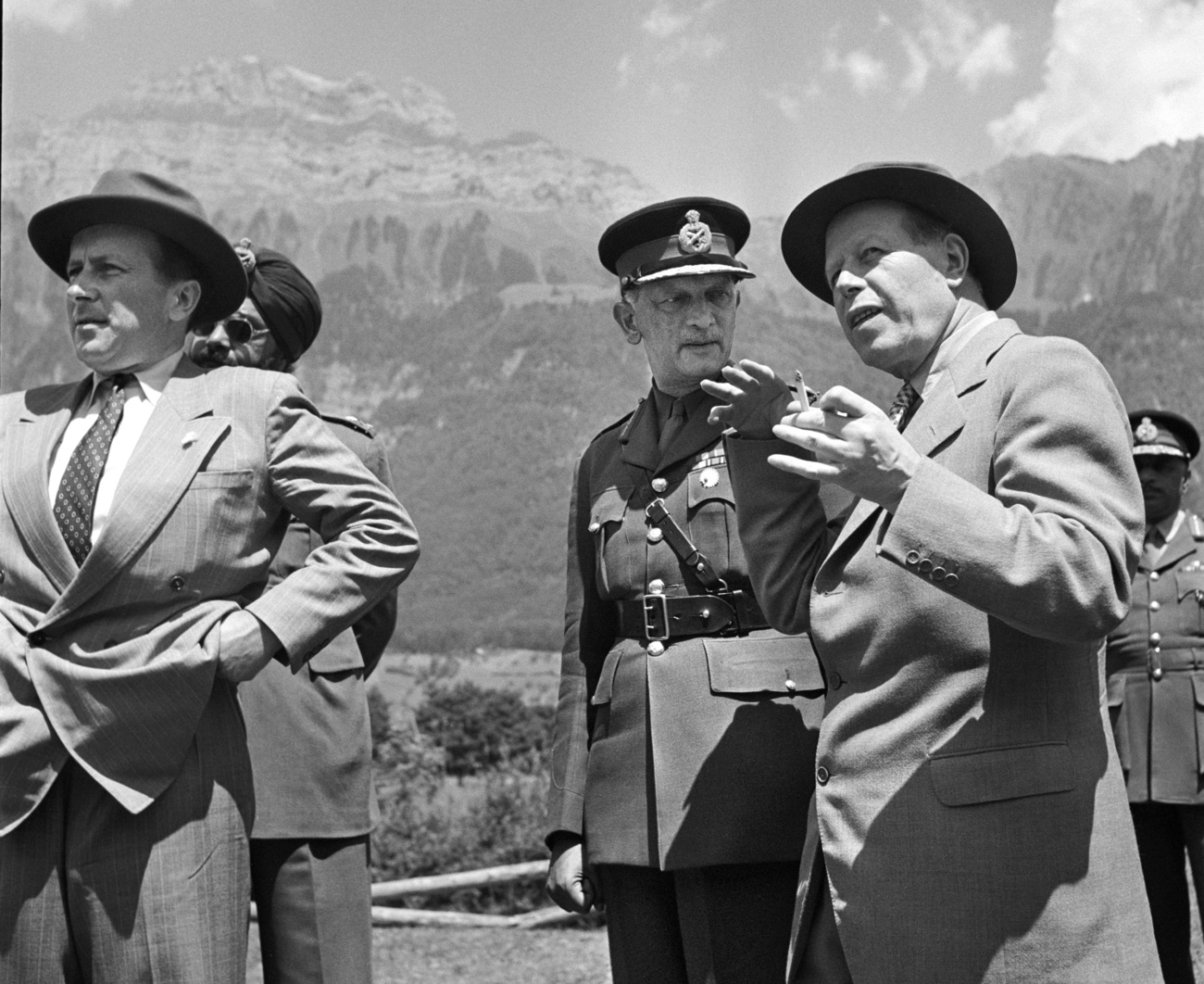
Emil Bührle and the art of war
The Gift
Bührle’s ties to the Kunsthaus date back to 1940, when he became a member of the museum’s board of trustees. He funded an earlier extension completed in 1958. A bust and plaque at the museum honour his contribution.
While the city of Zurich commissioned a report from Zurich University on Bührle’s biography and business activities before the collection went on display, research into the ownership history of individual paintings was overseen by the foundation created by his family. In his book, The Contaminated Museum, historian Erich Keller described the foundation’s provenance research as “a filter which withholds decisive facts.”

The first exhibition of the collection was roundly attacked for relying on this research. The uproar prompted the canton and city of Zurich and the trustees of the Kunsthaus to commission an independent report into the foundation’s provenance research. The team of experts, led by the president of the German Historical Museum, Raphael Gross, found it inadequate in a number of respects.
In a 2024 interview with Swissinfo, Gross described the collection as “historically particularly tainted, on a scale that is possibly unique in Switzerland.” Of the 205 paintings on loan from the Bührle Foundation to the Kunsthaus, 133 were owned by Jews at some point before 1945, the report found. Many of these works were not listed as having prior Jewish owners in the foundation’s research.
In April, after the city of Zurich approved CHF3.86 million ($4.9 million) in funding, the museum took over the provenance research into the collection in a five-year project. But the museum is still, it seems, struggling with how best to display this cumbersome legacy: it describes the new exhibition, which opened on April 10 and runs until 2027, as an “interim” show.
“As the research has now started, we wanted to show a presentation that has the character of an interim status report and gives an overview of what is in the collection and what will happen now,” says Kristin Steiner, a spokesperson for the museum.

More
Inquiry finds ‘tainted’ Bührle art collection needs much more provenance research
Stock inventory
At the entrance to the galleries, a wall panel poses the questions the Kunsthaus has been asking itself: “How can such an illustrious but, at the same time, controversial private collection be shown in a museum with a public mandate? How can the historical context be conveyed in an art museum?”
Inside, paintings are hung close together, many far above eye-level, in what the museum terms a “Petersburg hanging”, a style typical of 19th-century salons. To a modern-day viewer accustomed to abundant wall space between paintings, it can appear chaotic and overwhelming.

Sculptures are crammed into one room on plinths of varying heights against a green-carpet background – a jumble of medieval pietàs, virgins with child, saints and an incongruous child dancer by Edgar Degas in the centre foreground. To get any information on the works, including artist, date and title, visitors must consult pamphlets stored on racks in each gallery.
It is hard to fathom the rationale behind this transitional exhibition, described in the Neue Zürcher Zeitung “as loveless as a stock inventory”. The previous exhibition, mounted in 2023 after the first show faced an outcry, explored the historic context of the collection, the ownership history of individual artworks and a variety of perspectives on how to address Nazi loot in public museums.
One criticism after another
But even that important exhibition – the first to address Bührle’s legacy head-on – was heavily criticised. The entire expert team responsible for planning it resigned before the opening, protesting that it did not adequately explore the fates of the previous Jewish owners of the paintings Bührle bought.
The new exhibition allows the Kunsthaus to show almost all the artworks from the loan at once, a point the curators appear to view as important. But the emphasis on comprehensiveness leads to some odd encounters in the show: a 1520 painting of the baptism of Christ by Joachim Patinir is shown next to a studio copy. An 1897-1898 copy of a van Gogh self-portrait hangs close to an original one.

An empty frame drawn on the wall symbolises each work that cannot be shown, with a photo and text explaining, for example, that the work is on loan to an exhibition at the Leopold Museum in Vienna, or even, in the case of some works on paper, that they are too delicate to be on permanent display.
In a few instances, the explanation is more complicated. Take van Gogh’s The Old Tower from 1884. “This artwork was sold by a previous owner between 1933 and 1945 during their emigration from Germany due to Nazi persecution, outside of territory controlled by the Nazis,” it reads. “It is therefore considered to be cultural property that was confiscated due to Nazi persecution. The Bührle Foundation is negotiating with the legal successors to find a just and fair solution.”

The next chapter
This of course awakens curiosity for the next chapter. Next year, yet another exhibition for the collection is planned – this time, the museum says it will examine the art historical context and the role of Jewish collectors in modernism. There will also be a film focussed on the context of the collection and Bührle’s relationship with the Kunsthaus.
And after that? The Bührle Foundation last year changed its statutes to allow the collection to be loaned outside Zurich. Previously, they explicitly stated that it had to be displayed in the city. The Kunsthaus loan expires in 2034. Whether it will be extended beyond that is in doubt. At this point, it is tempting to speculate on whether its removal would elicit tears of regret or a huge sigh of relief – and difficult to imagine another European museum agreeing to shoulder this considerable burden.

More
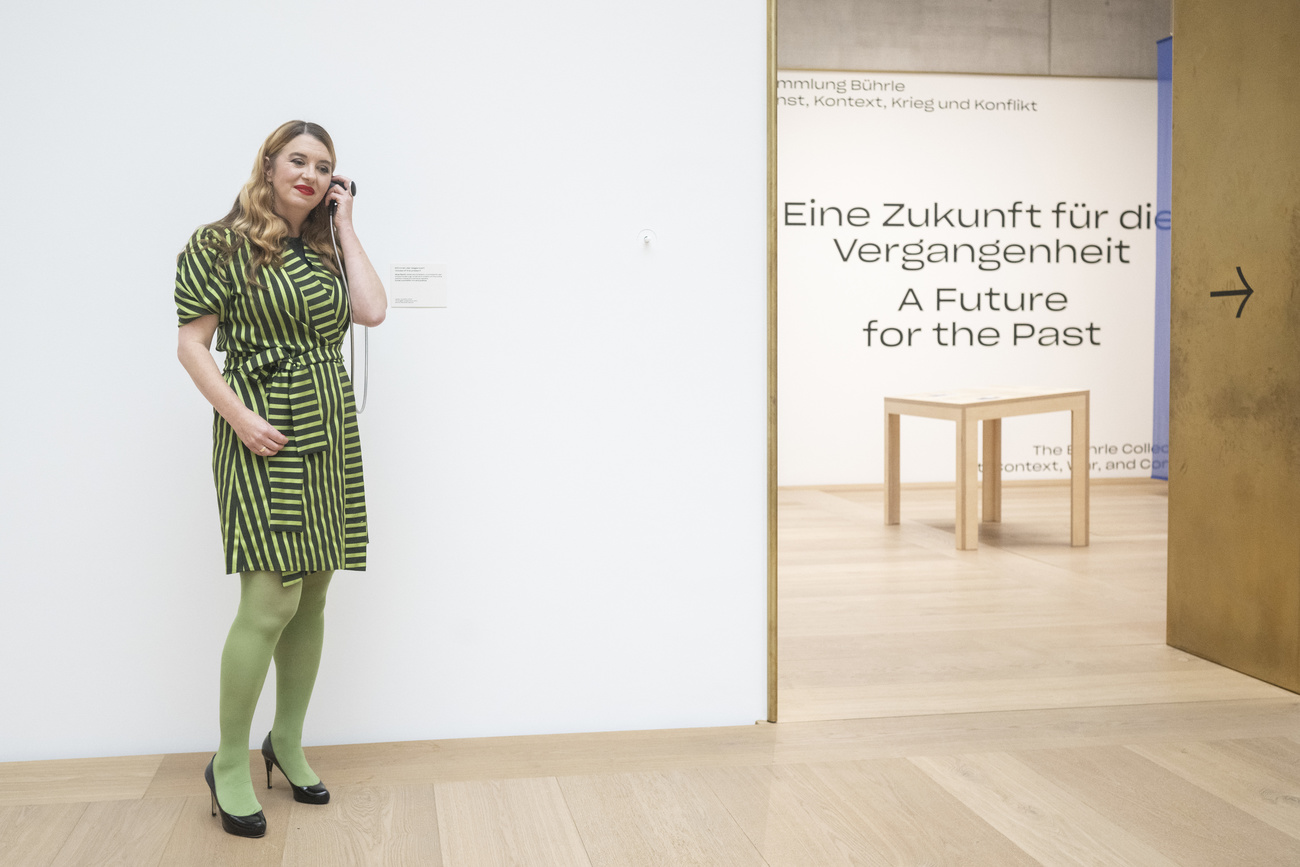
Bührle Collection: Ann Demeester on art, war, and context
Edited by Virginie Mangin & Eduardo Simantob/gw

In compliance with the JTI standards
More: SWI swissinfo.ch certified by the Journalism Trust Initiative

You can find an overview of ongoing debates with our journalists here . Please join us!
If you want to start a conversation about a topic raised in this article or want to report factual errors, email us at english@swissinfo.ch.