








Inside the Society of Saint Pius X’s latest traditionalist revolt
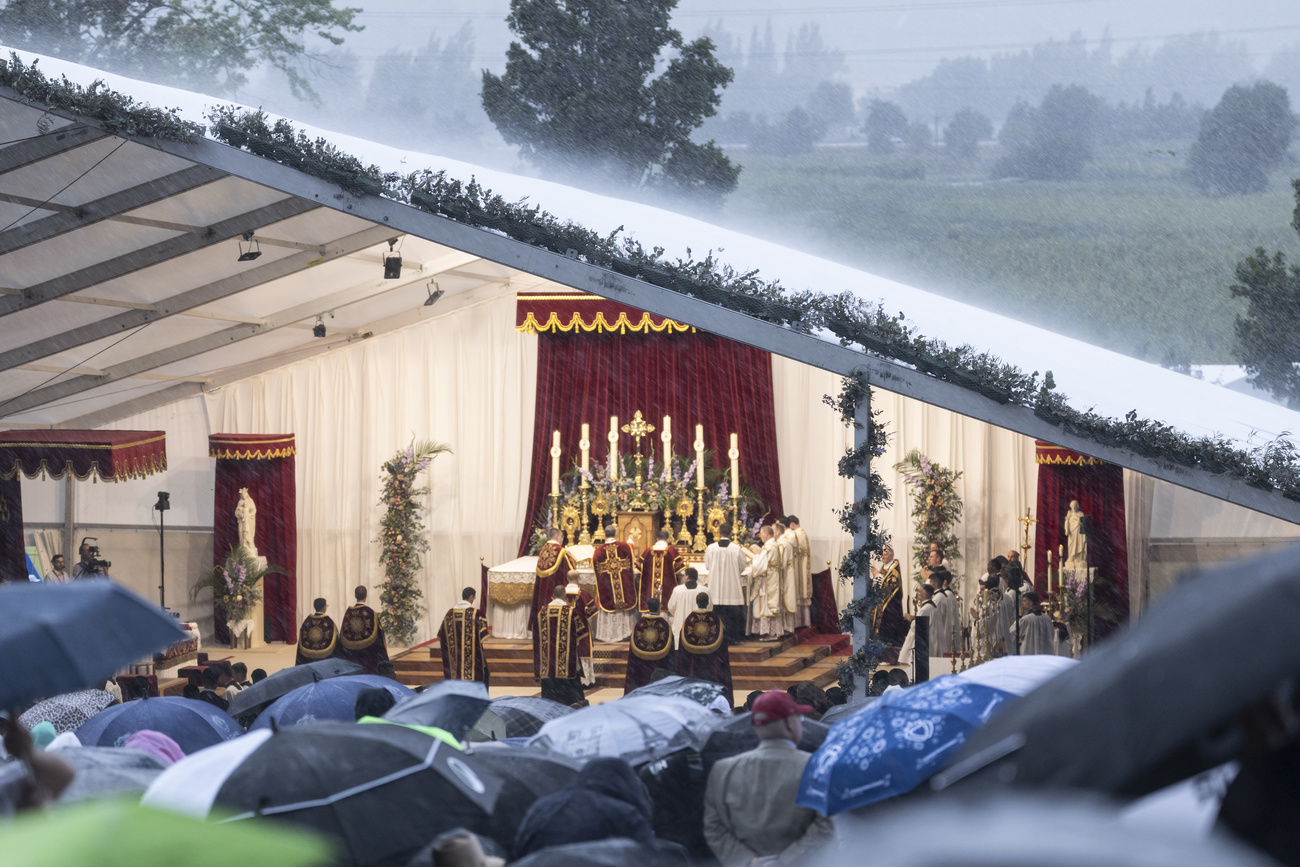
The Society of Saint Pius X has reignited its long-running dispute with the Vatican. Its illicit consecration of bishops in Switzerland has drawn attention worldwide and is likely designed as publicity for the ultra-traditionalist Catholic group.
Select your language
Generated with artificial intelligence.
Listening:
Inside the Society of Saint Pius X’s latest traditionalist revolt

Origins of the Society of Saint Pius X
The Society of Saint Pius X traces its origins to Marcel Lefebvre, a French archbishop born into an industrialist family in 1905. A staunch conservative Catholic, he rejected the reforms of the Second Vatican Council in the 1960s as too modern and soon became the leading figure in opposition to them within the Church.
After Lefebvre founded the society in 1970, it became a home for reactionary clergy and laypeople under his leadership. The society took its name from Pope Pius X, who had waged his own campaign against modernist influences in the early 20th century.
On the surface, the dispute between Archbishop Lefebvre and Rome centred on the preservation of traditional forms of worship, particularly the way Mass should be celebrated. Lefebvre denounced the modern Roman Catholic liturgy as a “bastard Mass” conducted by “bastard priests”. He continued to use the elaborate Tridentine rite, in which Mass is said in Latin and the priest faces away from the congregation.
The society’s ultra-traditionalist beliefs
From the outset, the dispute over the Mass was only the most visible aspect of a much deeper conflict. At its heart is the society’s ultra-traditionalist interpretation of Catholicism.
Its members place particular emphasis on devotion to the Virgin Mary, whom they also regard as the mother of the Church. This underpins their belief that only their interpretation of Catholicism defends the true Church.
Among other things, they conclude that people outside their Church are apostates and must be converted. They reject gender equality, condemn homosexuality, and demand that God rule over the state and society.
How the society differs from mainstream Catholicism

Lefebvre rejected the Catholic Church’s recognition that other faiths may contain elements of truth and that everyone has the right to choose their religion freely. He also condemned ecumenism, meaning efforts to promote closer relations between Christian denominations, as well as dialogue with non-Christian religions. “Protestants cannot go to heaven,” he said.
Society members also reject one of the Catholic Church’s most significant reforms: its condemnation of all forms of anti-Semitism. Instead, they continue to hold Jews collectively responsible for the murder of Jesus.
How Switzerland became the society’s base
As Lefebvre emerged as a leader of conservative opposition to the Second Vatican Council, he became increasingly marginalised in the French Church. In 1969, with the support of the local bishop, a longstanding associate, he relocated to Fribourg, Switzerland.
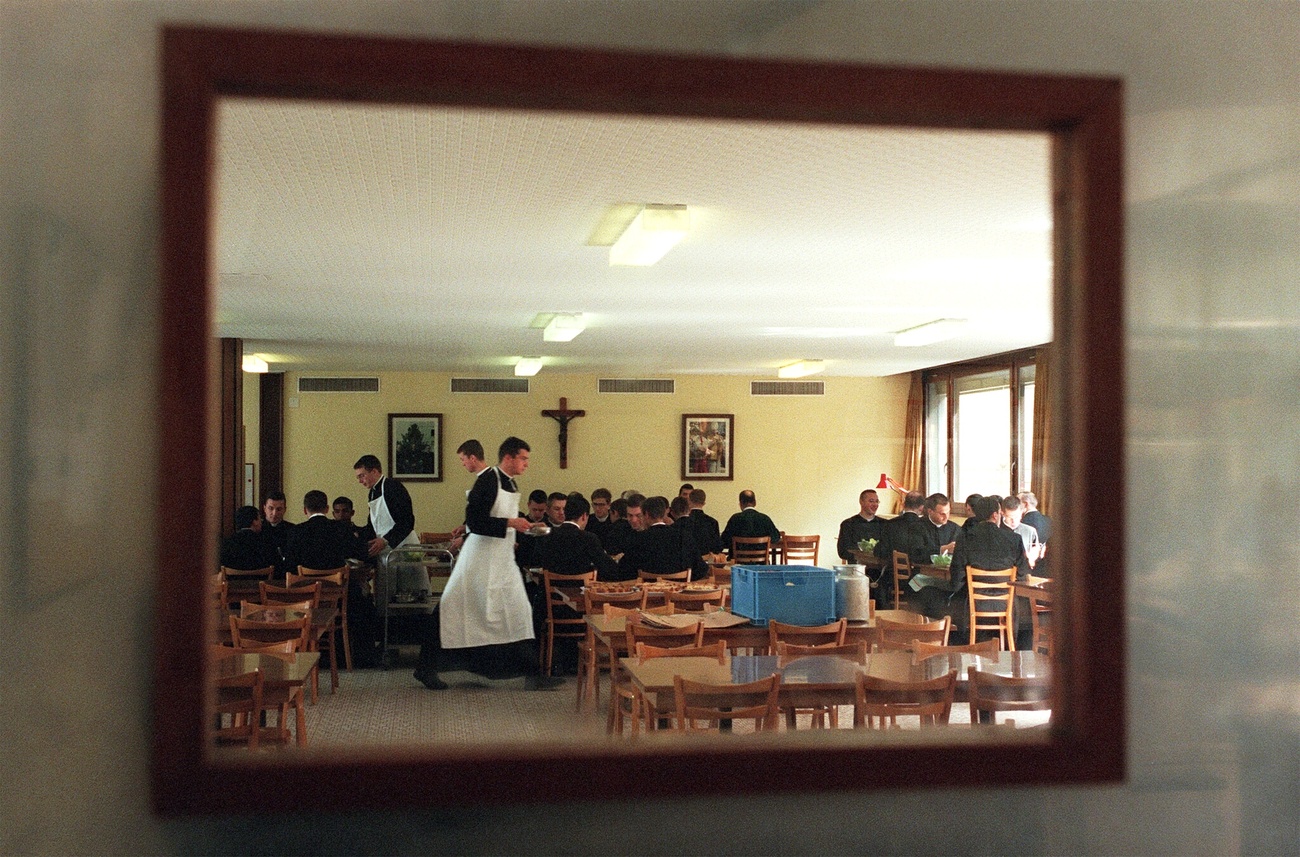
French seminary students who were loyal to Lefebvre followed him to the University of Fribourg, but they considered the teaching there too progressive. As Lefebvre became more radical and Rome intervened, he decided to establish a seminary beyond Rome’s influence. Lefebvre found a suitable location in Écône, in the southern Swiss canton of Valais, and founded the Society of Saint Pius X to run the seminary and further his movement.

Today, the society operates more than 30 churches and other religious sites in Switzerland. Écône is regarded as the movement’s spiritual centre, while the organisation’s headquarters are in a castle in the central Swiss canton of Zug. The society’s superior general, Davide Pagliarani, lives there, who the newspaper Neue Zürcher Zeitung has described as an “anti-pope”.
What role does France play?
According to Swiss theologian Urban Fink, France’s traditionalist and monarchist network has been the driving force of the movement from the beginning. Experts believe that these networks provide its financial backing, since the society receives no revenue from church taxes.
“These people are concerned not only with restoring the old Church order, but also the old social order – in other words, the way the world was before the French Revolution brought freedom and equality for all,” says Fink.
Throughout his life, Lefebvre remained closely aligned with the ideology of Action française, the monarchist movement that helped shape France’s pre-war far right. The Society of Saint Pius X later drew support from networks linked to the remnants of Action française and to supporters of the Vichy regime, which collaborated with Nazi Germany during the Second World War. Today, France has the society’s largest following, with an estimated 30,000 people.
The Society of Saint Pius X in numbers
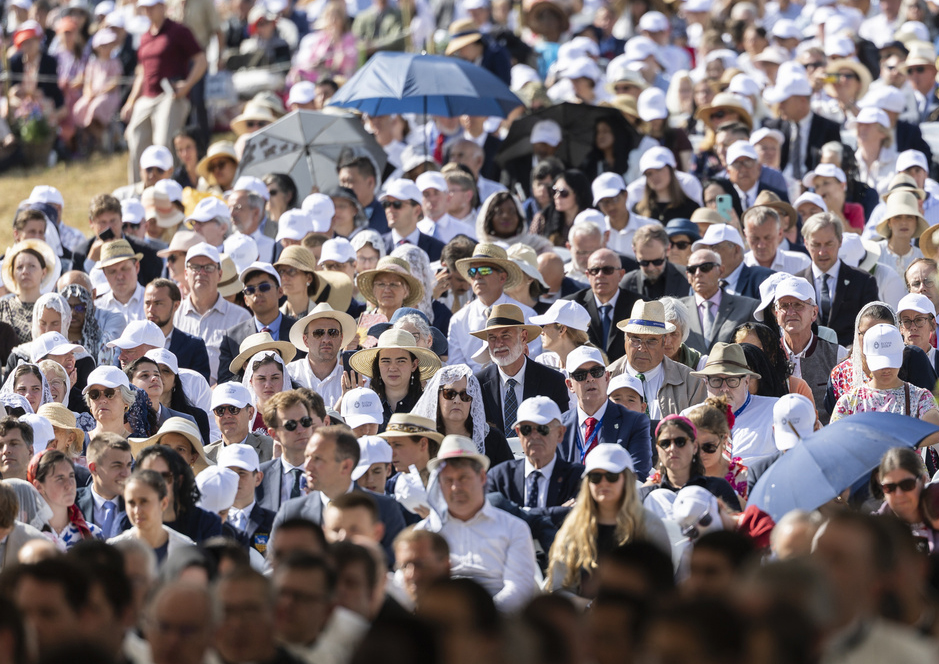
The society’s true size is unclear, as the most recent figures published by either the organisation or the Vatican are around 20 years old. The widely cited estimate of 600,000 lay followers has been challenged by the Catholic publication The Pillar, which puts the numberExternal link at around 320,000. It argues that the number of places of worship is the only reliable indicator. The society says it has around 450 worldwide, along with about 750 priests.
How the society broke with the Vatican
By 1976, the Vatican had lost patience with Lefebvre’s activities in Switzerland. He had ordained priests without Rome’s permission and continued to reject the reforms of the Second Vatican Council – actions the Vatican regarded as a threat to Church unity. The pope suspended him from ministry, and repeated attempts at reconciliation failed in the years that followed.
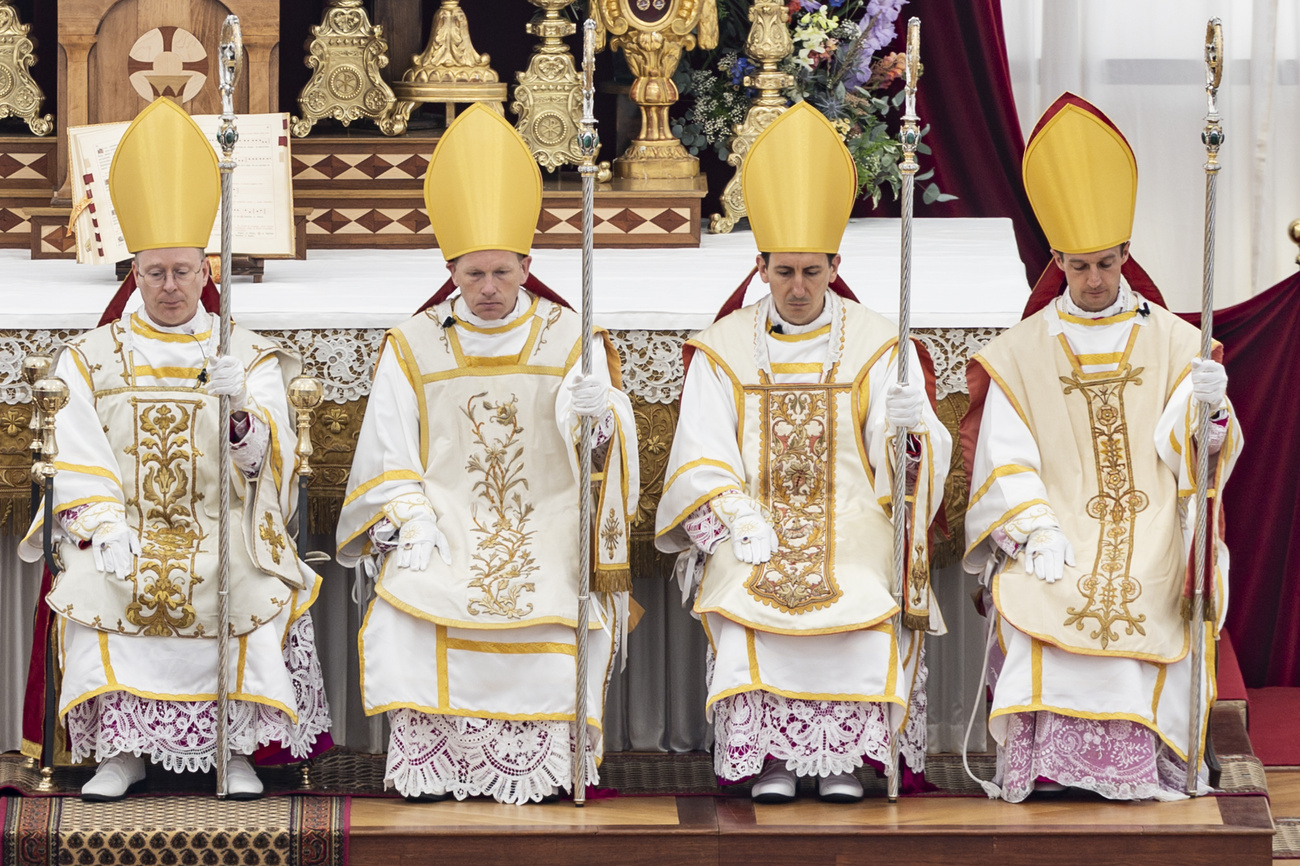
The dispute came to a head in 1988, when Lefebvre consecrated four bishops in defiance of the Vatican. The Church responded by excommunicating him and the four men, but Pope Benedict later lifted the excommunications in 2007 as part of a renewed attempt at reconciliation.
The escalation continued on July 1, 2026, when the society consecrated four more bishops without papal approval. Pope Leo warnedExternal link that “tearing Christ’s seamless garment is a sin of the utmost gravity”, invoking a biblical symbol of Church unity. The society nevertheless went ahead with the elaborate ceremony in Écône. Rome responded by excommunicating all its followers.
Can this be described as a schism?
A schism is a formal split within the Church, but Rome maintains that no such division has taken place. “I am not entirely sure whether we can already speak of a schism,” Cardinal Kurt Koch of Lucerne told the Catholic platform CommunioExternal link. “In 1988, Pope John Paul II referred to a ‘schismatic act’. The two are not necessarily the same, because such an act applies to those who carried it out,” Koch says.
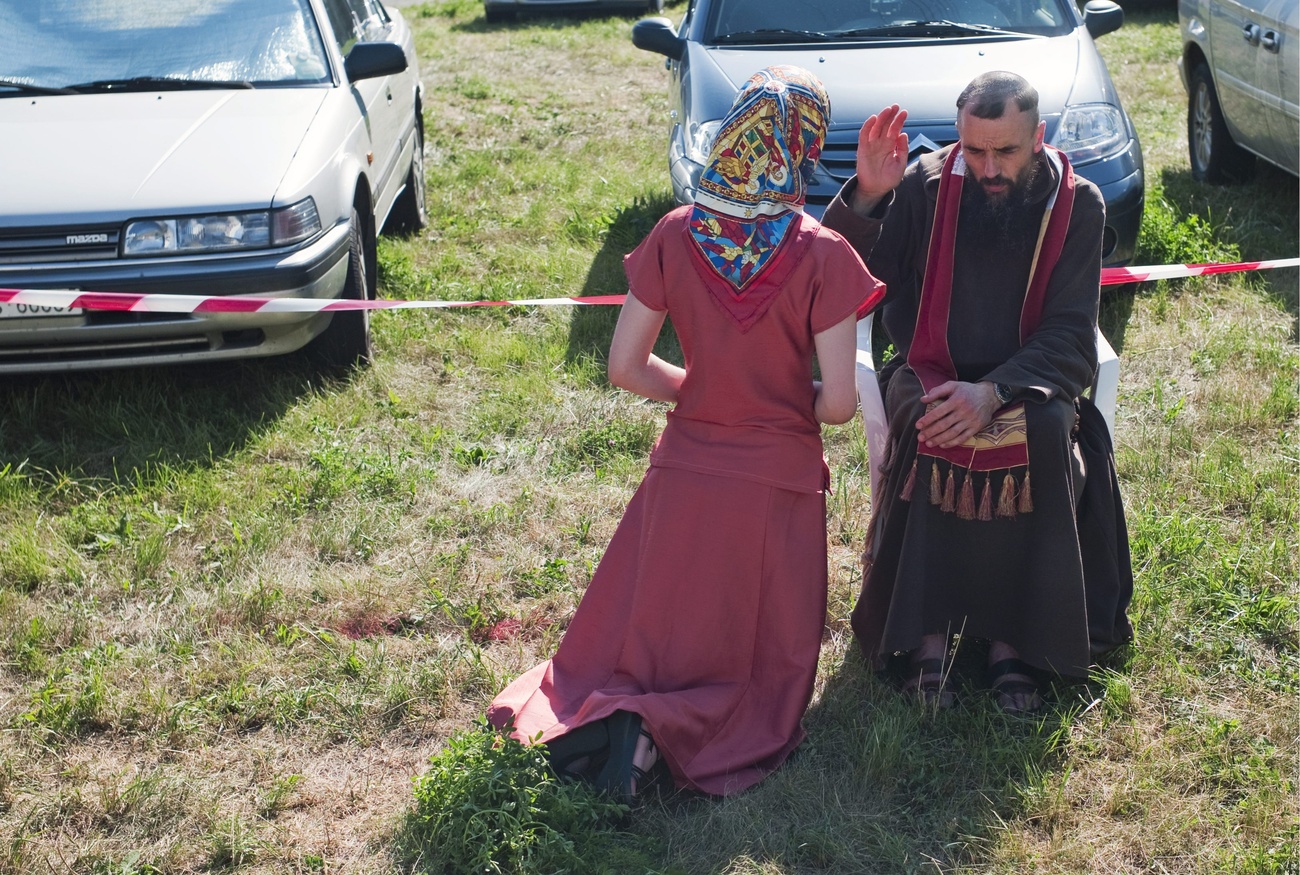
Fink is an expert on the Society of Saint Pius X and a critic of the organisation. He describes it as a breakaway group. “They cut out a slice of the cake for themselves. It is a classic case of a sect,” he told Swissinfo.
The society’s resolute and openly hostile stance towards the Vatican was evident in a speechExternal link given by Michael Goldade, one of the four bishops consecrated in Écône. He described the Roman Catholic Church as being “in ruins”, “a desert” and “a disease” that “kills everything it touches”.
Why consecrate new bishops?
According to the Society of Saint Pius X, it consecrated the bishops because it needs more senior clergy. Two bishops, it argues, are not enough to serve its followers worldwide. “It is about survival. They need bishops to keep the organisation going,” says Fink.
Fink sees such an overt act of defiance as a way of generating publicity. “Such large-scale events are also an advertisement,” he says. He believes the illicit consecration was deliberately staged as part of a strategy to attract new followers. “In a deeply uncertain world, the society is able to fulfil the longings and desires of a segment of the population,” he says.
Why the US may be ‘fertile ground’
In the United States, 20% of Christians are Catholic. The Society of Saint Pius X has an established but still relatively small presence, with an estimatedExternal link 25,000 followers. This is roughly the same number as in France. Michael Goldade has now become the first bishop assigned specifically to the society’s US membership.
Goldade believes the society’s reactionary stance could bring “strong growth in parishes and schools”. Speaking in Écône, he predictedExternal link that “many new people” would enter religious life and “many young people will dedicate themselves to the Holy Mother Church”.
Conservative Catholicism is enjoying renewed appeal in the United States. Since 2023, the Catholic Church has recorded a rise in converts, particularly among young men. “They are actively looking for conservative forms of religion,” US expert Claudia Franziska Brühwiler told Swissinfo.
According to Brühwiler, one reason traditionalism is appealing is that it offers stability. The Catholic Church, as the world’s oldest institution, has repeatedly withstood the shifting currents of the cultural zeitgeist. “At a time of upheaval, when everything is being questioned, this continuity and resistance to passing trends can be attractive and offer a sense of direction,” she says.
Brühwiler doubts that the US will become fertile ground for the Society of Saint Pius X. “Conservatives in the US do not need to put themselves on a collision course with the Catholic Church, because there are already many suitable alternatives,” she says. Latin Masses, for example, are once again widespread. They appeal in particular to worshippers from Protestant backgrounds because of their emphasis on solemn ritual and ceremony.
Edited by Samuel Jaberg. Adapted from German by David Kelso Kaufher/ds
More


See more Swissinfo articles in your Google results. Learn more

In compliance with the JTI standards
More: SWI swissinfo.ch certified by the Journalism Trust Initiative

You can find an overview of ongoing debates with our journalists here . Please join us!
If you want to start a conversation about a topic raised in this article or want to report factual errors, email us at english@swissinfo.ch.