








Twenty years after its creation, the Human Rights Council is under pressure
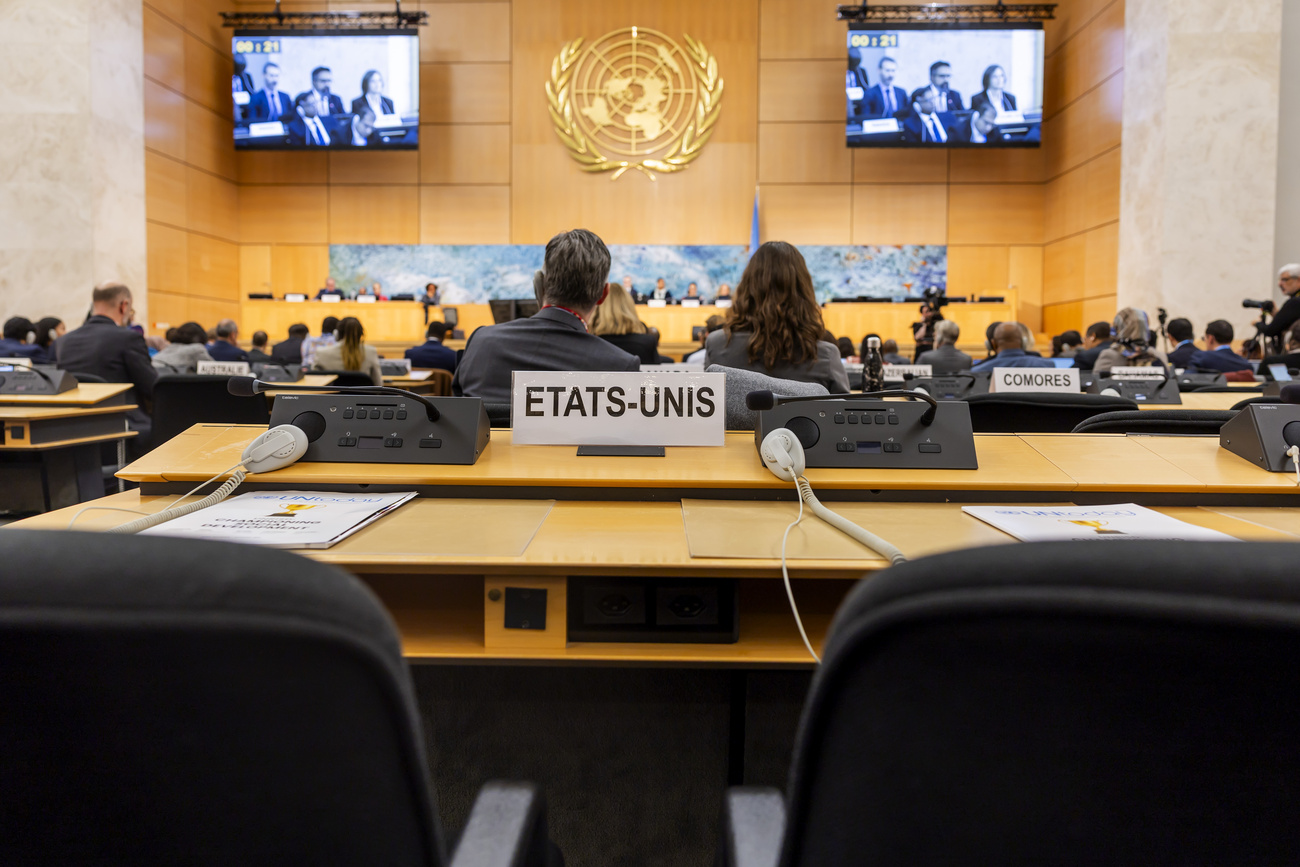
The main UN body responsible for upholding human rights in the world is meeting on Monday in Geneva. Its first session of the year will be marked by geopolitical tensions and financial difficulties.
Select your language
Generated with artificial intelligence.
Listening:
Twenty years after its creation, the Human Rights Council is under pressure

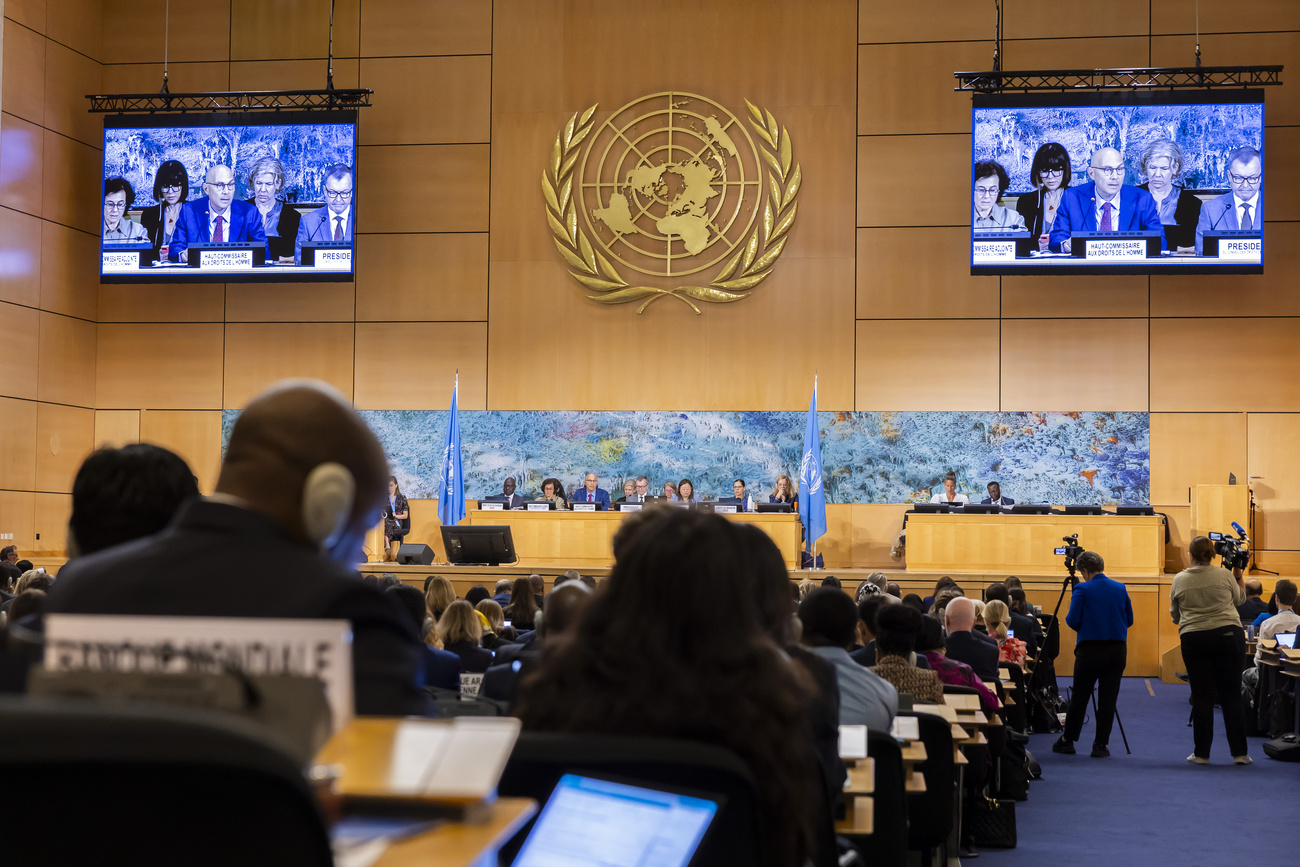
The Human Rights Council – the main UN body responsible for protecting fundamental rights in the world – meets on Monday in Geneva for its first session of the year.
From February 23 to March 31, its 47 members will have the opportunity to address a wide range of issues – from new technologies to children’s rights and climate change – and many countries that require their attention. Among them are some of the worst humanitarian crises, including Sudan, Ukraine, Iran and the Occupied Palestinian Territories.
Like last year, the debates will take place in a difficult climate, marked by geopolitical tensions – wars in Ukraine and Gaza in particular, US tariffs – as well as the liquidity and financial crisis that the UN is going through.
Cash strapped
At the end of January, UN Secretary-General Antonio Guterres warned of a risk of “imminent financial collapse” of the organisation if member states continue to pay their budgetary contributions late or partially.
To date, only 69 of the 193 member countries have paid their bills for 2026. Neither the United States nor China, the two largest donors, are among them.
The lack of liquidity and budget cuts by some countries have forced the UN to draw up a plan of reforms and savings, which does not spare the Office of the High Commissioner for Human Rights. Its expected budget in 2026 has been reduced by 16% to $624.3 million. Faced with this situation, the Human Rights Council had to shorten its session from six to five and a half weeks.
“This session will test the ability of the Human Rights Council to work under duress while remaining faithful to its mandate,” the president of the Council, Indonesian Ambassador Sidharto Reza Suryodipuro, told the press.
In recent years, the proliferation of resolutions calling for follow-up in the Council has resulted in the expansion of its programme and thus the lengthening of its sessions. This is a sign of the growing importance that member states attach to this body, which is celebrating its 20th anniversary, while the Security Council remains paralysed.
Services reduced
Speaking times will be reduced and some services – particularly interpretation – could be disrupted. These cost-saving measures are worrying NGOs.
“Shortening a session of the Council is tantamount to reducing the ability of civil society to engage in one of the few UN bodies that accepts and encourages its participation,” said Raphaël Viana David, programme manager at the International Service for Human Rights (ISHR), an NGO based in Geneva and New York.
NGOs regret in particular the disappearance of the hybrid modalities, temporarily introduced during the Covid-19 pandemic, which allowed remote access to the Council for organisations that do not have the means to travel to Geneva. A system that the member states consider too costly.
Fact-finding missions threatened?
Even more worryingly, last year, the lack of cash prevented the implementation of some decisions of the Human Rights Council.
A commission of inquiry to document abuses in eastern Democratic Republic of Congo (DRC) – requested by the country’s authorities and voted by the Council in February 2025 – has still not been able to begin its work due to a lack of cash. A situation that the Afghanistan investigative mechanism is also experiencing.
More
UN Human Rights Council demands investigation into Iran’s ‘brutal’ repression
Historically opposed to the Council’s fact-finding mechanisms, which they consider contrary to the principle of state sovereignty, some authoritarian regimes now also invoke budgetary considerations to justify their reluctance to create or renew these mandates. China, Russia, Cuba and Egypt are among the countries most critical of these mechanisms, which cost millions.
During this session, several mandates will have to be renewed, including those of the fact-finding missions on Ukraine, Syria, South Sudan and Myanmar. Asked if the Council would oppose it, a diplomatic source replied: “Even if the budgetary argument has become an easy card for states that oppose investigative mechanisms, the current composition of the Council remains favourable to their renewal.”
However, this may change in the medium term, as Council members are elected for three-year terms. Decried by some, the investigations of this body make it possible to collect evidence that can be used by the courts. This has been the case in particular during the trials of Syrian torturers in Europe.
One year of American withdrawal
Back in the White House, American president Donald Trump demanded the withdrawal of the United States from the Human Rights Council in January 2025.
Several diplomatic sources confirm that the Americans have indeed left the Assembly Hall, even if they “remain present behind the scenes” on certain issues. “The American disengagement has a strong ideological dimension that is deployed in the Human Rights Council,” observes a source, who believes that it is now more difficult to make progress on issues related to gender and climate change. “The fact that the world’s leading power has a reactionary stance on these issues frees up the energies of other delegations that share this point of view.”
Pressure to resign
French Foreign Minister Jean-Noël Barrot announced that he would use his speech to the Human Rights Council on Monday to call for the resignation of Francesca Albanese, the UN special rapporteur on the Occupied Palestinian Territories.
According to him, this independent expert mandated by the Council, known for her firm positions against the Israeli government, made “outrageous remarks” making her a “political activist”. Other countries, including Germany, have joined his call.

More
When is a ‘genocide’ really genocide?
The president of the Human Rights Council said he had received a letter of complaint against the Italian national from a diplomatic mission in Geneva, without disclosing which one. This has been forwarded to the Coordinating Committee of Special Procedures, a body composed of six independent experts, which will have to verify whether the code of conduct has been respected, he added.
Last year, a similar complaint was dismissed. The members of the committee have already denounced what they describe as “vicious attacks, based on disinformation”.
The subject is likely to generate intense debates within the Council, as many states of the Global South denounce the double standards of Western countries on the war in Gaza. According to them, the West has not condemned the bombing of civilians in Gaza in sufficient terms compared to Russia’s bombing of Ukraine.

More
International Geneva
Edited by Virginie Mangin/sj. Adapted from French by AI/ac

In compliance with the JTI standards
More: SWI swissinfo.ch certified by the Journalism Trust Initiative

You can find an overview of ongoing debates with our journalists here . Please join us!
If you want to start a conversation about a topic raised in this article or want to report factual errors, email us at english@swissinfo.ch.