








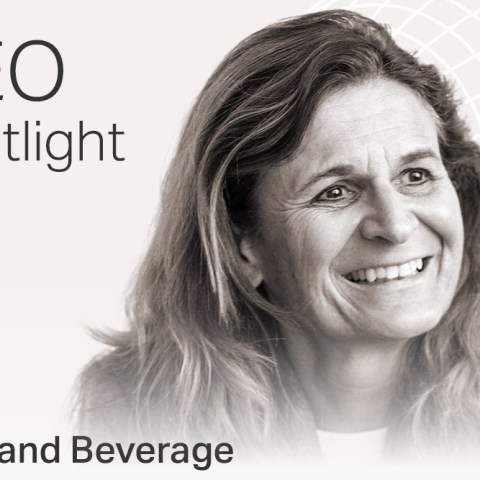


A Swiss woman gives up her desk job to make wine in the south of France
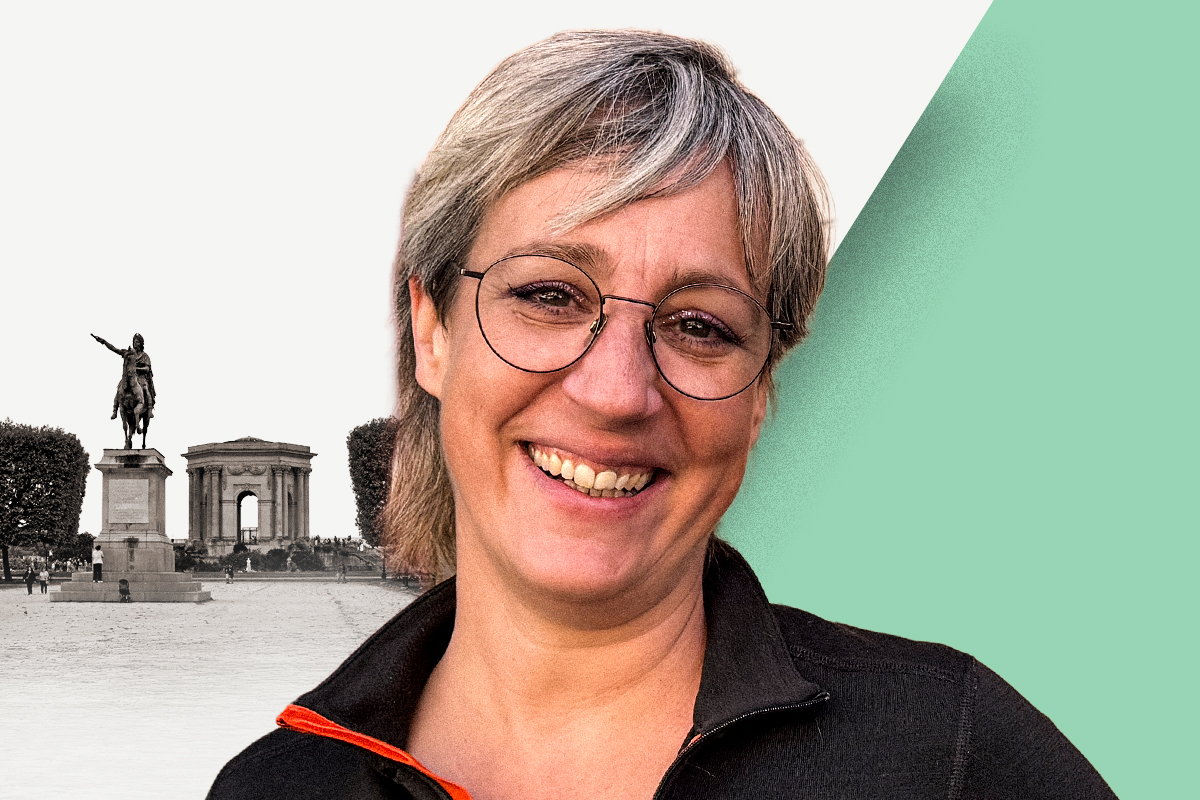
Series Swiss entrepreneurs abroad,
Episode 8:
A few years ago, Iris Frauchiger left her office job in Bern behind and became a winemaker in the south of France. Today, she produces natural wines and faces the physical, personal and bureaucratic challenges of this new life.


“I can sit but not for too long,” says Iris Frauchiger while standing. She recently returned to Bern for back surgery. You can tell from the way she moves carefully with measured steps that it’s a slipped disc. Her current state is a contrast to her daily routine of physical labour.
Frauchiger begins to talk about the town of Montblanc in the south of France, about vineyards, about the warmth and the place where she has made a fresh start.
Our series profiles Swiss men and women founding and building businesses abroad. Through their personal stories, we explore why they choose to pursue projects beyond Switzerland’s borders, the working conditions they encounter there, and the challenges and opportunities.
Through their life stories, this series also showcases how the Swiss Abroad community contributes to Switzerland’s economic, cultural, and political influence.
External Content
From the office to the vineyard
She decided to become a winemaker on her way home from a wine tasting. “I didn’t want to grow old in an office,” says Frauchiger, who once held the position of administrative director at the Kunsthalle contemporary art venue in Bern. She was in her early 40s and ready to start a new chapter.
She began reading, doing research and undertaking work placements – in Lavaux and the south of France – and in this way built up a network. She found friends and like-minded people, and soon a vineyard of her own.
“It’s always been my dream to live in France one day,” says Frauchiger. So it was a stroke of luck for her when, three years ago, her current mentor and friend Aymeric Amiel offered her a lease on part of his estate in Montblanc – “not the mountain, but the village”, as she clarifies – in the south of France.
“Actually, this opportunity came a bit too soon. Nevertheless, I knew I had to seize it,” says Frauchiger, looking back. She was able to take over some of the equipment, and the vines were healthy – that gave her the confidence to go ahead. Those around her, especially her teenage daughter, reacted positively. “Do your own thing, Mum,” she’d said.
“It’s not as if I’m completely cut off from the world, just a bit further away from Bern,” says the 46-year-old. Thanks to modern technology, she adds, it’s now possible to have a coffee or an aperitif together online.
Organisons NousExternal link – let’s get organised – the name of her winery seems fitting. “In viticulture, you support one another, help each other out and also share facilities and equipment,” she explains.
Why France – and not Switzerland?
The Bern native is now in her third year as a winemaker – a fea she managed without any formal qualifications. She would have liked to have done the training.
“But then I’d have been another three years older and would have learnt something that’s completely different in the south of France compared to Switzerland,” says Frauchiger. So she decided she’ll just learn by doing.
She started her winegrowing adventure in Montblanc with a Swiss colleague who returned to Switzerland at the end of 2025. Today, Frauchiger is already breaking even. That’s not bad for such a short time.
She has fallen in love with natural wines even though she prefers the term “unprocessed” because it is more honest. It was also always clear to her that she didn’t want to start her own business in Switzerland.
“I don’t like having mountains looming over me,” she says with a laugh. In Montblanc – a 20-minute drive from the Mediterranean – everything is flat, which makes wine production much cheaper and physically less demanding.
A profession that leaves its mark
The vineyards in Switzerland are often situated on sun-drenched, steep slopes.
“That requires specialised – and therefore expensive – machinery,” she says.
The work is consequently even more physically demanding. For Frauchiger, this is a key consideration, especially now that she’s had back surgery. She takes the operation in her stride.
“Now I’m finally one of them,” she says with a laugh. Many winegrowers she knows have had back operations – a sign of the physical strain the job takes on the body. Her current physical condition also brings home to her that as soon as she gives up her second home in Bern for good – and that is her plan for this year – she will also have to do without Switzerland’s excellent healthcare system. It’s not easy for her to pack up and leave Switzerland for good. “Doubts, fears and uncertainties do creep in,” Frauchiger admits.
Because she’s off work, she’s currently missing out on tasks in the vineyard such as pest control, mowing, pruning the vines – “a meditative task where you’re 200% focused on the plant,” she says wistfully. She is receiving support from local winegrowers and from friends in Switzerland and Montblanc.
‘In the south of France, nobody’s waiting for a Swiss winemaker’
After sitting for a while in a café on Bern’s Länggasse, the cold and Frauchiger’s back start to make themselves felt. She mentions it casually, almost apologetically, saying a bit of exercise would do her good. Slowly she sets off, step by step through her old neighbourhood, whilst she continues to talk about her new life.
She particularly enjoys the variety in her job: from tending the vines and harvesting the grapes to wine production and sales. These days, Frauchiger is bottling 11,000 bottles of wine: white wine, rosé, sparkling and red wine. She regularly attends wine fairs in the south of France and also sells her wines in Switzerland. To this end, she has set up an import company in External linkSwitzerland. “In the south of France, nobody’s waiting for a Swiss winemaker,” she admits.
Endless red tape
The administrative work involved in running a business with a presence in both France and Switzerland is time-consuming and challenging, and not just because of the language barrier.
“You’re sent from one counter to the next – it’s incredibly complicated,” she says.
She receives support in dealing with the bureaucracy from a trustee in Switzerland and an accountant in France. As long as she isn’t living permanently in France, her hands are tied when it comes to her company’s legal structure. As a foreigner – and one from outside the EU at that – she has only a limited choice of legal structures. At the moment, Organisons Nous is an agricultural co-operative.
Frauchiger clearly sees her future in France. She appreciates the rhythm of the seasons, working outdoors and the immediate results she can see with her own hands.
“It’s tough, yes – but also incredibly fulfilling,” she says.
She has learnt to take risks and embrace new challenges.
“In the end, it’s simply a matter of giving it a go.”
Frauchiger stops in front of a Migros supermarket. She still needs to do some shopping, she says. A brief pause in her old daily routine before heading back to the vineyards in the south of France.
Edited by Benjamin von Wyl. Translated from German, sub-edited by Anand Chandrasekhar

In compliance with the JTI standards
More: SWI swissinfo.ch certified by the Journalism Trust Initiative

You can find an overview of ongoing debates with our journalists here . Please join us!
If you want to start a conversation about a topic raised in this article or want to report factual errors, email us at english@swissinfo.ch.