








European parties chase ‘Swiss’ vote
In the 28 EU member states, the European parliament elections take place from May 22-25. These are also an event in non-EU Switzerland, home to more than a million potential votes. Several European parties have been out campaigning.
Some 1.75 million people – more than a fifth of the Swiss resident population – are EU citizens, according to a study by the EU delegation in Bern. Of those, half a million are Swiss with an additional “European” passport. Not counting minors, that means 1.4 million potential voters – more than in several of the smaller member states!
The Swiss can’t remain indifferent to the future composition of the European parliament since this is the body that will have the final say on any agreements able to improve relations between Bern and Brussels.
Each member state has its own electoral laws: 12 states (including Germany and Britain) allow postal votes; 13 allow voting in consulates or other suitable locations; five (including Spain) allow both. Four countries (including Belgium) do not allow their citizens to vote from abroad and in four countries (including Belgium again) voting is compulsory.
Maria-Chiara Vannetti, Neuchâtel: activist for Italy’s Democratic Party
“I’m going to vote mainly because I strongly believe in the European project. Even if until now Europe has been more a Europe of banks and the economy than the Europe of politics, it’s solidarity and democracy that I want. I’d like a Europe close to the people and less close to the banks. Political power should control economic power – not vice versa. But I still maintain that the EU project is a magnificent project.”
‘Red trains’
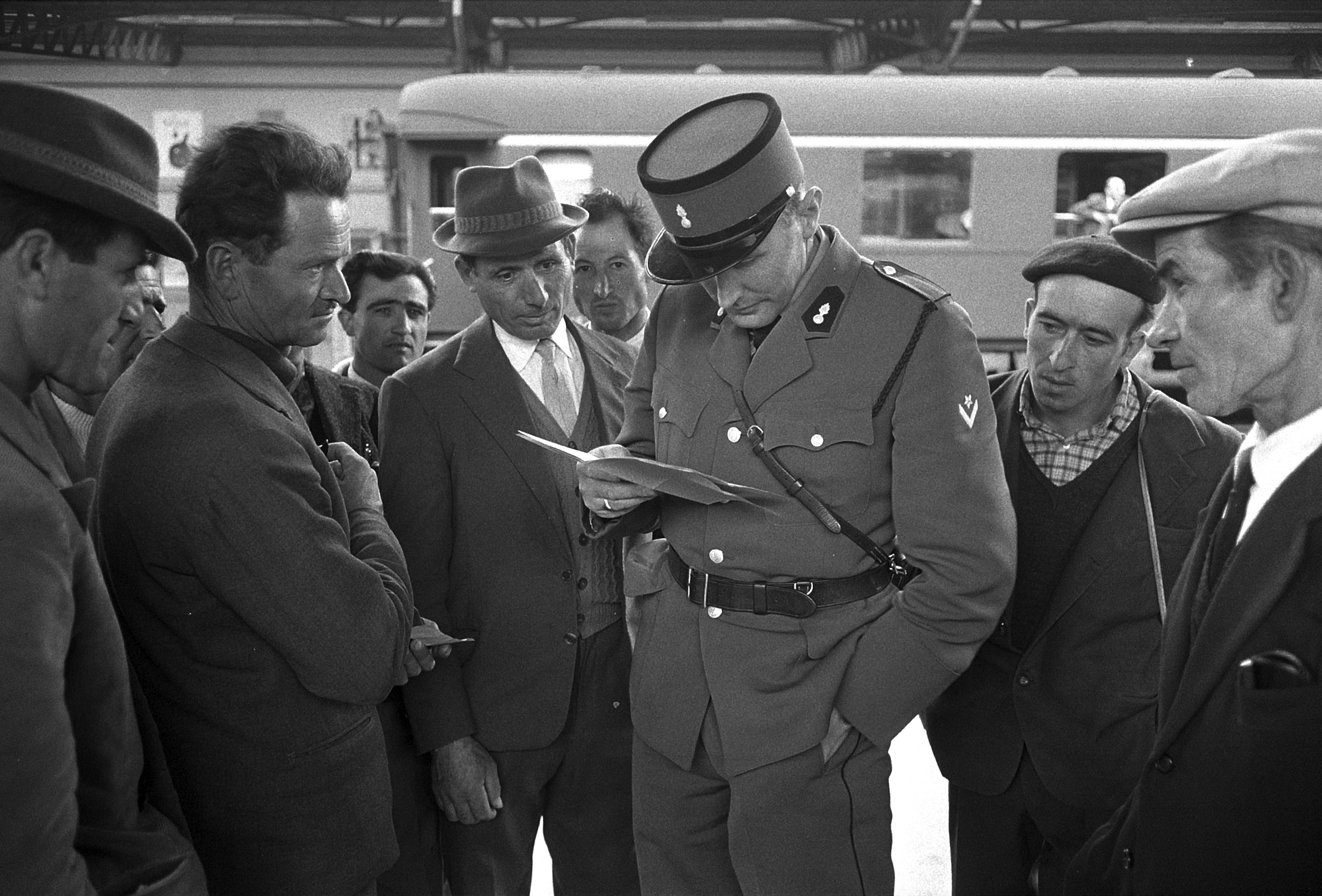
The most spectacular case is Italy, which, traditionally, forces its citizens to return home to vote. Many Swiss remember impressive special trains organised in the 1950s to transport Italians working in Switzerland home to elect their politicians. As many voted for Communist parties, these trains have come to be known in the Italian collective memory as “red trains”.
This Italian obligation to return home to vote is still the case for European elections, and it remains largely subsidised: trains are free once voters get to Italy and road tolls are lifted.
In the Zurich commune of Dietikon, most of the 2,500 Italians come from the same area of Calabria in the “toe” of the country and many will travel back there for the elections.
As usual, it will be a chance for a party. Two or three special coaches are already planned for Dietikon and for the rest of German-speaking Switzerland. Michel Schiavone, secretary of the Swiss section of Italy’s centre-left Democratic Party, estimates around 20 coaches will be trundling towards Italian voting booths.
Jean-Claude Marchand, dual French-Swiss national, Saint-Saphorin (canton Vaud): representative for the National Front in Switzerland
“It’s time to re-establish a ‘Europe of homelands’ – and too bad if that requires getting out of the current Europe. To return to a Europe of nation states is above all to re-establish border controls – let in those who are good and turn away those who are bad. What is valuable for commodities is all the more so for people. We want the end of a single currency and a referendum to free ourselves of the shackles of Europe. We want a new realistic construction rejecting the bureaucratic tentacles of Brussels.”
Voter mobilisation
France always makes an effort to simplify voting for its expats. For this year’s European elections, it is opening 19 voting locations in French-speaking Switzerland (including schools, an arsenal and a sports centre), 15 in German-speaking Switzerland and one in the Italian-speaking part of the country.
Politically, voter mobilisation takes place above all on the left. With 33 sections in Switzerland, Italy’s Democratic Party is particularly well organised in this regard. But the right is also engaged, especially in the French-speaking part of the country, where the UMP, the main opposition party in France, has a solid “delegation”. The French National Front has already organised a demonstration in Geneva.
As for Swiss political parties, they are by and large wary of playing a role in the elections. Only the centre-left Social Democrats are actively engaged in the campaign, setting up a sizeable network of cooperation and mobilisation with European socialist parties active in Switzerland.
It has also organised several meetings, including an “election party” in Bern which was attended by two socialist candidates, one from Spain and one from Germany.
From the 1930s until the end of the Cold War, the cabinet banned foreigners resident in Switzerland from taking part within Switzerland in elections abroad in any way. This was judged “incompatible with sovereign rights” and “dangerous” for national security.
The upheavals which shook Europe during the 1970s (fall of dictators in Portugal, Greece and Spain) and in 1989 (collapse of Communist regimes) forced Bern to change its mind – following several incidents.
The most embarrassing was in 1976, the year after the death of Spanish dictator Franco. King Juan Carlos organised a constitutional referendum which aimed to ratify the return of democracy to Spain. The Spanish ambassador in Bern took out adverts in the Swiss press inviting his compatriots to register in one of 17 official Spanish representations in Switzerland. However, the ambassador was promptly summoned by the cabinet who warned him that voting in Switzerland, even by post, was illegal. He was therefore forced to take out more adverts informing Spanish expats that the government was banning them from voting.
It was only in 1994 that Switzerland did away with such restrictions.
(Translated from French by Thomas Stephens)

In compliance with the JTI standards
More: SWI swissinfo.ch certified by the Journalism Trust Initiative

You can find an overview of ongoing debates with our journalists here . Please join us!
If you want to start a conversation about a topic raised in this article or want to report factual errors, email us at english@swissinfo.ch.