








Swiss defence minister calls for national unity

During a ceremony commemorating the Battle of Sempach, Defence Minister Martin Pfister strongly advocated the further development of the Swiss Armed Forces.
Select your language
Generated with artificial intelligence.
Listening:
Swiss defence minister calls for national unity
Exactly 640 years after the victory over the Habsburgs, Pfister said it was time to celebrate the country’s unity.
Following Albert Rösti in 2024, this year it was once again a member of the Federal Council who delivered the official speech at the annual commemorative event, which was attended by around 1,700 people, the State Chancellery of canton Lucerne said in a statement.
In his speech, Pfister emphasised that a country also thrives on “shared stories and memories”. Places such as Morgarten, Murten and Sempach became, in the 19th century, important landmarks of national identity for the then fledgling federal state.
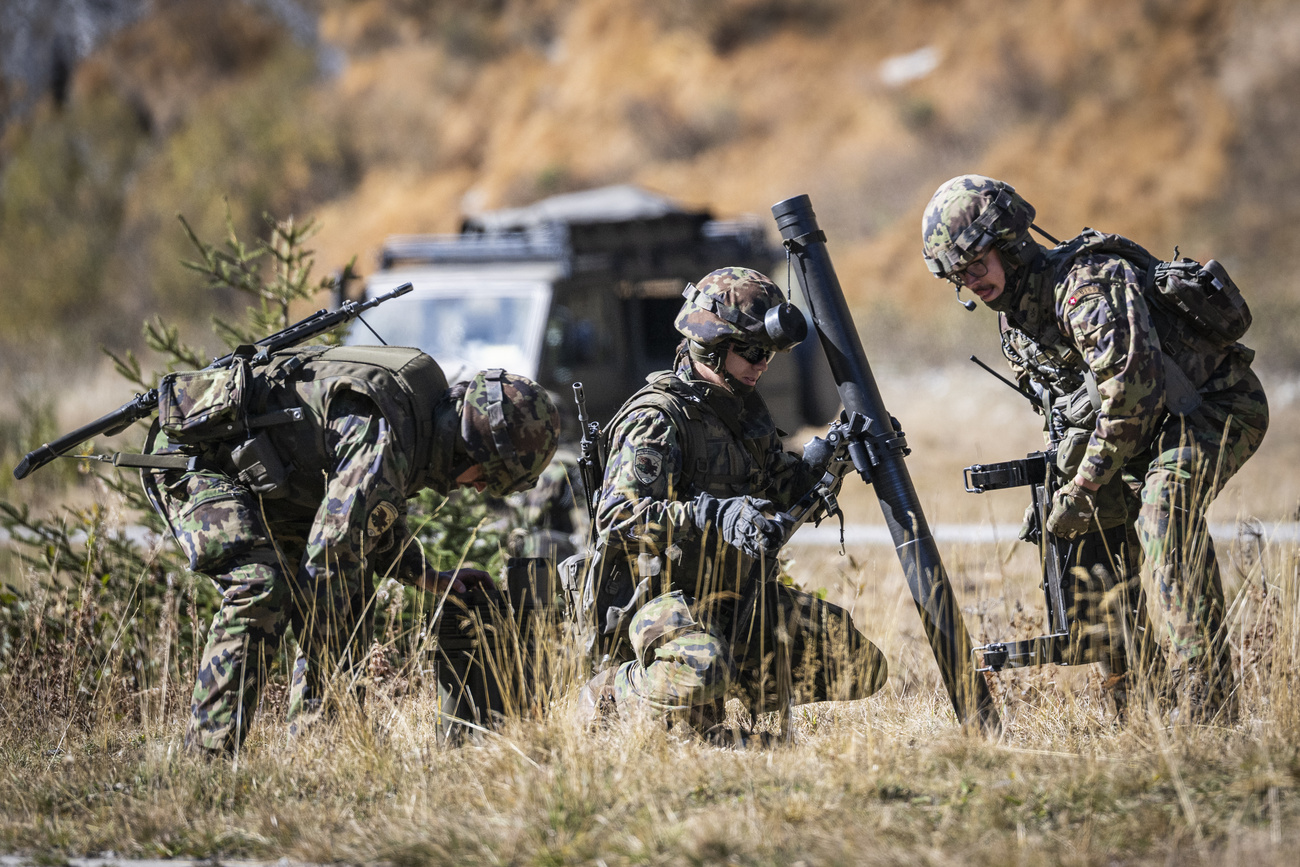
The defence minister then immediately linked these themes to current political issues. According to the text of his speech, Pfister reiterated the need to transform the Swiss Armed Forces and prepare them for today’s threats. This entails high costs, but is essential, he said.
More
Why Switzerland is struggling with its national defence
He warned that the past decades of peace have “blurred our sense of reality regarding threats”. Today, we find ourselves once again at a decisive moment in history. Swiss history is characterised by the unity of its citizens, a sense of responsibility and a commitment to the common good.
At the Battle of Sempach in 1386, the Confederates defeated the Habsburg army. This battle is regarded as part of the so-called wars of liberation against Habsburg feudal rule. Subsequently, the legend of Arnold Winkelried, who is said to have decided the outcome of the battle, also became part of the tradition. In the past, far-right groups have also marched in the commemoration on several occasions.
Join the debate:
External Content
Translated from Italian, sub-edited by ts
External Content

In compliance with the JTI standards
More: SWI swissinfo.ch certified by the Journalism Trust Initiative

You can find an overview of ongoing debates with our journalists here . Please join us!
If you want to start a conversation about a topic raised in this article or want to report factual errors, email us at english@swissinfo.ch.