








Wild honey bees reclassified as ‘critically endangered’
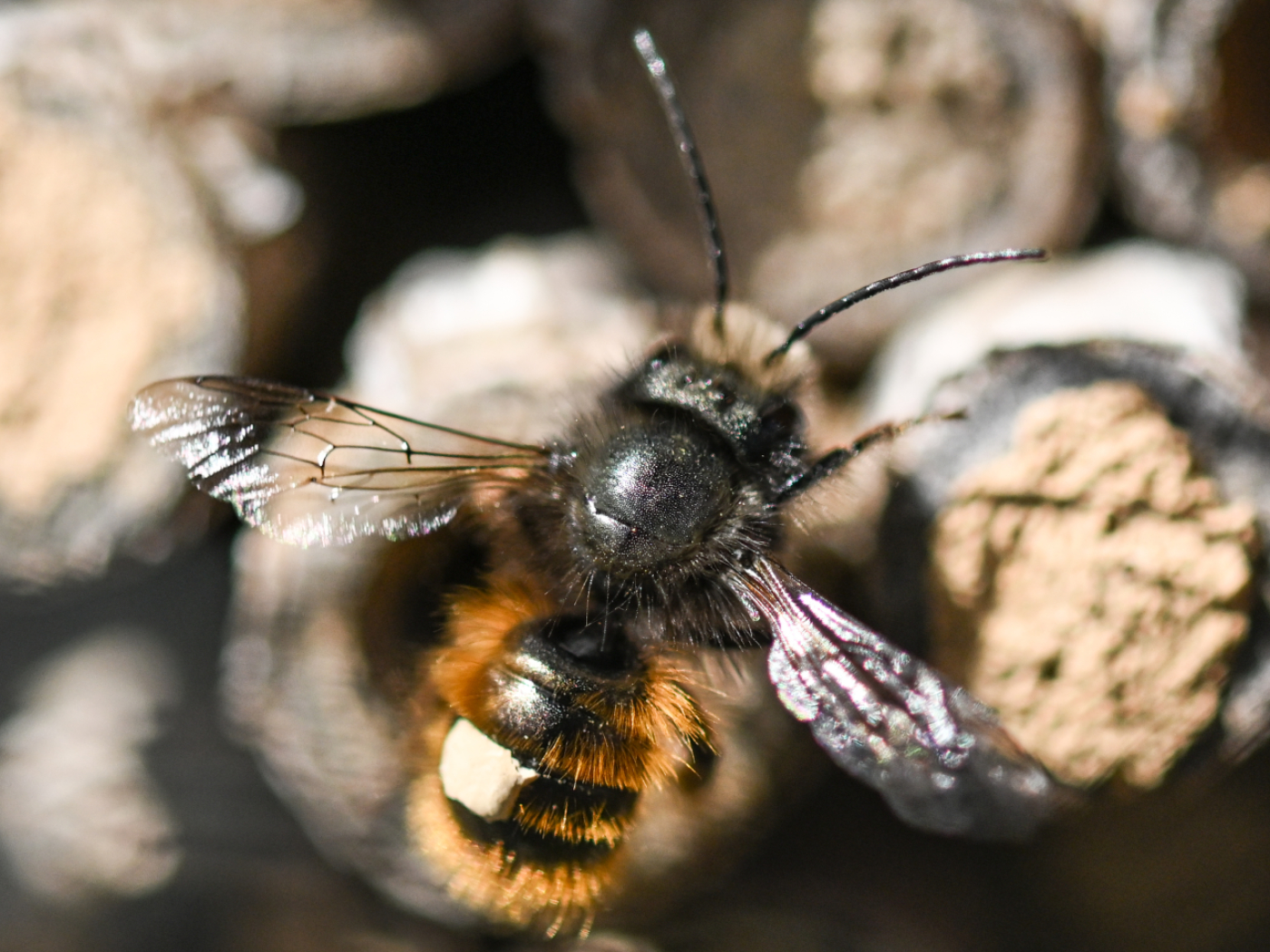
A study by Agroscope Zurich and the University of Hohenheim, Germany, shows a significant decline in wild honeybee colonies in Europe. The honeybee is classified as critically endangered, the Swiss organisation FreeTheBees announced on Tuesday.
The organisation, which is explicitly committed to protecting wild honeybees, cites the threat classification of the International Union for Conservation of Nature (IUCN).
The bee conservationists recommend that wild honey bees be recognised as part of biodiversity and systematically monitored. Wild colonies account for around a sixth of Europe’s honey bees, but their habitat is becoming scarce: there is a lack of old trees with hollows, a lack of food and a lack of near-natural structures.
More
Swiss bee colonies poisoned by insecticide
However, it is by no means only wild honey bees that are under threat. A total of 615 bee species live in Switzerland; 45% of native wild bees are threatened. This is according to the 2024 update of the Federal Office for the Environment’s (FOEN) Red List of Bees.
Of these, 9.6% – or 59 species – are considered extinct in Switzerland. 3.9% – or 24 species – were classified as critically endangered, 13.7% (84 species) as endangered, and 18.2% (112 species) as vulnerable.
+ How we produce English news
Translated from German, reviewed by an English Department journalist.

In compliance with the JTI standards
More: SWI swissinfo.ch certified by the Journalism Trust Initiative

You can find an overview of ongoing debates with our journalists here . Please join us!
If you want to start a conversation about a topic raised in this article or want to report factual errors, email us at english@swissinfo.ch.