








Swiss street to be renamed after black domestic worker

The municipality of Yverdon-les-Bains in western Switzerland has decided to rename Rue de l'Ancien-Stand as Rue Pauline-Buisson, in tribute to a black domestic worker who was born into slavery in Saint-Domingue and brought to Yverdon in 1776.
Select your language
Generated with artificial intelligence.
Listening:
Swiss street to be renamed after black domestic worker
+Get the most important news from Switzerland in your inbox
The symbolic gesture of reparation aims to bring to light a person who lived in the town for nearly half a century without ever receiving legal or social recognition.
In 1776, after spending several years in Saint-Domingue, modern-day Haiti, David-Philippe de Treytorrens, a native of Yverdon, returned to his hometown with two black servants, Pauline Buisson and François Midal. In 1790, Buisson gave birth to a son, Samuel Hypolite Buisson, born out of wedlock to a Frenchman passing through.
This illegitimate child found himself at the centre of a long-running dispute between the authorities and the de Treytorrens family due to his lack of legal status. The authorities refused to naturalise him or grant him citizenship. The man, who worked as a cobbler, remained, like his mother, stateless throughout his life.
+ Swiss cities dust off their colonial past
Little-known story
This story, long overlooked, has been documented thanks to research carried out by the city archives, notably through the work of historian Catherine Guanzini. It bears witness to the difficult journey of a man of colour who was able to live and work in Yverdon, but who was denied the papers that would have guaranteed the security of his stay.
For the local authorities, renaming a street in honour of Pauline Buisson constitutes a “gesture of symbolic reparation”, it explained in a statement on Thursday. This decision follows the legislature’s posthumous conferral of honorary citizenship on Pauline Buisson, her son and François Midal.
+ The hard battle for women’s visibility in the streets of Geneva
Detailed file
The city archives hold the file on the legal proceedings between the municipality and the Treytorrens family between 1826 and 1835. This file is considered by many to be exceptional, as documents from that period detailing the fate of slaves brought back to Europe from the colonies are rare. Yverdon is publishing it in full on its website to make it more accessible to researchers and anyone else interested.
The new name of Rue de l’Ancien-Stand is due to come into effect this year on October 3, the birthday of Samuel Hypolite Buisson (1790–1832).
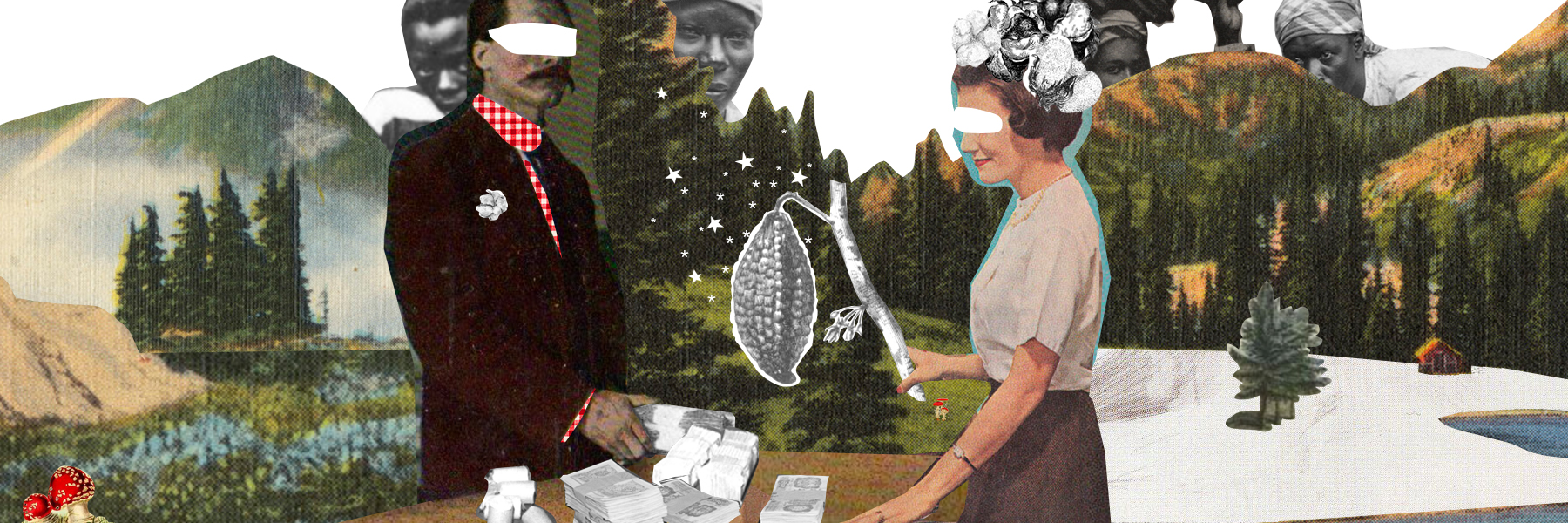
More
Switzerland and its colonists
Adapted from French by AI/ts
We select the most relevant news for an international audience and use automatic translation tools to translate them into English. A journalist then reviews the translation for clarity and accuracy before publication.
Providing you with automatically translated news gives us the time to write more in-depth articles. The news stories we select have been written and carefully fact-checked by an external editorial team from news agencies such as Bloomberg or Keystone.
If you have any questions about how we work, write to us at english@swissinfo.ch
External Content

In compliance with the JTI standards
More: SWI swissinfo.ch certified by the Journalism Trust Initiative

You can find an overview of ongoing debates with our journalists here . Please join us!
If you want to start a conversation about a topic raised in this article or want to report factual errors, email us at english@swissinfo.ch.