








EU industrial push strains ties with Switzerland and Norway
The European Union’s closest economic partners are warning Brussels that its increasingly protectionist industrial policies risk shutting them out of a single market they have spent decades integrating with.
Select your language
Generated with artificial intelligence.
Listening:
EU industrial push strains ties with Switzerland and Norway
Switzerland, Norway, Iceland and Liechtenstein have built close economic relationships with the bloc, accepting swaths of EU rules and contributing billions to European programmes in return for varying degrees of access to its 450 million consumers.
External Content

But as Brussels responds to competition from China and the US with subsidies, tariffs and “Made in Europe” requirements, that model is coming under strain. Measures intended to protect European industry from foreign competition are increasingly catching neighbouring countries whose economies and supply chains are deeply entwined with the EU.
“EU initiatives are increasingly oriented towards ‘Made in EU’ requirements,” Switzerland’s State Secretariat for Economic Affairs told the FT, arguing that new measures should take account of “the entire European value chains, including Switzerland” if Brussels wants to strengthen the continent’s resilience and competitiveness.
Swiss officials say the problems are often unintended rather than deliberately discriminatory — but that Bern is having to intervene more frequently to ensure it is not inadvertently treated like a distant third country.
More
Swiss-EU economic relations in eight charts
In one case, draft EU rules favoured processing municipal waste inside the bloc in Germany or Austria even when the nearest treatment plant was across the border in Switzerland. Bern intervened and an exemption was introduced allowing waste to be sent to the closest facility.
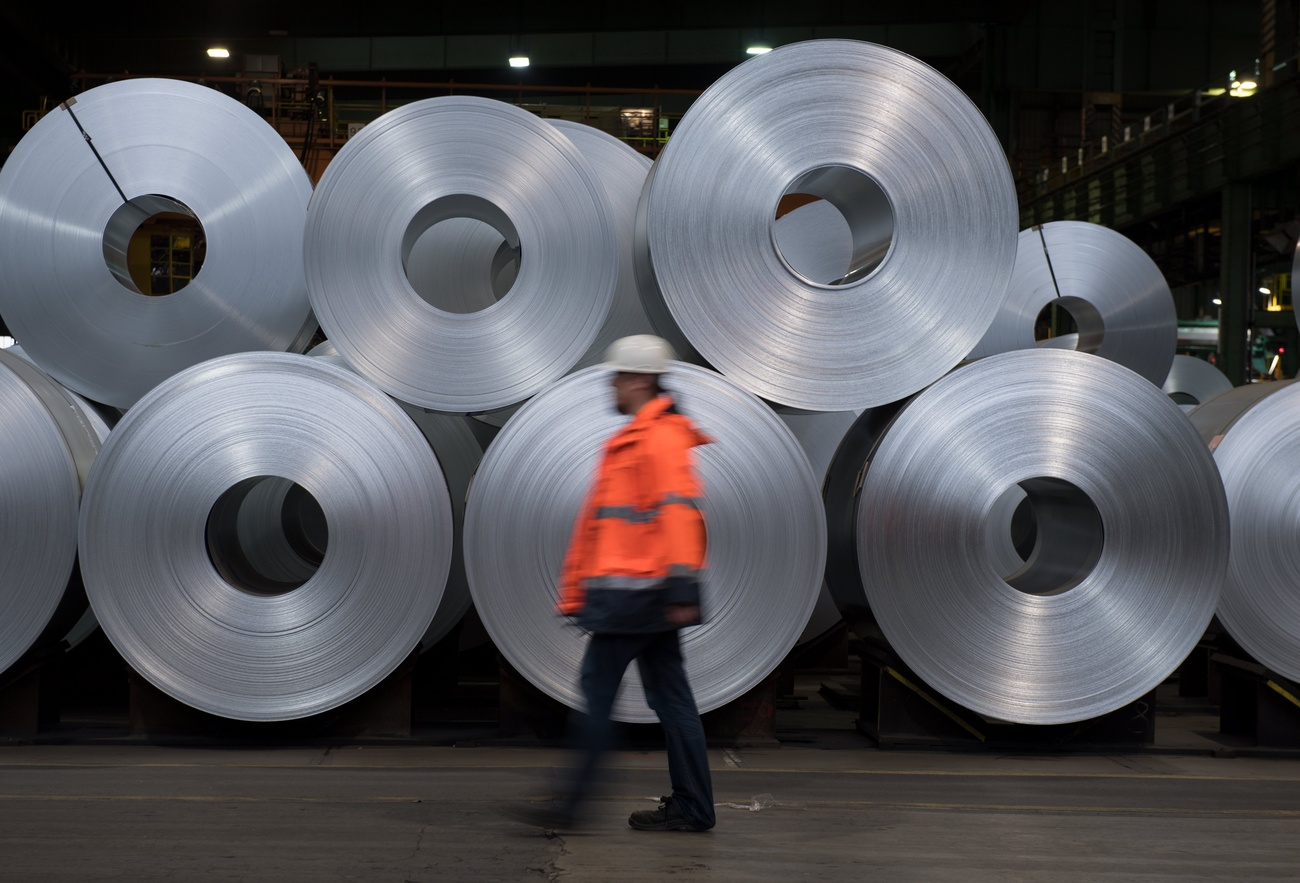
Switzerland has also protested after proposed EU steel safeguards treated it less favourably than European Economic Area members Norway, Iceland and Liechtenstein, and has raised concerns over aspects of the bloc’s Industrial Accelerator Act.
Swiss officials argue that excluding the country from some measures designed to bolster European industry could ultimately make EU supply chains less competitive.
“We have been trying to emphasise to the EU that it is beneficial for them to include Switzerland,” one official said.
The stakes are particularly high for Bern. The EU is by far Switzerland’s largest trading partner, while Bern has committed billions of Swiss francs to EU cohesion programmes despite having no formal role in shaping the bloc’s industrial policy. Bern has agreed to pay CHF130 million ($161 million) a year before increasing contributions to CHF350 million annually under a new bilateral package.

More
The threats to ‘Swiss Made’
That package, designed to stabilise Switzerland’s often fractious relationship with Brussels, still needs parliamentary approval and is expected ultimately to face a referendum in 2027 or 2028. Swiss officials are wary that new trade disputes could complicate the politics of selling closer EU ties to voters.
David Henig, of the European Centre for International Political Economy think-tank, said that as the EU seeks to protect domestic industry from a surge of cheap Chinese imports, it is erecting barriers against close partners.
“There is also enormous pressure to be seen to be protecting EU manufacturing jobs, even at the cost of being seen as an unreliable partner,” he said.
Switzerland’s concerns are increasingly shared by Norway, another country closely aligned with the EU that has been caught by the bloc’s more assertive trade and industrial policies.
Norway pays hundreds of millions of euros annually to participate in EU programmes and contributes separately to schemes aimed at reducing economic disparities within the bloc.
It is also a member of the European Free Trade Association (EFTA), which is now the world’s second-largest free-trade network after the EU, with 35 agreements covering 49 partner countries.
More
What does ‘Made in Switzerland’ mean exactly?
Last year, Oslo unexpectedly found itself subject to EU trade restrictions on some steel alloys to protect the industry from Asian competition, exposing a vulnerability of being outside the bloc.
“When tariffs and customs become more important, and when we see increasing trade tensions between the big trading blocs, the US, the EU and others, then of course that may have greater consequences than it has had until now,” Norway’s finance minister Jens Stoltenberg told the FT.
The debate prompted Norwegian industry to argue the EEA agreement was no longer sufficient and reopened a debate over Norway’s relationship with the bloc. The changing environment has also prompted Oslo to move responsibility for trade policy back to the foreign ministry this year.
“The ferroalloys case is a good example that being outside the EU has costs that we have to acknowledge. And that is a choice Norway has made,” said one Norwegian diplomat. “You have to live with that choice. Or decide: actually, we should join the EU.”
But as the US, China and the EU increasingly use tariffs, subsidies and industrial policy to pursue their goals, officials privately acknowledge that many economic decisions are being taken in areas where Norway and Switzerland have no seat at the table.
“We are not inside the room where these things are discussed, so we are not able to help shape them. That is really the big problem,” said another Norwegian diplomat.
Astrid Bergmål, deputy foreign minister, told the FT Norway retained “genuine trade policy sovereignty” because it remained outside the EU’s customs union and decided for itself which trade agreements to pursue.
The debate is spreading across Europe’s wealthy non-EU fringe. Iceland is preparing to vote on Saturday on whether to reopen accession negotiations with Brussels, while Liechtenstein has joined Norway and Iceland in pressing the EU not to fragment a single market that extends beyond the bloc’s political borders.
“The internal market is the EU’s greatest asset and one of its strongest drivers of competitiveness. Its strength lies in its integrity,” said Pascal Schafhauser, Liechtenstein’s ambassador to the EU, speaking on behalf of the EEA states.
“The EEA Agreement creates a market of 30 states, enabling businesses across Europe to compete, innovate and grow. ‘Made in Europe’ initiatives will be most effective when they build on the full strength of that market.”
Copyright The Financial Times Limited 2026

In compliance with the JTI standards
More: SWI swissinfo.ch certified by the Journalism Trust Initiative

You can find an overview of ongoing debates with our journalists here . Please join us!
If you want to start a conversation about a topic raised in this article or want to report factual errors, email us at english@swissinfo.ch.