








The threats to ‘Swiss Made’

For decades the country’s exporters focused on adding value, but US tariffs and the strong franc are now hitting them harder.
Select your language
Generated with artificial intelligence.
Listening:
The threats to ‘Swiss Made’
When US President Donald Trump hit Switzerland with punitive tariffs last year, Nabil Francis’s first reaction was shock.
“It was a wake-up call,” says Francis, the chief executive of Felco, a company known for its high-quality garden tools. “You understood that the world was changing when Switzerland was treated differently to the EU.”
External Content

For generations, Felco had been making its signature red-handled secateurs at its base among the green hills of the French-speaking canton of Neuchâtel. Around 95% of production is exported to more than 120 countries, with the family-owned group counting King Charles of the UK and US former first lady Michelle Obama among its customers.
Suddenly, it faced a tariff of 39% on shipments to its single biggest market, compared with a 15% levy applied to EU-based rivals. But Francis’s response was not to start moving manufacturing to cheaper countries, nor to make Felco’s shears cheaper.
Instead, it was to make them more expensive and more desirable, adding options such as leather-wrapped handles, gold-coated blades and laser-engraved personalisation that pushed the price above CHF100 ($125).
Felco’s strategy of doubling down on quality and reputation is typical of Switzerland, where manufacturing still accounts for almost 19% of GDP, twice the contribution from its celebrated financial services industry. The white cross on a red background, emblazoned on products from Heule precision tools to Caran D’Ache pencils, is both a guarantee of quality that is understood worldwide, and a valuable marketing device for Swiss manufacturers.
But it is becoming more difficult to execute as the franc appreciates, hurting the exports that generate half of Switzerland’s economic output, and major trading partners turn to protectionism and tariffs. Moves to increase flexibility by introducing additional definitions of Swissness besides “Swiss Made” have provoked a backlash from some lawmakers and manufacturers.
More
What does ‘Made in Switzerland’ mean exactly?
Switzerland this year slipped from first to third in a ranking of global competitiveness by IMD, the business school, while its economic performance ranking plunged from 13th to 37th, largely because of a deterioration in investment flows and weaker employment.
“The Swiss model is hardly sustainable in a world that is more fragmented and more protectionist,” says Arturo Bris, professor of finance at IMD.
Swissmem, the country’s largest industrial association, described 2025 as a “lost year” in which sales stagnated and 6,600 tech-industry jobs disappeared. A tentative but uneven recovery is now under way, with SME sales falling 3.8% in the first half of 2026 even as high-tech manufacturing overall grew 2.5%.
Back in Neuchâtel, Francis acknowledges there is “a limit to everything” in terms of premiumisation. But Felco has not yet reached it; a new range, set for launch in September, swaps the famous red for anodised aluminium in bold colours such as Electric Blue, Power Green, Pink Passion and Tangerine Blaze.
He wants to turn the humble pruning shear into a “lifestyle object” similar to Le Creuset, whose brightly coloured cookware has become a kitchen style statement.
The focus will remain resolutely upmarket. “If you are an industrial company producing in Switzerland and exporting, you’re not going to shoot at the mass market,” says Francis.
“At that game, you will always lose.”
The industrial outlier
A landlocked country of 9mn people, with few natural resources and some of the world’s highest wages, is not an obvious starting point for a manufacturing success story.
But the Swiss made it work. Companies responded to high wages and an appreciating currency by becoming more productive, more specialised, more sophisticated and more expensive, while focusing on global markets rather than their small pool of domestic consumers.
“Swiss Made” became shorthand for the result: watches, machinery and precision tools good enough that customers around the world would pay extra for them. One of the results is an economy unusually rich in relatively small companies that dominate particular niches.
A study published this summer identified 100 such Swiss businesses, together generating more than CHF40 billion in annual revenues. They range from VAT, a maker of vacuum valves used in semiconductor production, to Burckhardt Compression and specialist manufacturers such as Rondo, whose machines shape dough into pastries in bakeries around the world.
The resilience of such hidden champions has helped the Alpine country to resist much of the deindustrialisation that has swept through the rest of western Europe. Switzerland has the highest proportion of high-tech manufacturing of any of the OECD’s 38 member countries.
That strength is underpinned by an unusually deep apprenticeship system. About two-thirds of young Swiss pursue vocational education and training, most learning partly inside companies — supplying manufacturers with generations of machinists, technicians and other skilled workers.
Bern pushed its commitment to open markets still further in January 2024 when it unilaterally abolished all tariffs on imports of industrial goods. The government argued that such protection had become counter-productive: cheaper imported components would reduce costs for Swiss factories embedded in global supply chains.
But its vision of a liberal, export-driven success story is increasingly at odds with a more protectionist world. US tariffs are encouraging companies to manufacture closer to American customers, while China has long supported industries deemed strategic. Europe has responded with subsidies and industrial policies that favour production inside the EU.
The franc remains a persistent handicap for Switzerland’s exporters. Its status as a haven currency means it tends to strengthen in periods of uncertainty — with the result that the financial crisis, the Covid-19 pandemic and the conflicts in Ukraine and the Middle East have all served to make Swiss products more expensive abroad.
“If you look back a couple of years at where the franc exchange rate was and where it is now, it is a wonder Swiss companies still exist,” says Urs Furrer, director of the Swiss SME Association, which represents some 230 trade and cantonal associations.
Former Swiss National Bank chair Thomas Jordan argues that the franc’s real exchange rate has been “remarkably stable” in recent years. But he acknowledges adjustment after sharp appreciation is never automatic and requires significant effort from companies — particularly in a difficult global economic environment.
Swiss manufacturers responded through productivity, automation and by moving further into niches where customers were less sensitive to price.
But like Francis, the Felco boss, Furrer does not believe Switzerland can preserve every kind of manufacturing. “Mass production of cheap, low-quality goods is not the future,” he says.
How much Swiss?
Inside Felco’s factory, housed in an old watch-dial works, automated precision machines now hum and whirr where horologists once worked.
Francis says it has made no redundancies directly because of automation, which has instead allowed it to raise productivity and keep production in Switzerland while workers move into new roles.
Every pruning shear is still assembled by hand, meaning Felco complies with strengthened “Swissness” legislation that came into force in 2017 following years of political debate. This sets out that for most industrial products, at least 60% of manufacturing costs must generally be incurred in Switzerland and an essential manufacturing step must take place there for the product to qualify as “Swiss Made”.
But at Bernina, a 133-year-old maker of sewing machines, serial production has this year moved from Steckborn in eastern Switzerland to its existing factory in Thailand. The company blamed the strong franc and difficult conditions in the US, which accounts for almost three-quarters of its sales.
Bernina will retain more than 300 employees in Steckborn, along with development, prototype construction, testing and quality management. “The DNA of Bernina is and remains Swiss,” says chief executive Kai Hillebrandt, even if Swiss production could “no longer be economically justified” and its sewing machines can no longer be described as “Swiss Made”.
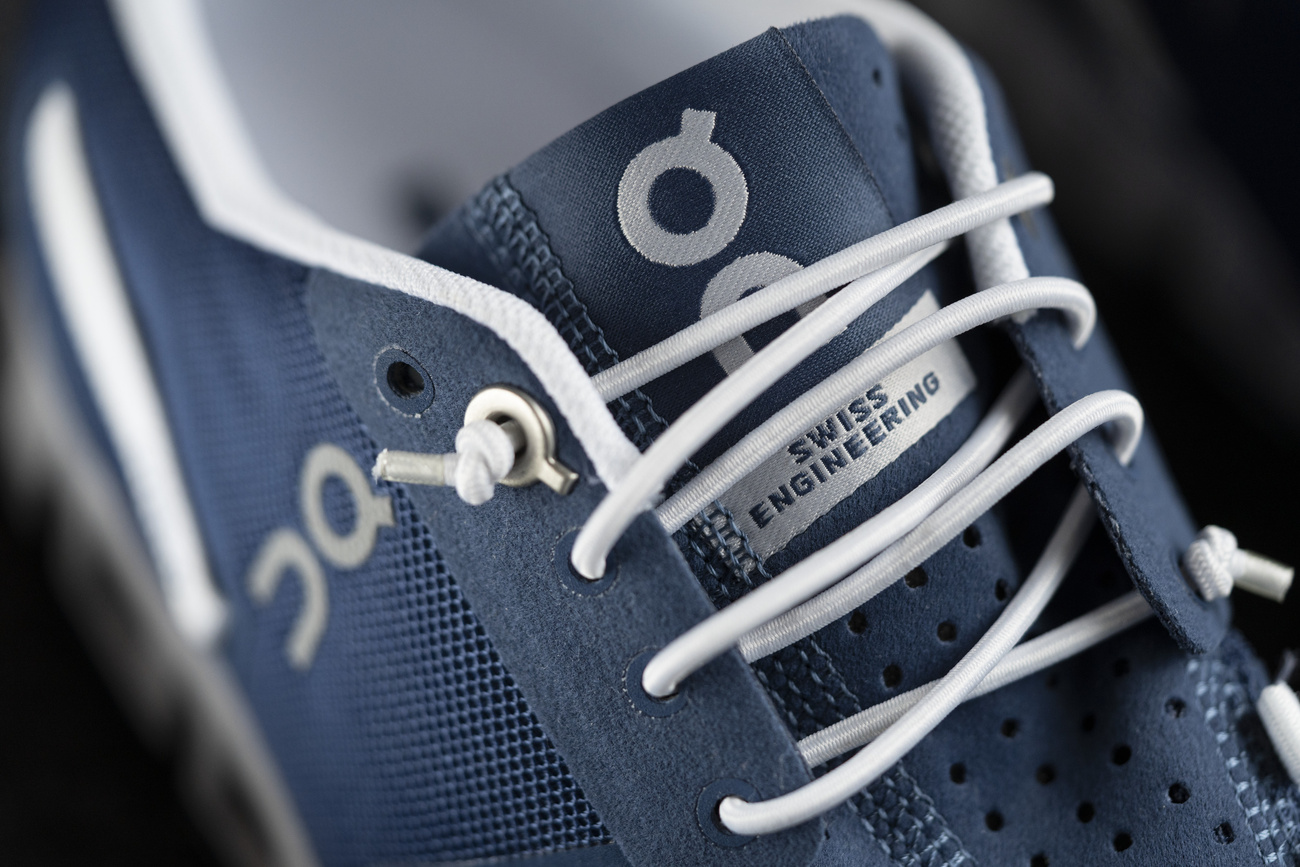
Companies can now use alternative descriptions involving the famous white-on-red cross, such as “Swiss Engineering” or “Swiss Research”, subject to certain conditions, after the Swiss Federal Institute of Intellectual Property (IPI) loosened its interpretation of the closely guarded Swissness rules in March, citing the strong franc and US tariffs.
The change to the rules followed a long-running dispute involving On, the Zurich-based maker of sports shoes backed by former tennis star Roger Federer, which had been putting a Swiss cross on shoes made in Asia.
On said it manufactures abroad because the supply chain for large-scale production does not exist in Europe. But it argues that much of the value in its products — design, engineering, technology and intellectual property — is created in Switzerland, and that it should be able to highlight this.
But Swissness Enforcement, a public-private entity created to combat misuse of Swiss indications, argued that doing so breached the rules, because the shoes themselves were not Swiss-made.
“Why do you want to use the Swiss trademark?” says David Stärkle, the organisation’s managing director. “You want to profit from the value of the reputation.”
Swiss business newspaper NZZ am Sonntag has reported that On put pressure on the IPI, including threatening a state-liability lawsuit if the authority’s actions caused it losses in China. On has “strongly rejected” the suggestion and said its correspondence was part of a normal process of seeking legal clarity.
Since the IPI’s change, politicians have filed motions seeking to tighten the rules again. “The Swiss cross must not be put on products manufactured abroad — full stop,” centre-right lawmaker Daniela Schneeberger has said.
Industrial organisations representing Swiss companies have also expressed dismay. Nicola Tettamanti, president of Swissmechanic, which represents more than 1,000 SMEs, says his members remain strongly attached to “Swiss Made”.
He expects production that survives in Switzerland to become increasingly specialised and technologically demanding as robotics and AI compensate for high costs. “We have a chance in Switzerland,” he said, if companies remain above average in technology, quality and speed.
Other Swiss companies have taken different approaches. Victorinox still makes its famous Swiss Army knives in Switzerland but its luggage is designed in Switzerland and manufactured in Asia, bearing a white cross on a black, coat-of-arms-style emblem instead of the traditional white-on-red logo that adorns the knives.
When Toblerone’s US owner Mondelez shifted some production of the chocolate from Bern to Slovakia, Swissness rules meant it could no longer use the image of the Matterhorn and other indications of Swiss provenance on its packaging. But replacing the famous mountain with a more generic peak and changing the wording has not obviously dented sales.
La Prairie, the luxury skincare brand owned by Germany’s Beiersdorf, has deepened its Swiss roots, moving its global marketing team back from New York and in 2022 taking full control of the St Gallen company that manufactures most of its skincare collections.
“Swissness is more than our country of origin, it is part of who we are,” says Estelle Létang, La Prairie’s chief executive. “Our Swiss heritage continues to shape how we innovate.”
Even after last year’s US tariff shock, Beiersdorf said La Prairie would remain “Made in Switzerland” — although the economics are helped by extraordinary price tags: 50ml of its Skin Caviar Luxe Cream sells for about CHF650.
‘The business of surviving’
Switzerland is far from alone in confronting these pressures, though governments across Europe and the US are increasingly resorting to tariffs, subsidies and procurement rules to secure domestic manufacturing.
But there are reasons for Swiss industry to be confident. It retains one of the most sophisticated, diverse industrial bases in the world, while automation is reducing the importance of labour costs in some sectors.
The manufacturing that remains may simply become still more specialised, automated and concentrated in areas where Swiss precision and knowhow still justify the cost.
Stefan Brupbacher, director of Swissmem, argues that there is little alternative to this approach. “Swiss industry is too diverse to choose a handful of sectors or companies to subsidise,” he says.
The longstanding bargain is that companies accept international competition while the government provides the framework in which they can compete: access to markets and skilled workers, strong education and research, sound public finances and limited regulation.
Swiss Enforcement’s Stärkle is adamant Swiss manufacturing will weather the latest upheaval as it has previous currency shocks and changes in global trade. “There is something in the pride of Swiss industry to do it here, no matter what,” he says.
Even as global trade fragments, Bern recently concluded negotiations to upgrade its free trade agreement with China. The revised deal would allow 99.8% of current Swiss exports to enter China duty free, up from about half today.
Brupbacher questions how sustainable the subsidy race elsewhere will prove. “Let’s see down the road in 10 years who is succeeding,” he says. “Who has the money to continue to subsidise?”
For Swiss manufacturers, his answer is to remain indispensable: make products and components that customers cannot easily source elsewhere. The pandemic underscored his point. Early on in the crisis, Germany and France held up shipments of protective masks destined for Switzerland, sparking domestic outrage.
But Europe was dependent in the other direction too. Switzerland was a crucial supplier of specialised respiratory equipment and for Brupbacher, the episode illustrated the protection available to a small country that remains difficult to replace.
“For now, we are still indispensable,” he says. “And we are in the business of surviving.”
Copyright The Financial Times Limited 2026

In compliance with the JTI standards
More: SWI swissinfo.ch certified by the Journalism Trust Initiative

You can find an overview of ongoing debates with our journalists here . Please join us!
If you want to start a conversation about a topic raised in this article or want to report factual errors, email us at english@swissinfo.ch.