








Swiss farmers draw on fodder reserves
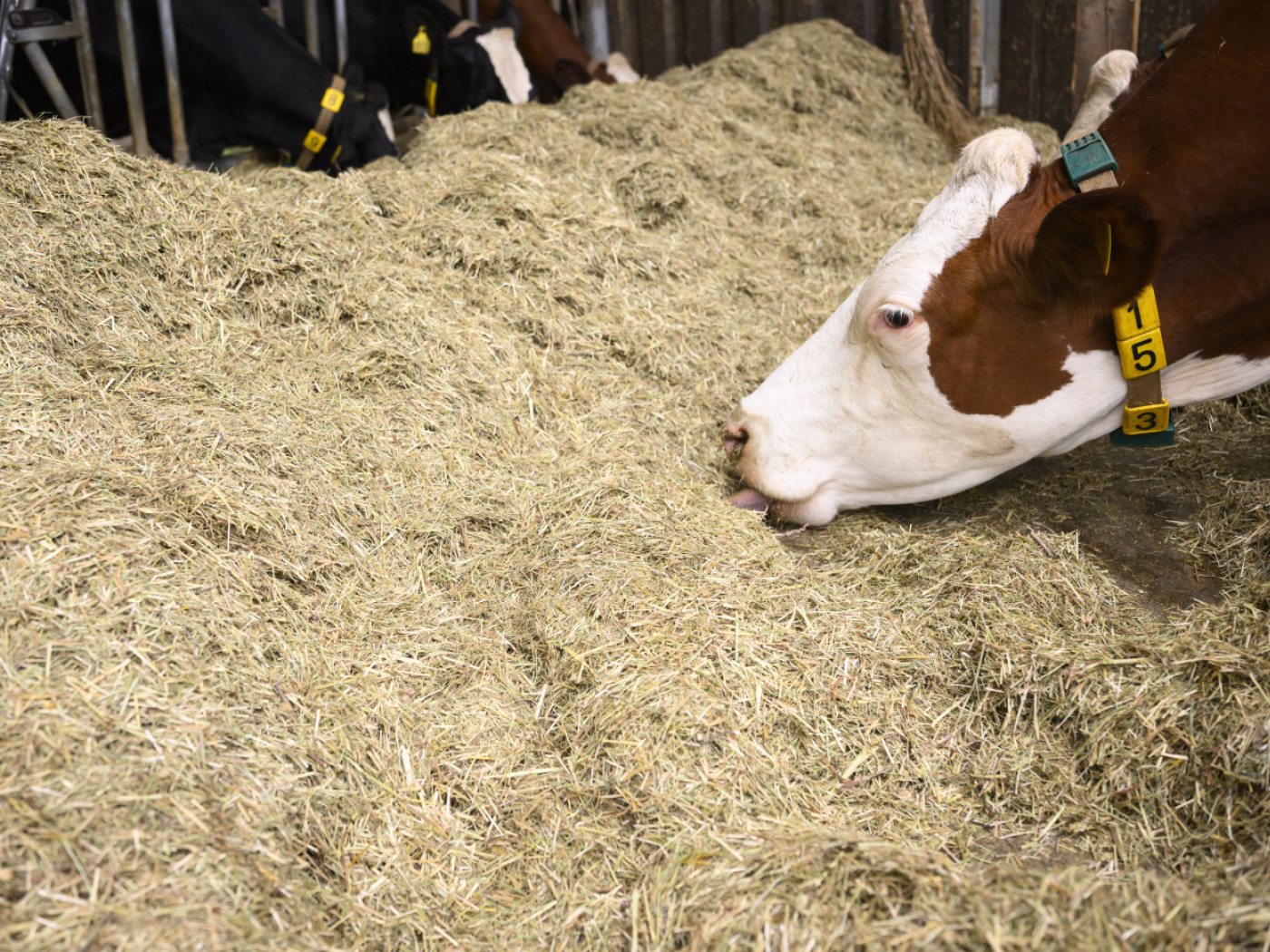
In response to a shortage of protein-rich fodder, Switzerland has authorised temporary withdrawals from its compulsory reserves. Up to 20% of stocks may be used from September 1.
Select your language
Generated with artificial intelligence.
Listening:
Swiss farmers draw on fodder reserves
Until the end of February 2027, it will therefore be possible to withdraw some 16,000 tonnes of fodder for animal feed from the compulsory stocks, the Federal Office for National Economic Supply (OFAE) announced on Monday.
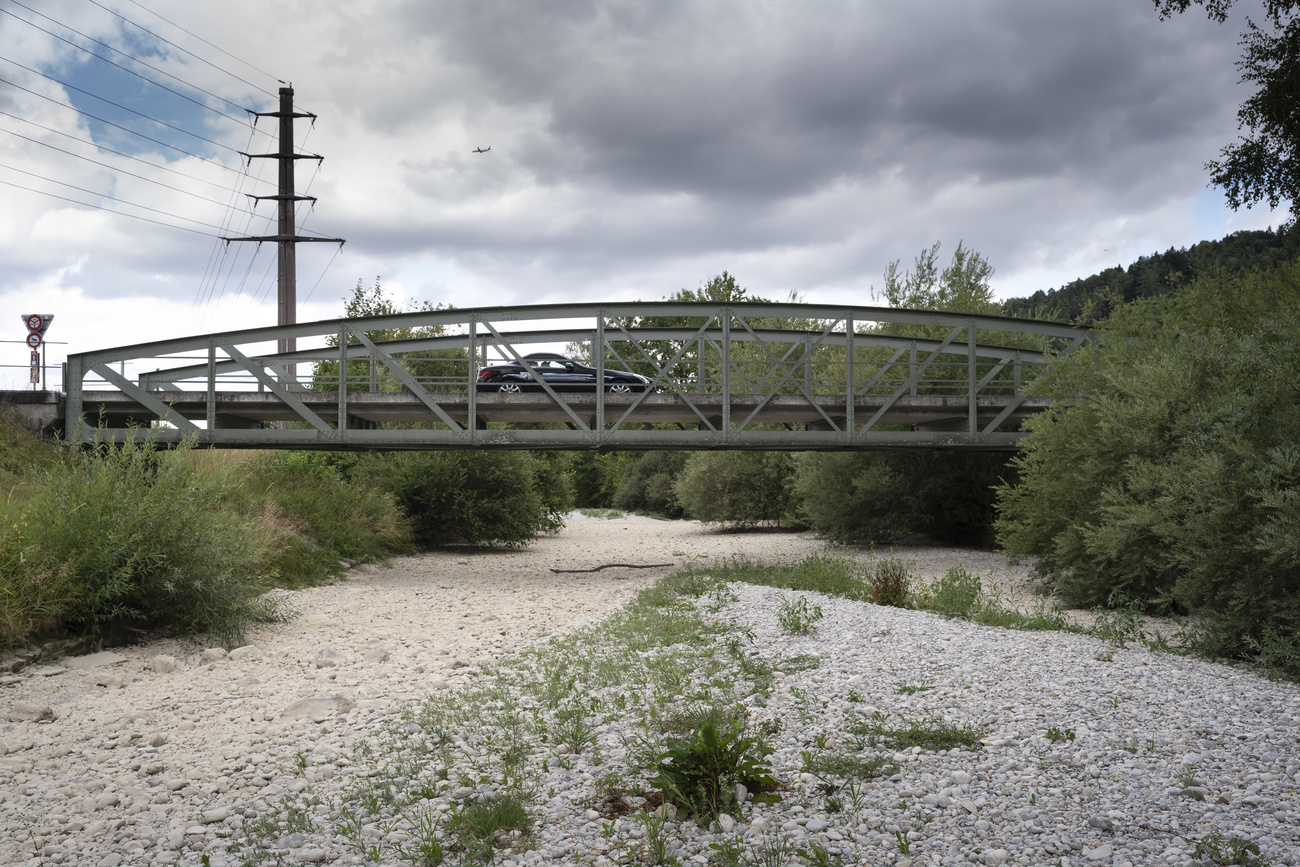
This decision by the delegate for national economic supply, Roland Pfister, aims to safeguard supplies. These have been disrupted by import difficulties, notably the persistently low water levels in the Rhine and the Danube, which are essential transport routes for these goods.
More
Drought in Switzerland: Europe’s ‘water tower’ runs dry
The prolonged drought has also reduced the availability of local fodder, exacerbating the situation.
The supply of protein crops on world markets is considered sufficient. The bottleneck lies instead with the transport routes to Switzerland. Importers are unable to transport sufficient quantities of goods, as road and rail transport capacities are already saturated with other goods. But the country’s supply of essential goods remains secure.
Switzerland relies almost exclusively on imports for protein crops, such as soya meal. These products, derived from seed residues, are an important source of protein for feeding cattle, pigs and poultry. They are generally mixed with cereals to form compound feed.

More
Switzerland is water-rich. So why are 151 towns rationing it?
Should the situation worsen further, economics minister Guy Parmelin, could order the release of the entire stock, which could cover the country’s needs for two months.
A similar temporary drawdown had already been authorised in 2018. At the time, no withdrawals were ultimately necessary, as the situation improved rapidly.
Join the debate:
External Content
+ How we produce news in English
Translated from French, reviewed by an English Department journalist.

In compliance with the JTI standards
More: SWI swissinfo.ch certified by the Journalism Trust Initiative

You can find an overview of ongoing debates with our journalists here . Please join us!
If you want to start a conversation about a topic raised in this article or want to report factual errors, email us at english@swissinfo.ch.