








Switzerland’s record-breaking summer by numbers
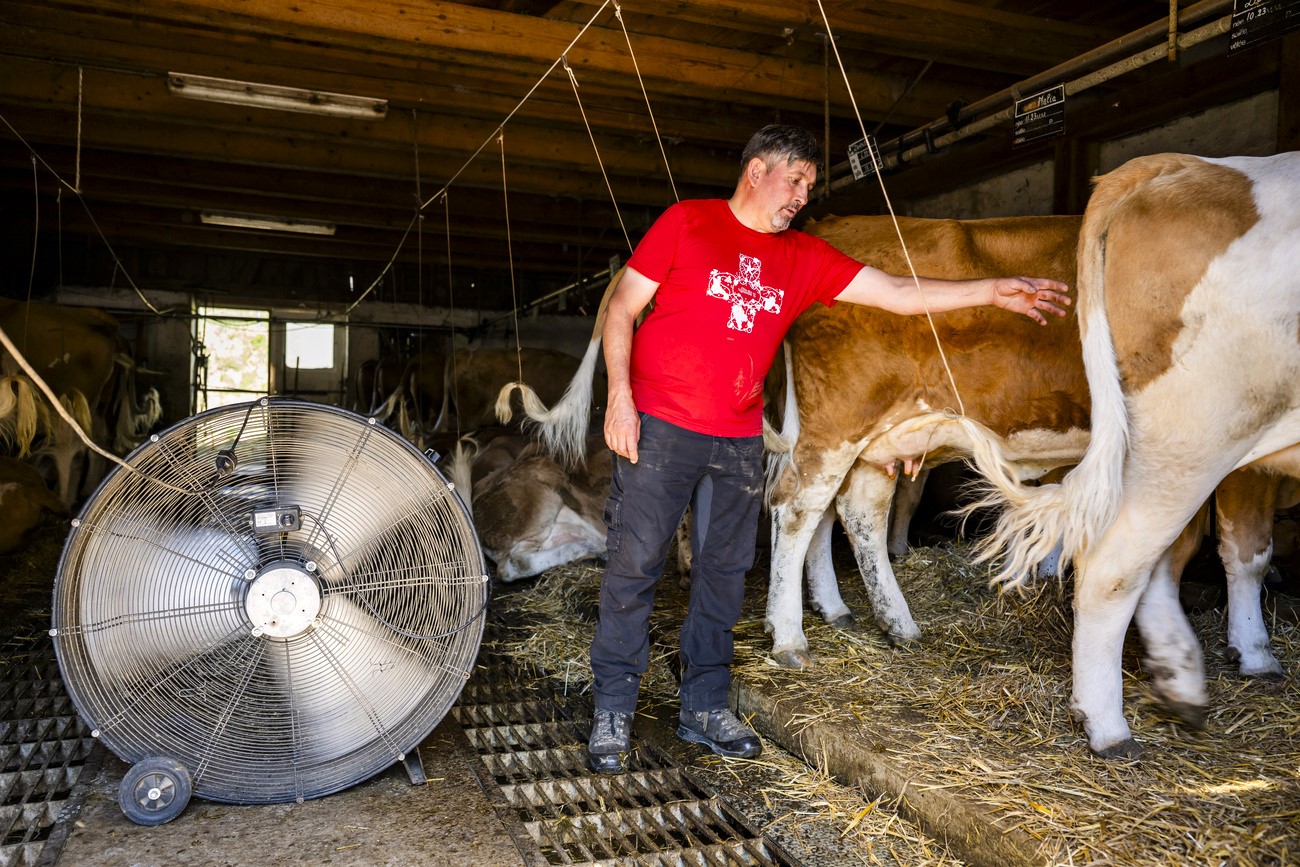
This year’s summer was the hottest and driest in Switzerland since measurements began in 1864. Only one national record remained unbroken.

The summer of 2026 rewrote Switzerland’s climate history. Average temperature, heat-alert days and tropical nights all exceeded those recorded during the famous “summer of the century” in 2003 – a season that had previously been an outlier. In addition, water levels in several of the country’s major lakes fell to unprecedented seasonal lows.
Data from the final summer report of the Swiss Federal Office of Meteorology and Climatology (MeteoSwiss), published on September 10, illustrate just how exceptional the past few months have been. And climate scientists say this anomaly could become the norm if greenhouse gas emissions are not reduced rapidly.
“With current global climate policies, we’re heading towards a world in which every second summer will be hotter than this one,” Reto Knutti, Professor of Climate Physics at federal technology institute ETH Zurich, told the news portal WatsonExternal link.
>> What Switzerland needs to learn from earlier and longer heatwaves:

More
What Switzerland needs to learn from earlier and longer heatwaves
3.4°C above the long-term average
The national average temperature for June, July and August was 17.2°C, which is 3.4°C above the 1991-2020 reference-period average. By comparison, the average temperature during the summer of 2003 was 16.9°C.
According to Knutti, five factors explain the exceptional heat: global warming, which accounts for 60-70% of the increase; dry soils, which eliminate the cooling effect of evaporation; cleaner air, which allows more solar radiation reaching the ground; persistent high-pressure systems over Europe; and a lack of thunderstorms.
Switzerland is among the countries warming most rapidly worldwide. In the Alpine nation at the heart of Europe, climate warming is occurring at roughly twice the global average rate. We explain why in this article.

39.7°C in Basel
Thirty of MeteoSwiss’s 160 or so automatic weather stations recorded new daily maximum temperature records this summer. Nearly half of these records were broken as early as June.
The national peak was registered at the Basel/Binningen station, where temperatures reached 39.7°C on July 30, equalling the all-time record for Switzerland north of the Alps, set in Geneva/Cointrin in 2015. New daily maximum temperature records were also registered in Buchs/Aarau (38.6°C), Zurich/Kloten (38.3°C) and Lucerne (36.8°C). South of the Alps, the highest temperature was measured in Biasca, Ticino, with 39.2°C on July 30.
Temperatures reached extraordinary levels in the mountains as well. In Scuol, in canton Graubünden, the mercury climbed to 35.1°C at an altitude of 1,304 metres.
One record did remain intact, however: Switzerland’s absolute temperature record. It still belongs to Grono, in southern Graubünden, where 41.5°C was recorded during the summer of 2003. However, this measurement is subject to some uncertainty, as it was not taken using an electronic sensor. Under current meteorological measurement and data assessment standards, that figure would be equivalent to 40.5°C.
>>This summer must serve as a wake-up call, according to a Swiss expert on the health impacts of heat:

More
Why Switzerland is still not ready to face heatwaves
Fifty-seven heat-alert days
The summer of 2026 will also be remembered for the number of heatwaves, defined as periods of at least three consecutive days with an average daily temperature of 25°C or higher. Between late May and late August, there were four such events.
Locarno-Monti in Ticino recorded the highest number of heat-alert days: 57 level three alerts (moderate danger), including 33 level four alerts (high danger), characterised by a daily average temperature of at least 27°C. The station also set a record for consecutive days above 30°C, reaching 24 days.
Several stations recorded at least two additional weeks of tropical days compared with previous records. Basel, Geneva and Sion exceeded 50 days with temperatures of at least 30°C, while Zurich and Bern recorded more than 40. The number of very hot days, with temperatures exceeding 35°C, also increased.
The summer that has just ended offers a glimpse of what future summers may look like. Climate models indicate that, under a scenario of 3°C global warming, Switzerland could experience an average of 45 level three heat-alert days per year, including 15 level four days.

Fifty tropical nights in Locarno-Monti
Temperatures remained high at night as well. A tropical night is defined as one in which temperatures do not fall below 20°C. Locarno-Monti recorded 50 such nights, eight more than during the summer of 2003. Residents experienced an uninterrupted sequence of 19 tropical nights between late July and mid-August.
Heat stress was also severe in Neuchâtel, where the number of tropical nights doubled from 15 in 2003 to 30 this year. When temperatures remain above 20°C throughout the night, the human body cannot cool down and recover from the heat accumulated during the day. This increases health risks for vulnerable groups such as the elderly and people with chronic illnesses.
Since the 1980s, the average increase has been around five to eight additional tropical nights per decade, meteorologist Luca Nisi explainedExternal link to Swiss public broadcaster RSI. Over the past two decades, however, the rate of increase has accelerated to roughly ten additional tropical nights per decade.
According to climate scenarios for SwitzerlandExternal link, Locarno-Monti could experience more than 70 tropical nights per year under a 3°C global warming scenario. In Neuchâtel and other Swiss cities, the number could approach 50.

Lake Constance 50cm lower
The year 2026 was also exceptional in terms of drought. The period from April to August was the driest since 1901. Rainfall across Switzerland amounted to only about half (61%) of the usual total.
Some locations recorded particularly low precipitation: 318mm in Herisau (compared with 736mm during the 1991-2020 reference period), 282mm in Fribourg (490mm), and 371mm in Faido (692mm).

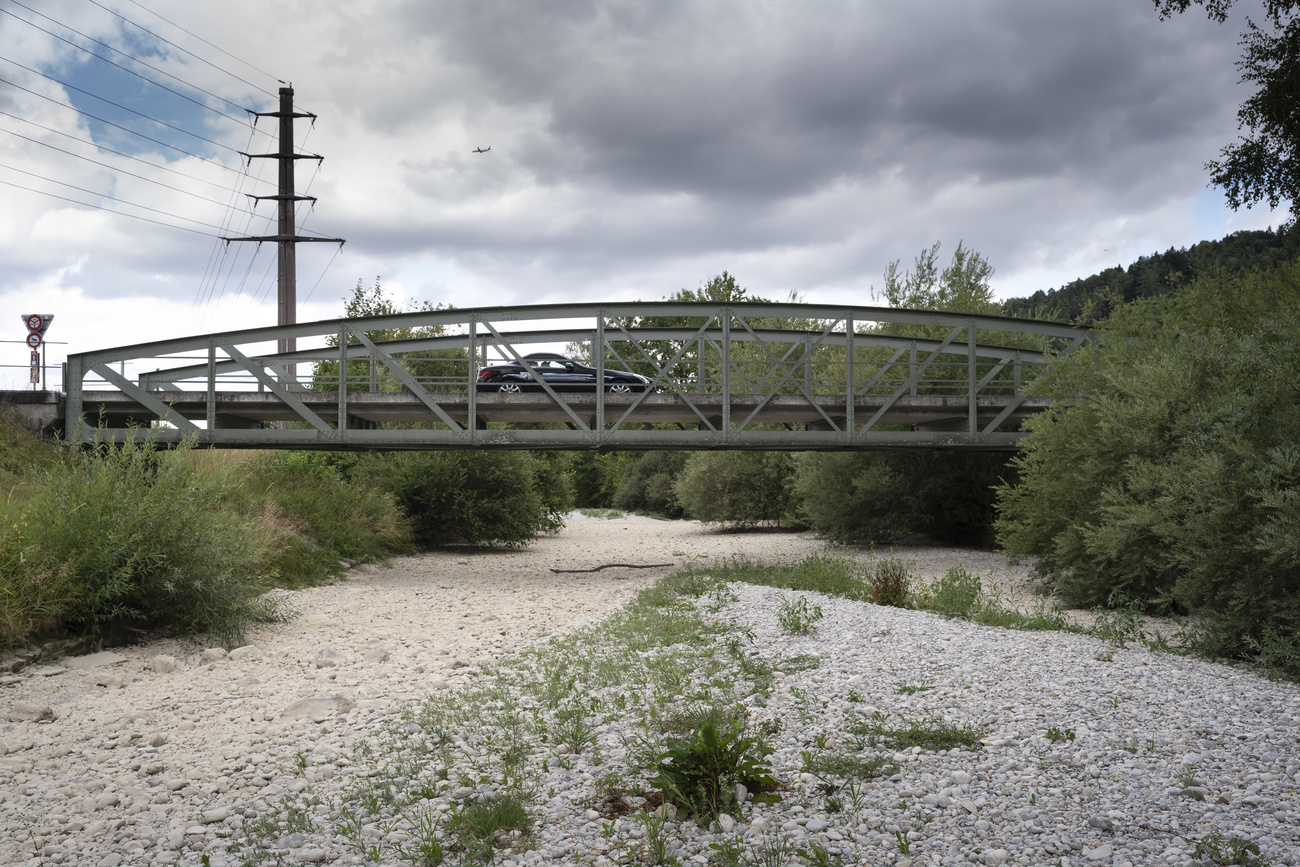
Many rivers across Switzerland recorded flow rates well below the long-term average. Some, such as the River Emme in central Switzerland, dried up along certain stretches. When water levels are low, streams and rivers warm up more quickly under intense solar radiation, increasing stress on many aquatic species.
The situation was particularly critical on the River Rhine, where exceptionally low water levels hampered navigation. Many vessels were forced to reduce their cargo loads, driving up transport costs and complicating the supply of goods and raw materials.
More
Drought in Switzerland: Europe’s ‘water tower’ runs dry
Switzerland’s major lakes were also hit hard by the drought. During the summer, water levels in Lake Constance and Lake Zurich fell below the historical minimums normally observed at that time of year, with deficits approaching 50cm.
The summer of 2026 entered the history books as the hottest in the past 162 years. Yet according to MeteoSwiss, if the planet continues to warm, it may eventually be remembered as one of the coolest summers of the century.
Edited by Gabe Bullard/Vdv/ts

In compliance with the JTI standards
More: SWI swissinfo.ch certified by the Journalism Trust Initiative

You can find an overview of ongoing debates with our journalists here . Please join us!
If you want to start a conversation about a topic raised in this article or want to report factual errors, email us at english@swissinfo.ch.