








Swiss Rhône Glacier suffers one extreme year after another

The snow reserves that built up this winter on Switzerland’s glaciers have already been used up. The Rhône Glacier in canton Valais is a testament to the scale of this phenomenon.
Select your language
Generated with artificial intelligence.
Listening:
Swiss Rhône Glacier suffers one extreme year after another
Matthias Huss, director of Glamos, the Swiss glacier monitoring network, documents these changes season by season.
“Since I was last here two weeks ago, we’ve lost 1.4 metres of ice,” said Huss, adding that this amounts to almost 10 centimetres a day. “That’s a huge amount.”
Since the start of this year’s measurements in mid-June, the glaciologist has recorded nearly four metres of melt, against a backdrop of repeated heatwaves. “It’s not good news for the glacier,” he confirms.
Not far from the reference point, the researcher points to a collapsed subglacial cave. This underlying melt adds to that occurring on the surface. “It’s a process we’re observing more and more often.”
More
The international consequences of a glacier-free Switzerland
Normally, glaciologists visit the glaciers in April to measure snow accumulation and return only in September to determine the annual melt.
On the Rhône Glacier, the loss is such that the measuring sensors have to be replaced and repositioned earlier in the season; otherwise, they would fall out and become useless. The long metal rods – some measuring eight metres, which corresponds to normal annual melt at the point where they are positioned – are screwed into the glacial layer.
“2026 has been an extreme year so far, but we have not yet made up for the record losses of 2022,” explains Huss. “We had a rather dry winter, with little snow and scant protection for the ice, and the heatwaves started early. In 2022, we saw the effect of Saharan sand settling on the snow, accelerating the melt.”
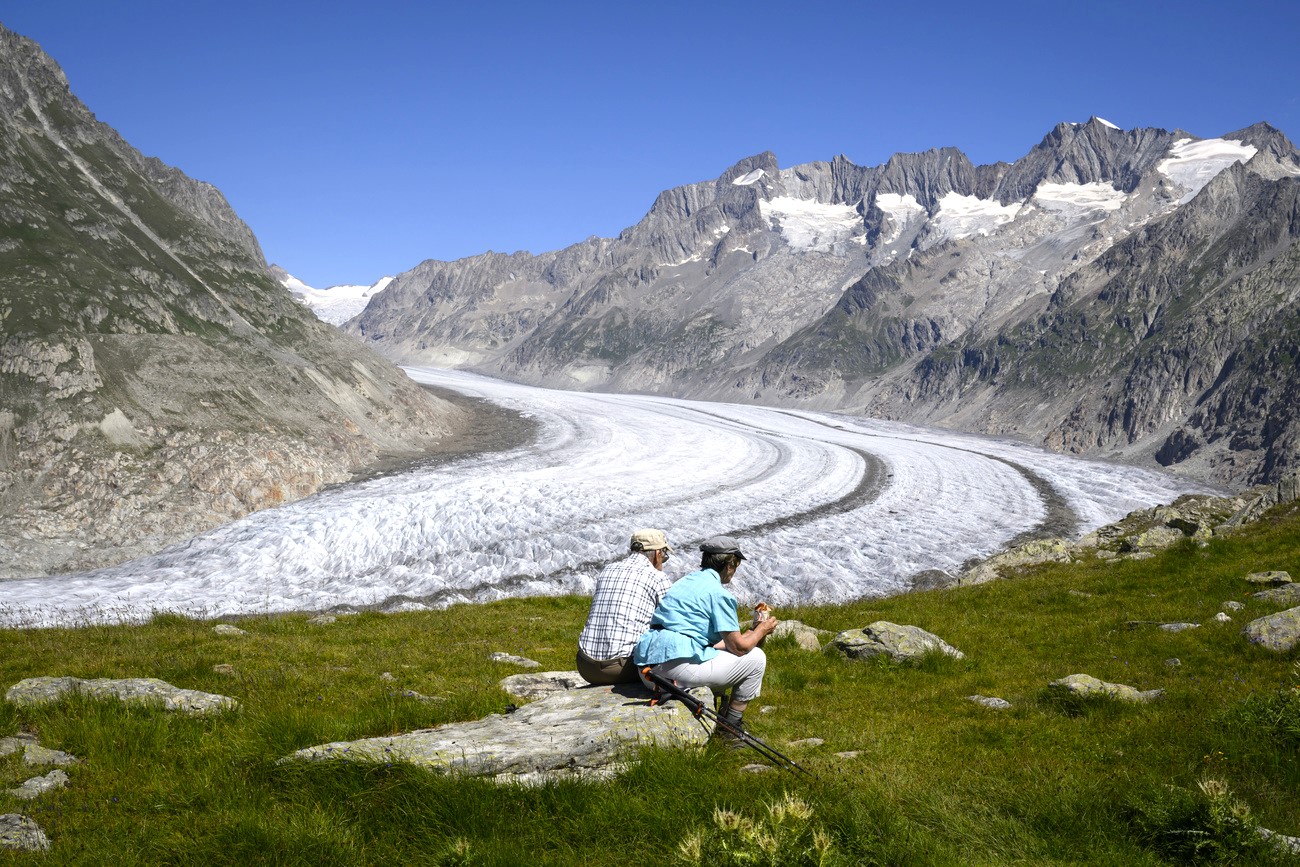
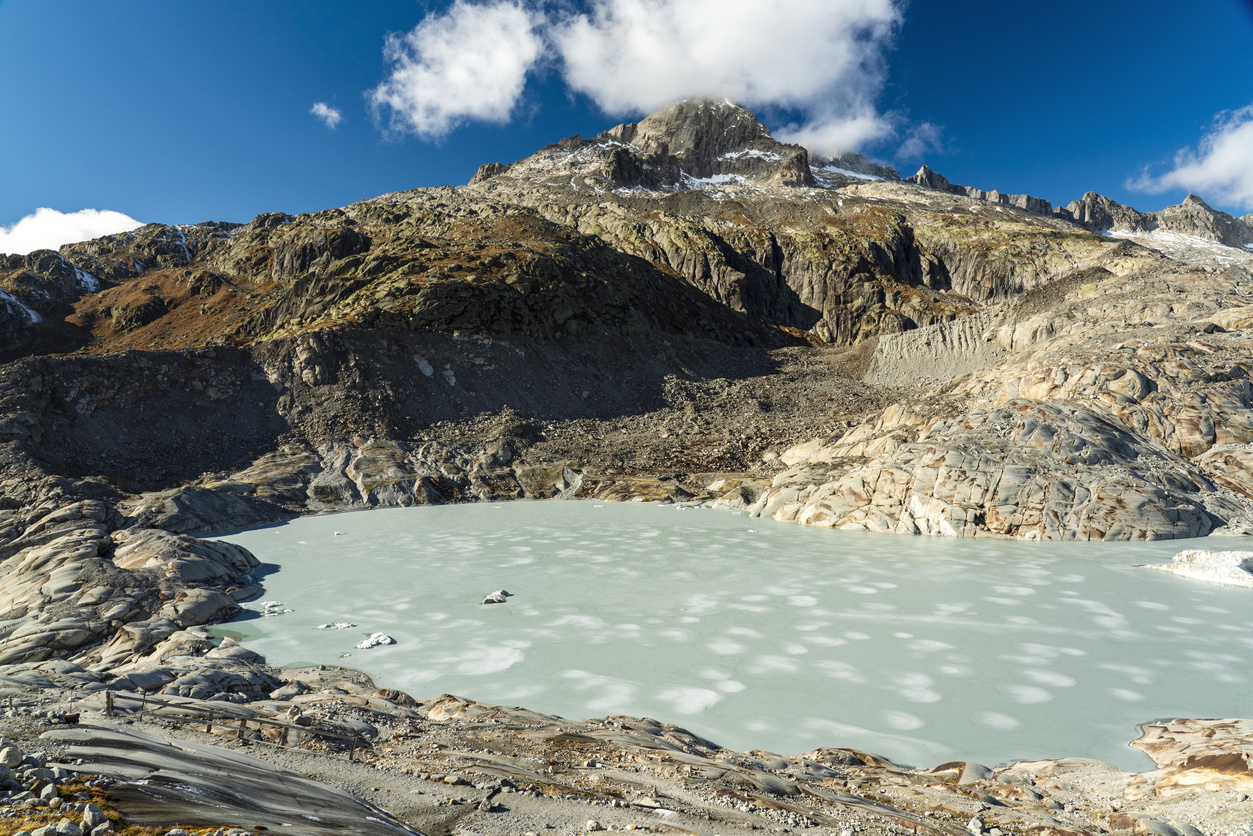
“The glacier is retreating rapidly, we’ve lost almost a kilometre over the last 20 years. It will disappear from view at the viewpoint in thirty or 40 years’ time, but it will still be there, up at the top, on the Dammastock.” It is in this massif, at an altitude of almost 3,600 metres, that the Rhône Glacier has its source.
More
Why Switzerland is among the ten fastest-warming countries in the world
“It’s colder there and there’s more snow,” points out Huss, who is also a lecturer at the Swiss Federal Institute of Technology in Zurich (ETHZ). “It might survive until the end of the century, but in a much smaller form.”
“With climate change, we know that heatwaves are becoming increasingly frequent and likely,” admits Huss. “It’s difficult to have to document the same thing over and over again. One extreme year after another. But that’s our daily reality as glaciologists.”
Join the debate:
External Content
+ How we produce English news
Translated from Italian, reviewed by an English Department journalist.
External Content


See more Swissinfo articles in your Google results. Learn more

In compliance with the JTI standards
More: SWI swissinfo.ch certified by the Journalism Trust Initiative

You can find an overview of ongoing debates with our journalists here . Please join us!
If you want to start a conversation about a topic raised in this article or want to report factual errors, email us at english@swissinfo.ch.