








Just under two-thirds of Swiss railway stations are accessible to the disabled

Around 65% of railway facilities in Switzerland are either partially or fully accessible to the disabled. Half of all bus stops can be used without restriction by people with disabilities.
The Disability Equality Act requires railway station operators to make their stations accessible by the end of 2023. According to a progress report by the Federal Office of Transport on the current status of implementation, 1,168 of the approximately 1,800 railway stations were accessible as of the end of 2025, with a further 193 due to follow by 2029. As larger stations were the first to undergo structural modernisation, 83% of all passengers can now benefit from accessible stations. This figure is set to rise to 87% by 2029.
Nevertheless, 454 stations still require adaptation, of which 261 will not be upgraded until after 2029, as the report presented to the media on Tuesday showed. The main reasons for the delays are said to be a lack of resources for planning and a shortage of staff, as well as financial constraints. However, under the 2025–2028 service agreement, the federal government has allocated additional funding of CHF250 million.
For around 150 stations where a full refurbishment is deemed disproportionate, permanent alternative measures will be provided, such as assistance from staff, the report added.
Half of bus stops are accessible
The report presented also covered the refurbished bus stops for the first time. There are 25,000 bus stops in Switzerland, or 48,000 kerb edges. Half of these can be used spontaneously by passengers with reduced mobility. At 13% of the kerb edges, independent boarding without additional assistance is guaranteed. At 37%, assistance from driving staff is required, usually through the use of a folding ramp.
Around 42% of kerb-side boarding points cannot be used either independently or with assistance from staff. According to the report, alternative arrangements are essential at these locations. As a rule, a shuttle service is provided to the nearest stop that complies with the Disability Act.
More
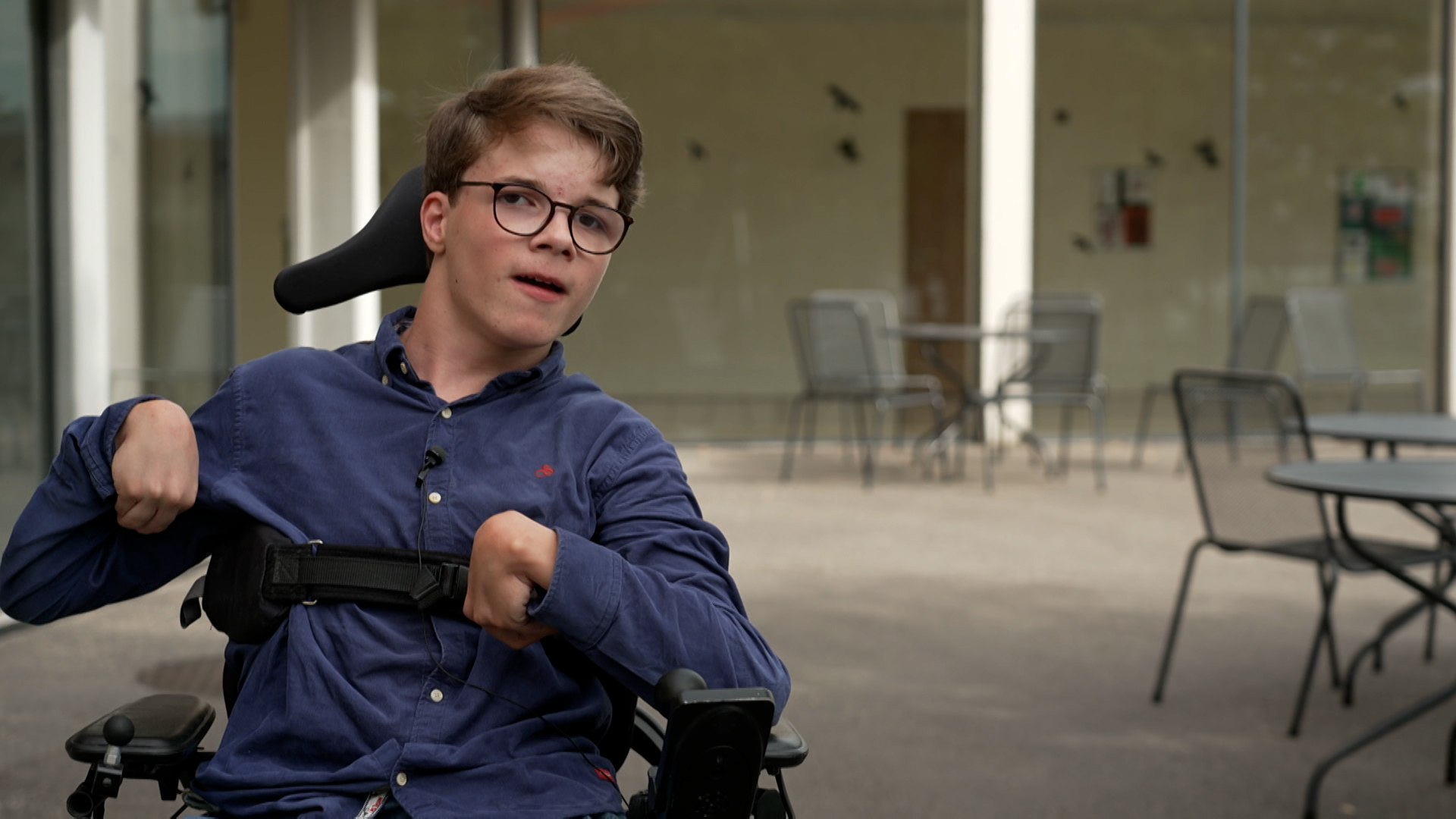
A better way to live for the disabled in Switzerland?
Those present gave a positive assessment of the work completed to date. “The inner determination to make real progress is there,” said Transport Minister Albert Rösti to the media. It is not just a matter of fundamentally improving the infrastructure, but also the mobility of people with disabilities, said Centre party parliamentarian Christian Lohr. “Mobility is important for people with disabilities to participate in social life,” he added.
Association plans to take action against delays
Although the statutory deadline under the Disability Act had already expired at the end of 2023, the implementation of accessibility in public transport is slowing down, the umbrella organisation for people with disabilities, Inclusion Handicap, announced on Tuesday. At the round-table discussion chaired by Transport Minister Albert Rösti, no binding commitments were forthcoming from the authorities or public transport operators.
In view of the delays, Inclusion Handicap is calling for the establishment of a task force. This task force should identify obstacles to implementation and funding. “People with disabilities are clearly losing out when it comes to new large-scale projects,” co-president Olga Manfredi was quoted as saying in the press release. There can be no inclusion without accessible public transport.
+ How we produce news in English
Translated from German, reviewed by an English Department journalist.

In compliance with the JTI standards
More: SWI swissinfo.ch certified by the Journalism Trust Initiative

You can find an overview of ongoing debates with our journalists here . Please join us!
If you want to start a conversation about a topic raised in this article or want to report factual errors, email us at english@swissinfo.ch.