








Swiss scientist develops low‑emission ‘drop‑in’ synthetic fuel
A Swiss chemical engineer is developing a “drop-in” synthetic fuel that could significantly reduce emissions from the millions of combustion engines – powering machines, vehicles and aircraft – that will remain in use for decades, offering a climate-friendly alternative without engine modifications.


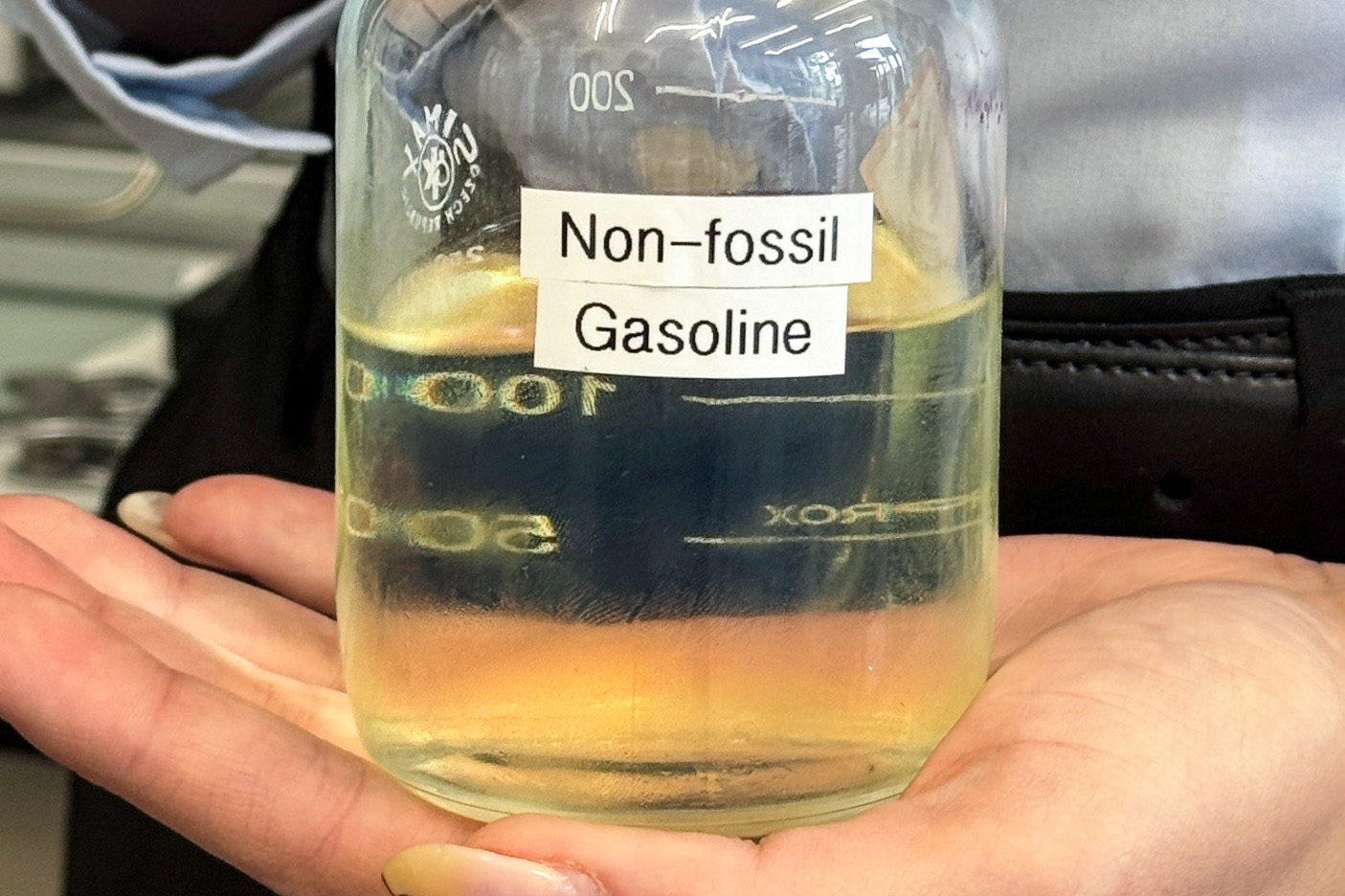
Many combustion engines running on fossil fuels will continue to operate globally for years. Recognising this, Alessia Cesarini, a chemical engineer at the Swiss Federal Laboratories for Materials Science and Technology (Empa), has developed a technological solution to produce synthetic fuel. Her innovative “drop-in” fuel is designed to be fully compatible with existing vehicles and infrastructure, providing a less-polluting solution that can be produced locally.
Cesarini’s research focuses on a chemical process called oligomerisation, which transforms ethylene or propylene molecules into a liquid fuel that closely mimics conventional gasoline. The process begins with carbon dioxide (CO2) captured from the biosphere or atmosphere, converted into alcohols like methanol or ethanol. These are then dehydrated into ethylene and propylene gases, which are subsequently recombined using a secret, energy-efficient catalyst into longer hydrocarbon chains, forming the synthetic fuel. The gasoline reaches a similar standard to unleaded gasoline, research octane number (RON) 95.
More
Making synthetic fuels: a Swiss scientist’s bid to decarbonise cars and planes
The next stage is to scale up the technology to bring it to market. Initial applications are expected to target sectors like forestry, where controlled usage can facilitate testing. While precise emissions data is still being gathered, Empa says the fuel is climate-friendly, with Cesarini estimating a potential reduction in emissions of 90-95%.
This work looks set to position Switzerland as a leader in advanced research for low-carbon fuels, says a German fuels expert. Empa is actively investigating various synthetic fuel production methods. The International e-fuels Observatory 2025 highlights the rapid expansion of the e-fuels sector, with nearly 120 industrial-scale projects identified across 28 countries. Cesarini’s work targets a unique niche by focusing initially on “drop-in” gasoline using energy-efficient catalysts, before later also tackling the aviation sector.

You can find an overview of ongoing debates with our journalists here . Please join us!
If you want to start a conversation about a topic raised in this article or want to report factual errors, email us at english@swissinfo.ch.