








Swiss tourist etiquette campaign reaping results

A campaign to raise awareness among tourists about rules of conduct in Switzerland is receiving a positive reception from the tourism sector. Several regions are promoting this initiative, and initial feedback is encouraging.
Select your language
Generated with artificial intelligence.
Listening:
Swiss tourist etiquette campaign reaping results
In April, the Swiss tourism industry launched its ‘Travel with care. Leave with memories’ campaign. This aims to raise awareness among visitors about the needs of local residents by offering a few simple guidelines. The goal is to ease tensions between the local population and tourism.
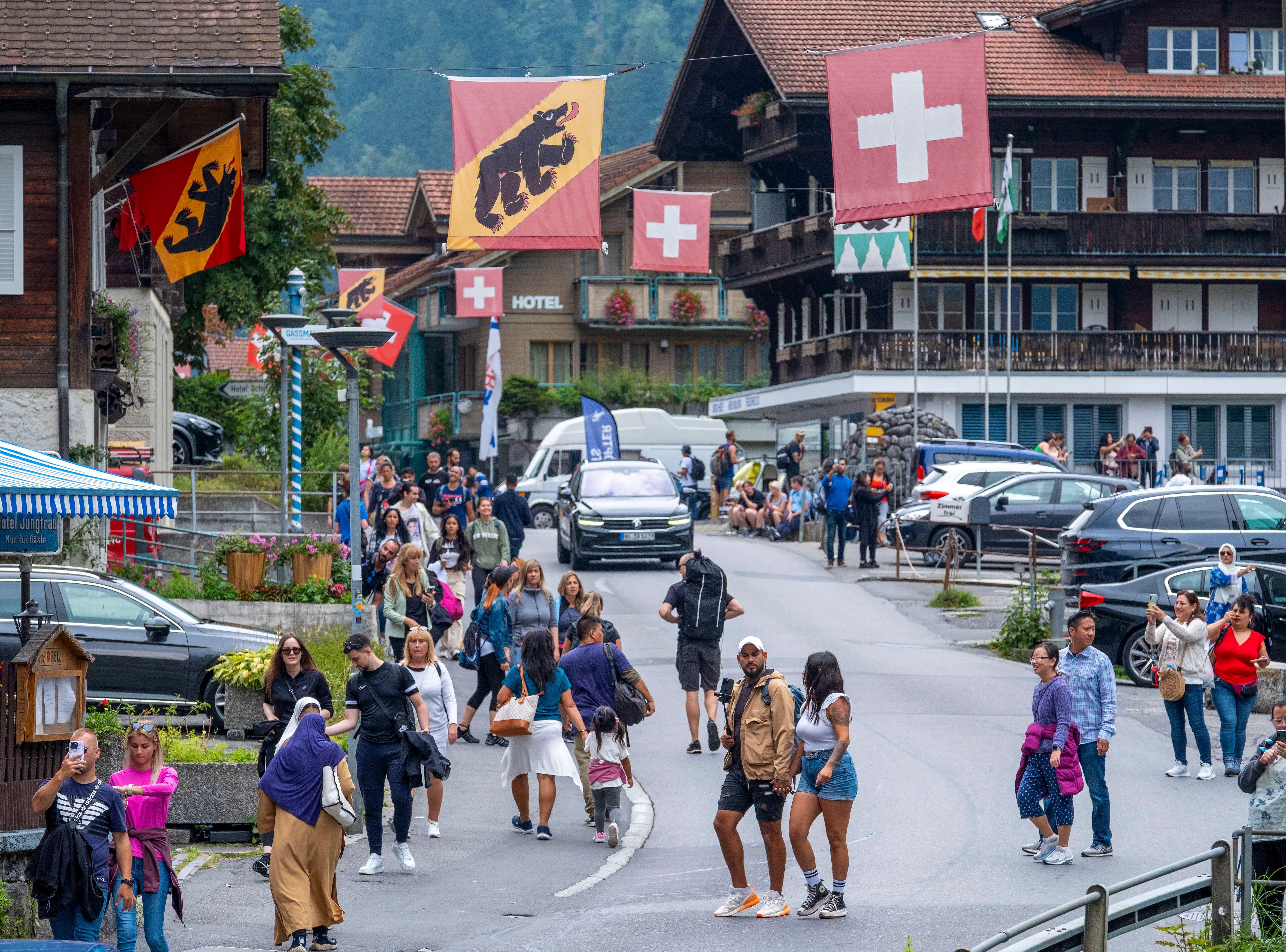
+ Lauterbrunnen mulls Venice-style tourist entry charge
Many of these rules of conduct are common sense – and are not always respected by the locals themselves. According to the campaign, in Switzerland, you don’t put your luggage on the seats on the train, you don’t push other passengers when boarding, and you don’t leave your rubbish lying around.
Vacationers are also urged to exercise restraint. The campaign reminds everyone that it is not permissible to enter any unfenced property. It is also recommended to ask permission before photographing someone.
Several tourist regions have adopted this initiative, including the Jungfrau Region, Lucerne Tourism, and Basel Tourism. In Lauterbrunnen, the first posters have already been installed, according to Marc Ungerer, managing director of Jungfrau Region Tourism. He says visitors have welcomed them.
It is still too early to measure the effects of the campaign. Its long-term impact can only be assessed over time, explains Letizia Elia, director of Basel Tourism.
‘Valuable asset’
For Marc Ungerer, however, the usefulness of these awareness campaigns is beyond question. In Grindelwald and Lauterbrunnen, facilitators are hired during the high season to directly inform tourists about the region and the rules of conduct.
More
Swiss village of Lauterbrunnen mulls Venice-style tourist entry charge
The Jungfrau region had already produced posters and leaflets in recent years outlining the main rules of good conduct. “These measures were very well received by the public,” the director said.
For Elia, the Switzerland Tourism campaign is an important first step towards better addressing the needs of the population. She believes the national campaign adopted by several destinations is a valuable asset, creating a sense of recognition.
Ungerer shares this analysis. He explains that vacationers are made aware of the issues as soon as they arrive in Switzerland, and then again during their journey to their accommodation. This ensures that the messages are better received and complement the actions already undertaken by the destinations.
More
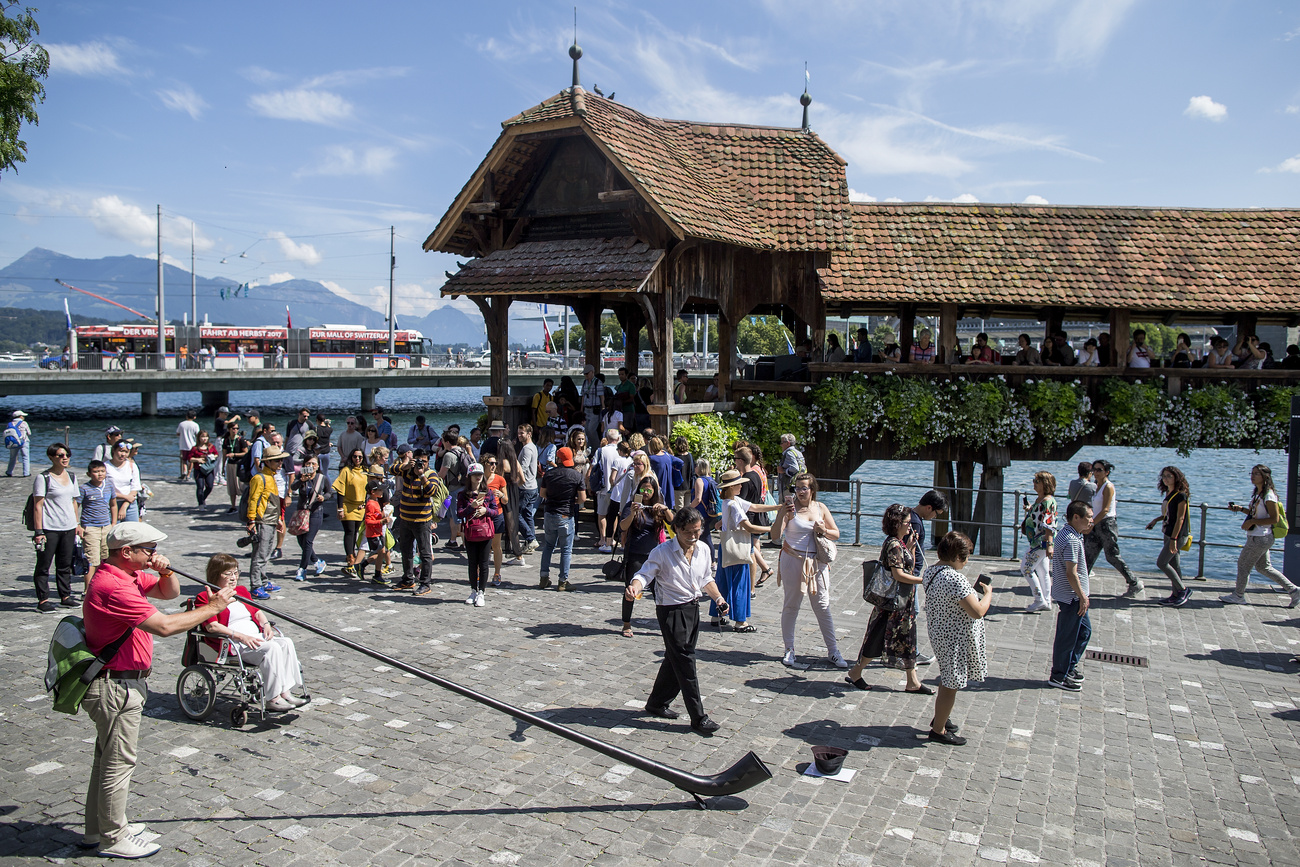
Switzerland’s main tourist spots still overrun despite state subsidies
Canton Valais has also chosen to promote this national campaign among its many tourism partners. Damien Constantin, director of Valais Promotion, emphasizes that the coexistence between residents and visitors is going “very well overall”.
Fines ‘last resort’
As in other Alpine destinations, certain behaviors can occasionally cause problems, including disregard for signage, littering, straying from marked trails, and a lack of consideration for natural areas, agricultural zones, and private property. According to him, these situations remain limited and affect a minority of visitors.
For Constantin, awareness campaigns are an important tool. However, good coexistence also depends on appropriate infrastructure, traffic management when necessary, clear information on the ground, and close collaboration between the various stakeholders.
At Jura & Trois-Lacs Tourisme, director Jérôme Langaretti believes that this campaign primarily addresses the needs of destinations facing overtourism. In his region, some sites like the Creux du Van or the Étang de la Gruère occasionally experience problems, with visitors getting too close to the cliffs or leaving litter.
According to him, however, these issues have not increased over time. Langaretti also believes it’s important to raise awareness among visitors, while acknowledging the need to avoid moralising. More restrictive measures, such as fines or quotas, should only be considered as a last resort.
More

+ How we produce English news
Translated from French, reviewed by an English Department journalist.
External Content


See more Swissinfo articles in your Google results. Learn more

In compliance with the JTI standards
More: SWI swissinfo.ch certified by the Journalism Trust Initiative

You can find an overview of ongoing debates with our journalists here . Please join us!
If you want to start a conversation about a topic raised in this article or want to report factual errors, email us at english@swissinfo.ch.