








Where Switzerland stands on the Iran war
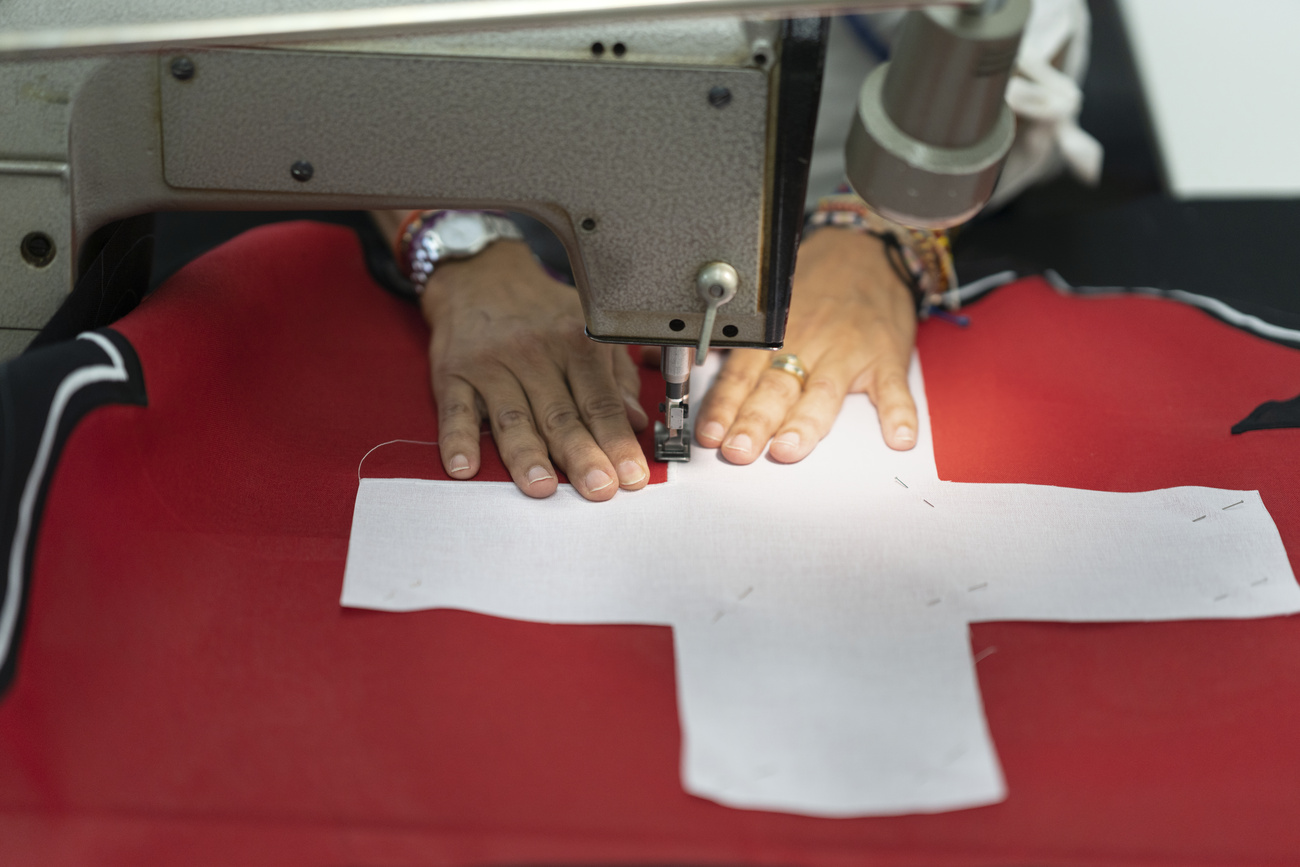
Switzerland’s neutrality puts it in a delicate position in the Iran war, particularly in its relations with the United States.
Select your language
Generated with artificial intelligence.
Listening:
Where Switzerland stands on the Iran war

Since the joint Israeli-US attack on Iran, European countries have responded in different ways. Spain has barred the US from using shared military bases, citing international law. In Madrid’s view, the attack was a unilateral military action and therefore unjustified and dangerous.
Most other Western countries have taken a different approach. The UK now allows limited use of its bases, after initially withholding permission because of doubts about the attack’s legality. Many countries have signalled support for the US, particularly after Iran began attacking other countries in the region.
As a neutral state, Switzerland does not ally itself with any side in the war. But applying neutrality during a conflict is a politically charged balancing act. In deciding how to position itself, Bern’s main concern is its relationship with the US, both economically and because of its protecting power mandate in Iran.
The situation under international law
Neither the US nor Israel issued a formal declaration of war against Iran. Both countries have described the attack as pre-emptive, aimed at preventing a possible Iranian nuclear attack. The move even drew criticism from allies such as Canada and France. Other states have classified the action as a violation of international law and a breach of the UN Charter.
Other countries, including Germany, have expressed solidarity with Israel and the US, while ruling out military cooperation. And notably, the UN Security Council has not passed a resolution condemning the attacks.
Since the start of the war, Switzerland has calledExternal link for de-escalation and a return to diplomacy. Talks between the US and Iran were still taking place in Geneva just days before the fighting began.
Read more here:

More
War in Iran: were the negotiations held in Geneva doomed to fail?
So far, the Swiss government has remained guarded about how it plans to apply neutrality in this conflict. Parliamentarians and the media are asking how Switzerland will respond. For now, their questions remain unanswered.
Neutrality and relations with the US
To uphold its neutrality, Switzerland could close its airspace to the US, as it did during the Kosovo war in 1999 and the invasion of Iraq in 2003. The large US military airbase at Ramstein in Germany makes Swiss airspace useful for US aircraft, although they could easily fly around Switzerland. Still, such a decision would likely anger US President Donald Trump, much as Spain’s refusal to allow the use of its military bases already has.
For now, Swiss policymakers are more concerned with trade in military equipment. The US is the second-largest buyer of Swiss arms and dual-use goods. In principle, Swiss neutrality lawExternal link allows for the supply of such goods to parties at war, provided both sides are treated equally. However, Switzerland has long participated in sanctions imposed against IranExternal link and therefore does not export arms there.
Strictly abiding by its neutrality law could now mean stopping arms exports to the US as well. The State Secretariat for Economic Affairs (SECO) told Swiss public broadcaster SRF that it was already exercising restraint when approving export licences. Switzerland is also in the process of purchasing F-35 fighter jets and other military equipment from the US. This raises the question of whether Washington would halt its exports to Switzerland if Bern blocked exports to the US.
The same question arises with regard to Israel. The export of certain military and dual-use goods to Israel is permittedExternal link, and Switzerland also procures military equipment there.
Read more here:

More
When does neutrality law apply? Swiss government faces difficult decision over the Middle East conflict
Trade with the US
The US is Switzerland’s second-largest export market after the EU. Tariffs imposed by Washington last year caused widespread disappointment in Switzerland and strained relations with a key trading partner. This was compounded by Trump’s repeated accusations that Switzerland had been prospering at America’s expense.
The trade agreement currently being negotiated between the two countries is seen in Bern as particularly important, with the government and parliament hoping it will provide clear and predictable rules for trade.
Switzerland’s protecting power mandate
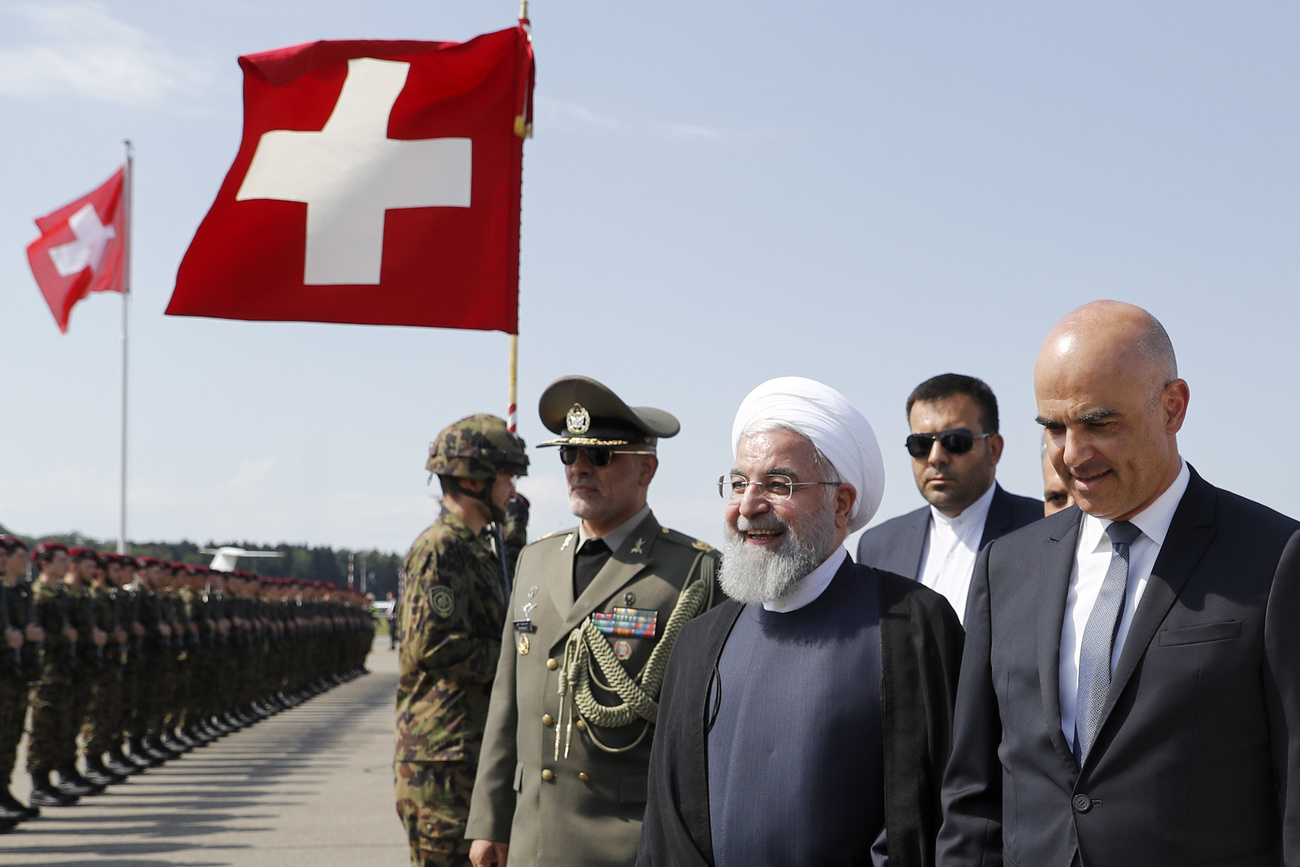
Another diplomatic factor is also at play. US interests in Iran are represented by Switzerland under a protecting power mandate. After the outbreak of the war, Iran’s ambassador to the UN in Geneva said the mandate puts Switzerland in a position to play a constructive role.
“But the importance of this mandate should not be overstated,” says Laurent Goetschel, director of the peace institute Swisspeace. “Switzerland is essentially a postman. If the United States wants to contact Iran through an official channel, it can ask Switzerland to do so. But this is not a mediation role,” he explains. According to Goetschel, Switzerland has mediated only selectively and on specific issues in the past, such as prisoner exchanges.
Read more here:
More
The special relationship between Iran and Switzerland
The risks facing the Swiss government
Strictly interpreting neutrality law could mean closing Swiss airspace and stopping arms exports, which could strain relations with the US.
The Swiss government does have some room for manoeuvre. Swiss neutrality law is largely based on the Hague Conventions, drawn up in the early 20th century. These rules were later superseded by the UN Charter. Today, Switzerland remains one of the few countries still invoking them. But Swiss neutrality policy goes further. As the Swiss foreign ministry told Swissinfo in 2024, it refers to “all the measures a neutral state takes on its own initiative to ensure the predictability and credibility of its permanent neutrality”.
This distinction between neutrality law and neutrality policy is a Swiss invention, says historian Marco Jorio. “Hardly any other country has something comparable.” This often leads to confusion about Switzerland’s position, he says.
This can be seen in Switzerland’s stance on the war in Ukraine. Bern applies the principle of equal treatment to justify its ban on supplying military equipment to Ukraine. According to Jorio, this principle has not been applied since the UN Charter was adopted in 1945. Switzerland imposes restrictions on exports to Ukraine because similar sanctions are in place against Russia. But Jorio says the situation is more complex in the new conflict. “In the Middle East, the aggressor-victim dynamic is less clear-cut than in Russia’s war against Ukraine.”
The Swiss government appears aware of the potential foreign policy challenges ahead. Asked about the issue by SRF, Foreign Minister Ignazio Cassis said the threshold for applying Switzerland’s neutrality law had not yet been reached. He left open when that point might come.
Edited by Benjamin von Wyl. Adapted from German by David Kelso Kaufher/ts
Tell us what you think:
External Content
More
Our newsletter on geopolitics

In compliance with the JTI standards
More: SWI swissinfo.ch certified by the Journalism Trust Initiative

You can find an overview of ongoing debates with our journalists here . Please join us!
If you want to start a conversation about a topic raised in this article or want to report factual errors, email us at english@swissinfo.ch.