








With international law under attack, can Geneva remain a guardian of global order?

Nations and leaders must step up to protect the rules and demand accountability at a time of conflict, polarisation and disregard, say legal and humanitarian experts.
Select your language
Generated with artificial intelligence.
Listening:
With international law under attack, can Geneva remain a guardian of global order?
At the Palais des Nations, the sprawling campus of the United Nations headquarters in Geneva, 48 university students from Africa, Asia, Europe and the Americas made their cases as finalists at the 18th Nelson Mandela World Human Rights Moot Court Competition.
The panels of judges, made up of international human rights experts, lawyers and real justices, had sharp questions for the students arguing the claims of two invented nations whose fractious relations were putting regional stability at risk.
It was a fictional conflict being argued in a mock court, but the testing times for international law, multilateralism and Geneva’s role as a guardian of global order are very real in today’s geopolitics and the challenges ahead for younger generations.
For Daksh Balakrishnan, a second-year student at National Law School of India, the five days of the moot court in mid-July connected directly to the far-reaching impact of conflicts in Gaza, Iran, Ukraine, Sudan and other parts of the world.
“There is more scope for aggression and for hostility now because, in the last few years, it’s been leaning towards a more isolated nationalist perspective,” he told Swissinfo at the Palais des Nations. “But I really do think that common ground and cooperation and dialogue will help international law prevail.”

Cuts, attacks and indifference
Geneva, home to the UN Human Rights Council, the World Health Organization, the World Trade Organization, more than 40 multilateral agencies and nearly 500 NGOs, has long been a hub for international law.
The Swiss city is also the birthplace of humanitarian law. The first Geneva Convention, signed there in 1864, established legal standards for protecting people in war.
After the devastation of the Second World War, nations committed to a shared rules-based order. Building on earlier treaties, the 1949 Geneva Conventions and their additional protocols have underpinned the work of the United Nations, international stability and decades of development.
The International Committee of the Red Cross (ICRC), custodian of the conventions, is also based in Geneva.
Together, the treaties and conventions of international law govern issues ranging from security and trade to the environment and human rights. The gravest violations include genocide, crimes against humanity, war crimes and aggression.
Today, however, enforcing and defending those rules is becoming increasingly difficult.
In recent years, the system has been hit by big cuts in funding for the United Nations, a general retreat from multilateralism and attacks by major powers on the legitimacy of the International Criminal Court (ICC) and the International Court of Justice (ICJ) in the Hague.
In many conflicts, experts said, the global rules are being openly ignored with little or no pushback from other nations.
“The rule of law is being tested,” Ambassador Zaheer Laher, South Africa’s Permanent Representative to the United Nations in Geneva, said on a panel during a moot court event about waning multilateralism and the threat to international human rights law. “It’s not an à la carte menu that you can choose from.”
The United States, with the highest UN membership fees, has caused signficant damage to the system by refusing to pay its dues or debts and by moving to withdraw from more than 30 UN entities, including UN Women and the World Health Organization. Delayed dues from China, Russia and other members, along with cuts to foreign aid budgets, have added to the financial strains.

More
What’s next? Moving on after losing a job in International Geneva
International Geneva – already facing competition as a diplomatic and multilateral hub from the likes of Qatar, the United Arab Emirates, Kenya and various Asian centres – has felt its share of the impact.
More than 3,000 Geneva-based jobs at the UN and other international organisations have been cut or relocated to cheaper places since 2025, about a fifth of the UN posts in the city, Reuters reportedExternal link in early May, citing its survey of a dozen agencies and local authorities.
In response to the cuts and a UN austerity drive, the Swiss parliament approved funding of CHF122.6 million ($152 million) for 2026 to 2029 to support International Geneva, infrastructure enhancements and multilateral diplomacy. The canton has its own relief plan of CHF50 million, co-funded with the Hans Wilsdorf Foundation.
Manipulated and navigated
While disagreement and violations are not new to international law, the momentum is now reversing away from wanting to reinforce standards, predictability and accountability, said George Ulrich, academic director of the Global Campus of Human Rights, a network of more than 100 universities training human rights and democracy professionals.
“The sense that the international legal system is being somehow managed and manipulated and navigated, not always for the right reasons, is a concern that should be taken seriously,” Ulrich told Swissinfo.
“The international institutions like the United Nations and other Geneva-based institutions are in fact suffering consequences of these divisions that we’re seeing.”
Cordula Droege, chief legal officer at the International Committee of the Red Cross, said international humanitarian law (IHL) has worked well to save lives over the years but is difficult to enforce, not least when people and states are ignoring the rules.
“Violations of international humanitarian law – some of which amount to war crimes – are today viewed with a worrying degree of tolerance or indifference. This is what needs to change,” Droege told Swissinfo in an email interview.
“International humanitarian law requires states not only to respect IHL themselves, but also to ensure respect for IHL universally, that is to use their influence to bring warring parties back to an attitude of respect for the law.”
More
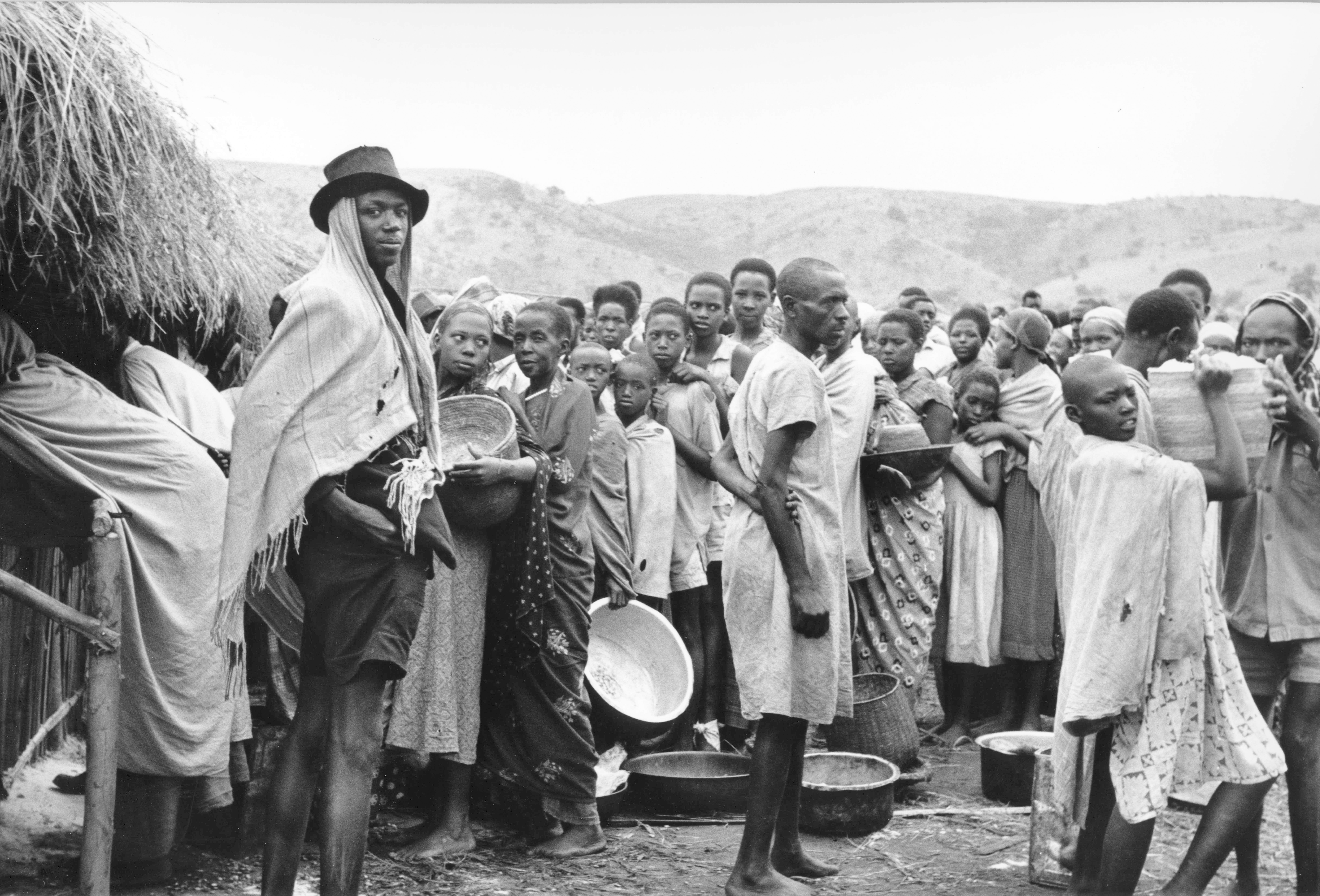
UN Refugee Convention turns 75 amid rising political pressures
Respect, reform and renewal
Even the strongest countries should have an interest in legal order as their power is not limitless, said Marco Sassòli, honorary professor of International Law at the University of Geneva.
“States should have a more powerful reaction and, in particular, avoid double standards, because double standards are a poison for the credibility of the law,” Sassòli told Swissinfo in a video interview. “The priority is to get the respect of the existing rules.”
While international law is not without its shortcomings, he and others said, some of the issues around observing and enforcing the rules trace back to how the post-war global system was set up nearly 80 years ago – including the veto power in the UN Security Council held by the United States, Russia, China, France and the United Kingdom.
“Most states will agree we need a new system. I mean, the Security Council is not functional. Not only is it unjust that these states have a veto power, but they don’t deliver. But how can you change it? That’s the problem,” Sassòli said.
“So it’s better to have a not ideal structure under the old rules than nothing, and so those who criticise the system should be careful not to destroy it before they can build up something else.”
At the moot court, Kenyan law student Simon Muriithi said the UN system needed to evolve and change, including how the big powers view the rest of the countries of the world.
“It’s all based on seeing them as equal states and just not based on the interest, not based on the aid provided, not putting restrictions or pressure,” Muriithi, in his final year at Kenyatta University, told Swissinfo. “If we cannot protect basic human dignity, we’re not going anywhere as a world.”
Speaking on the panel at the moot court event, Bertrand Ramcharan, a lawyer and professor with a 30-year career at the United Nations, said a collection of steps is needed to protect the international legal order.
His list included safeguarding and reinforcing the UN Charter, exploring the role of humanity as a source of international law, enhancing the role and authority of the International Court of Justice and finding innovative ways for multilateralism to operate with overwhelming majority support, even if major powers retreat into unilateralism.
“It would be a good idea for the United Nations to now declare a second era for international law, so to allow governments and peoples of goodwill towards international law to express their support for it,” Ramcharan told Swissinfo after the panel.
More
Inside Geneva Podcast: is international law dead?
“Our attitude must be one of support for the Swiss in their efforts to uphold international law,” he said. “They could now sponsor a process of reflection on how to strengthen international law.”
For Droege, the top lawyer at the International Committee of the Red Cross, the effectiveness of international law in the future relies on two key factors. “First, we need to ensure that the core causes of war are defeated. Armed conflicts do not happen in a vacuum. Where politics fails, wars follow. Second, international humanitarian law needs to be made a political priority by leaders worldwide,” she said.
“There is no alternative to a world based on international law if we want next generations to live in security, health and peace.”
Edited by Virginie Mangin/ts

More
Our newsletter on geopolitics

In compliance with the JTI standards
More: SWI swissinfo.ch certified by the Journalism Trust Initiative

You can find an overview of ongoing debates with our journalists here . Please join us!
If you want to start a conversation about a topic raised in this article or want to report factual errors, email us at english@swissinfo.ch.