








What’s behind the peptide boom and why it matters to Switzerland

Peptides, a class of drugs made of short chains of amino acids, are in growing demand for everything from weight loss and muscle aches to longevity and rare cancers. This is good news for Switzerland, which is home to some of the largest peptide manufacturers in the world.
Select your language
Generated with artificial intelligence.
Listening:
What’s behind the peptide boom and why it matters to Switzerland


On July 20, South Korean contract biopharmaceutical manufacturer Samsung Biologics announced plans to acquire Swiss company PolyPeptide in an all-cash deal for around CHF1.46 billion ($1.81 billion). This made it the largest everExternal link M&A deal by a South Korean biopharmaceutical company, according to the Korea JoongAng Daily.
+ Korean firm bids CHF1.5bn for Swiss pharma supplier Polypeptide
Few people inside or outside Switzerland have heard of PolyPeptide, whose origins date back over 70 years, but it’s one of the world’s largest contract manufacturers of peptides. The drug class, which includes GLP-1 therapies for weight loss and diabetes, is a booming market. PolyPeptide, which has just over 1,400 employees, produces one third of the commercially approved peptidesExternal link in the world.
What are peptides and what’s behind all the excitement?
What are peptides?
Peptides are short chains of amino acids that act as temporary messengers by binding to cells. They can tell your body to repair tissues, to relax or to signal hunger. There are more than 7,000 naturally occurring peptides found in humans or other living organisms, such as insulin or collagen.
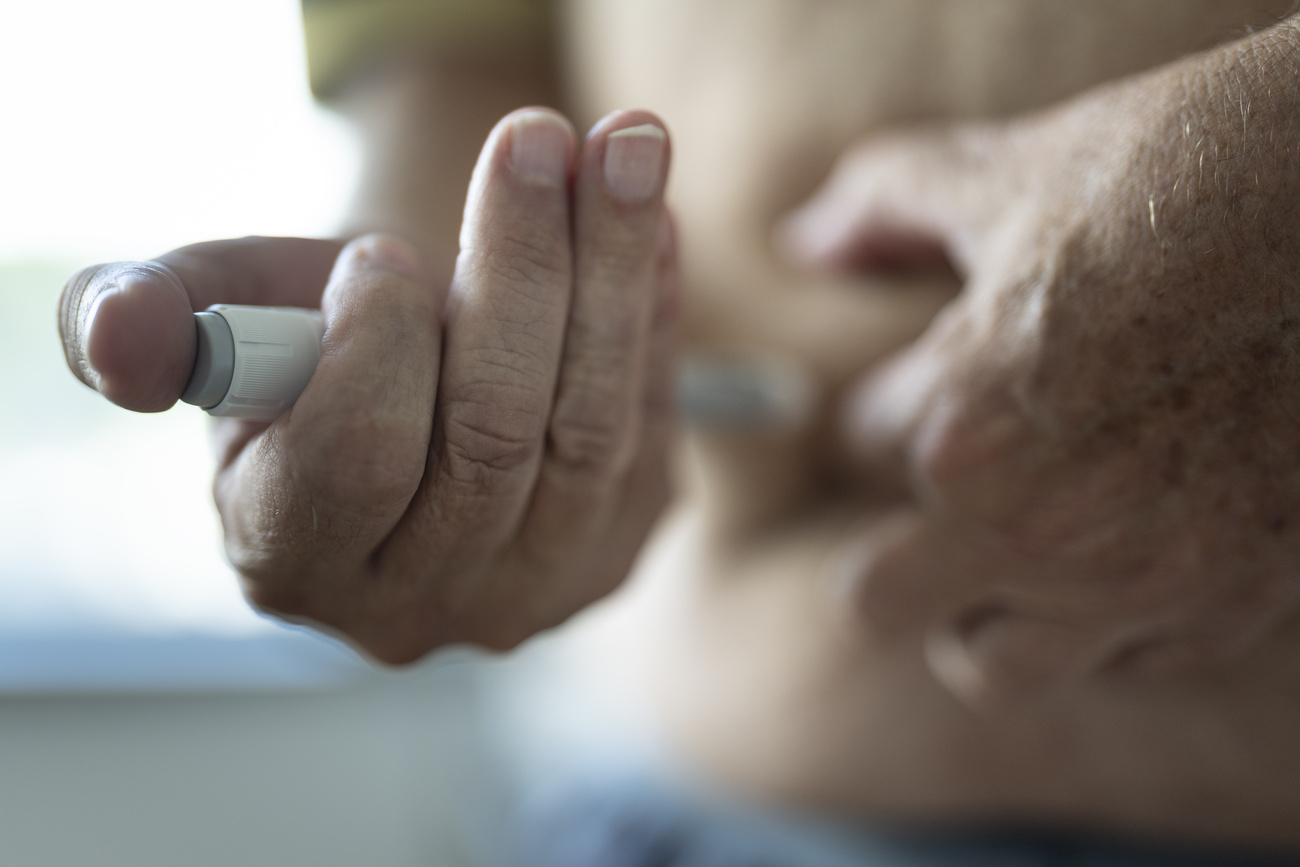
Synthetic peptides have been around for a while, starting in the mid-1950s with oxytocin, which is primarily used to induce labour. This was followed by insulin, several years later. Today peptides, often administered as injections, are being used to treat a range of health issues including inflammation, certain cancers and, most notably, weight loss.
The slimming treatments that have been flooding markets in the last few years are mostly glucagon-like peptide-1 (GLP-1) drugs that mimic the naturally produced peptide hormone glucagon. GLP-1 drugs inform the pancreas to release insulin, the stomach to digest more slowly, and the brain to turn off hunger signals.
More
Can Swiss pharma giant Roche reshape the obesity market?
GLP-1 drugs are among the more than 100 peptides approvedExternal link by the US Food and Drug Administration (FDA) and there are at least twice as many compounds awaiting approval.
But there is an even greater number of unapproved and untested peptides being used for a range of health issues, which are already available through direct-to-consumer channels – to the dismay of some doctorsExternal link that have warned of potential safety risks.
Unapproved peptides are mostly older compounds abandoned by labs due to limited medical interest. Most haven’t been tested on humans or only at small scale and may have side effects such as nausea, water retention and abnormal blood vessel growth.
Why are they a booming business?
The growing demand for peptides is mostly to due to the success of GLP-1-based weight loss drugs, technological advances in peptide development, and the growing field of longevity. Swiss bank UBS estimatesExternal link there will be 40 million people on GLP-1s by 2029, with 44% in the US. This translates into $126 billion in sales by 2029, a 2023-2029 sales compound annual growth rate of 30%.
Social media influencers, particularly men, and celebrities like American podcaster Joe Rogan or actor Gwyneth Paltrow have been endorsing “peptide therapy” for everything from skincare to faster healing and muscle growth.
External Content
Today, statements like “I just had a total knee replacement. I’m on BPC-157/TB-500/KPV” have become common online, as patients turn to informal platforms to share and find advice on which peptides to take and how – given there is usually no official guidance.
Approved peptides such as GLP-1s for weight loss are available through a valid doctor’s prescription and purchased at licensed pharmacies. Peptide-based creams, powders and pills that are derived from animal sources have been available as dietary supplements for years.
Up to now, it has been illegal for pharmacies to make and sell certain popular unapproved peptidesExternal link. Many unapproved peptide-based treatments, especially injections, are being sold often for a couple of hundred dollars a month on the internet or in wellness centres under the guise of “research”, which is technically legal in the US and some other countries. The majority of these are sourced from factories and labs in ChinaExternal link and rebranded by domestic distributors.
But this could change soon. In late July, a US FDA advisory panel voted in favour of allowing six popular peptides to be put on the list of bulk drug substances. If the FDA adopts the panel vote, compounding pharmacies would be able to manufacture the peptides based on a narrow safety review than approved drugs.
The decision was supported by US health secretary Robert F. Kennedy Jr. but drew criticismExternal link from scientists worried about the lack of clinical trial data on their safety.
Why does this matter to Switzerland?
Switzerland is home to some of the largest third-party developers and manufacturers of peptides for therapeutic use. Some dataExternal link shows that the country contributes to over 12% of “certified” peptide manufacturing capacity, largely driven by major industry leaders like Bachem and the PolyPeptide Group.
Quality peptide production is considered complex, which is why even the two leading suppliers of weight loss injections, Eli Lilly and Novo Nordisk, rely on contract manufacturers.
Headquartered in Baar, in central Switzerland, PolyPeptide Group, which was spun off from global pharmaceutical company Ferring in 1996, has developed or produced more than 1,000 therapeutic peptides.

More
Middle-aged Swiss men are chasing testosterone. Doctors aren’t sold.
Bachem, which is based in canton Basel Country, has an estimated 25-30% of the global therapeutic market, accordingExternal link to UBS. It expects sales to grow by 35-40% in 2026 driven by a strong pipeline of peptide development projects, according to its half-yearly result released on July 20.
The company, which has been producing peptides for over 50 years, has made major investments in scaling up production in the last few years. It recently unveiled plansExternal link for a new large-scale facility in Sisseln, Aargau, following the signing of an agreement to supply large volumes of peptides to an undisclosed client.
In March Bachem CEO Anne-Kathrin Stoller told investors that the “strong interest in peptides for metabolic indications [such as obesity] has re-sparked overall interest in peptides”. Four peptides have already been approved by global regulators in the first half of 2026, the same number approved in 2025.
Swiss competitor Corden Pharma cancelled a €500 million (CHF465 million) production plant in the same canton (due to US tariffs, according to media reportsExternal link), but in May it announced the acquisition of US peptide manufacturer AmbioPharm, which employs over 350 people and has facilities in Shanghai and South Carolina.
While the major Swiss peptide makers don’t supply compounding pharmacies and are focused on peptides for approved drugs, growing investment in research and manufacturing of peptides broadly is likely to be good news for Swiss companies. Grand View Research estimatesExternal link the global peptide therapeutics market to grow from $140.9 billion in 2025 to $294 billion by 2033.
Are peptides available in Switzerland?
Peptide powders, pills and skincare products derived from animal parts such as collagen are widely and legally sold over the counter in Swiss shops, pharmacies and online platforms as supplements. Prescription peptide medications (such as those used for diabetes and weight loss, specific cancers, or hormonal disorders) are legally authorised and available through licensed medical channels.
+ Rogue peptide performance enhancers on Swiss market
Pharmacies can only compound peptides that are prescribed by a doctor and made with raw materials that are approved by the Swiss medicines agency Swissmedic. Patented medication like weight loss drugs can’t be compounded at all and the sale of peptides like BPC-157 promoted on social media, which isn’t approved by Swissmedic, is illegal.
There is, however, a rising black market for peptides in Switzerland as in other countries, with users ordering products online and getting them delivered by post. At the end of June, Swiss authorities conducted a targeted campaign against illegally imported peptides and warned users of the risk associated with using products that haven’t been cleared for human use.
Edited by Virginie Mangin/ts

In compliance with the JTI standards
More: SWI swissinfo.ch certified by the Journalism Trust Initiative

You can find an overview of ongoing debates with our journalists here . Please join us!
If you want to start a conversation about a topic raised in this article or want to report factual errors, email us at english@swissinfo.ch.