








Drought causes Swiss water levels to fall to record lows
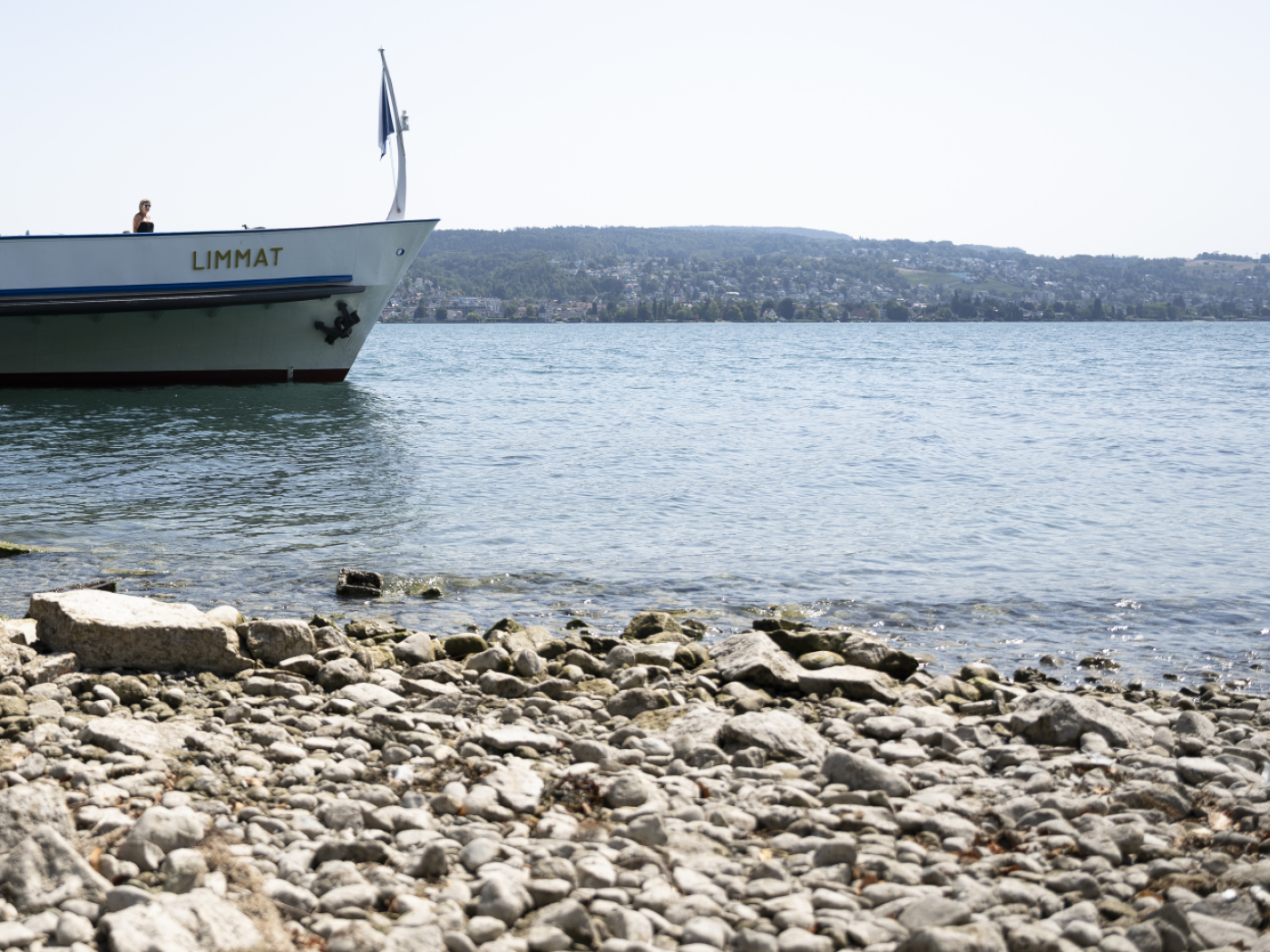
Rivers and streams in Switzerland have exceptionally low water levels due to the ongoing drought. In July, the Federal Office for the Environment (FOEN) even recorded historic lows at eleven monitoring stations.
Select your language
Generated with artificial intelligence.
Listening:
Drought causes Swiss water levels to fall to record lows
Between April 1 and 31 July 31, around a fifth of the monitoring stations recorded record low levels for this time of year, as the FOEN told the Keystone-SDA news agency. This confirmed a report in the Swiss paper Tages-Anzeiger.
According to the FOEN, water levels in many watercourses north of the Alps are so low that this only occurs once every two to ten years, and in some cases only once every 30 to 100 years or even less frequently. South of the Alps, the situation is less dramatic, partly thanks to glacial melt.
+ Switzerland is water-rich. So why are 151 towns rationing it?
Thunderstorms offered little relief
The Swiss Plateau and the Jura are particularly affected. The drought is clearly evident on the Doubs near Ocourt in canton Jura and on the Rhine near Basel. In Basel, river flows have been below the long-term average since the start of the year – with the exception of February.
Even the thunderstorms in the first half of last week did little to improve discharge levels in the affected watercourses, as the FOEN notes. In Switzerland, the only streams and rivers less severely affected are those whose flow is significantly influenced by glacial melt.
Lakes are also affected
Water levels in numerous lakes are also exceptionally low, including Lake Constance, Lake Walen, Lake Zurich, Lake Zug and Lake Maggiore. Smaller lakes such as Lake Sempach and Lake Hallwil are also affected.
The FOEN emphasises that Switzerland still has “abundant water resources”. However, climate change will alter their availability: the water supply from snowmelt and glacial melt is decreasing. Dry spells are likely to become more frequent and longer, with more water in winter and less in summer. The total volume of water available over the course of the year, on the other hand, is expected to decline only slightly.
+ How we produce English news
Translated from German, reviewed by an English Department journalist.

In compliance with the JTI standards
More: SWI swissinfo.ch certified by the Journalism Trust Initiative

You can find an overview of ongoing debates with our journalists here . Please join us!
If you want to start a conversation about a topic raised in this article or want to report factual errors, email us at english@swissinfo.ch.