








The Swiss woman who brought river swimming to Boston
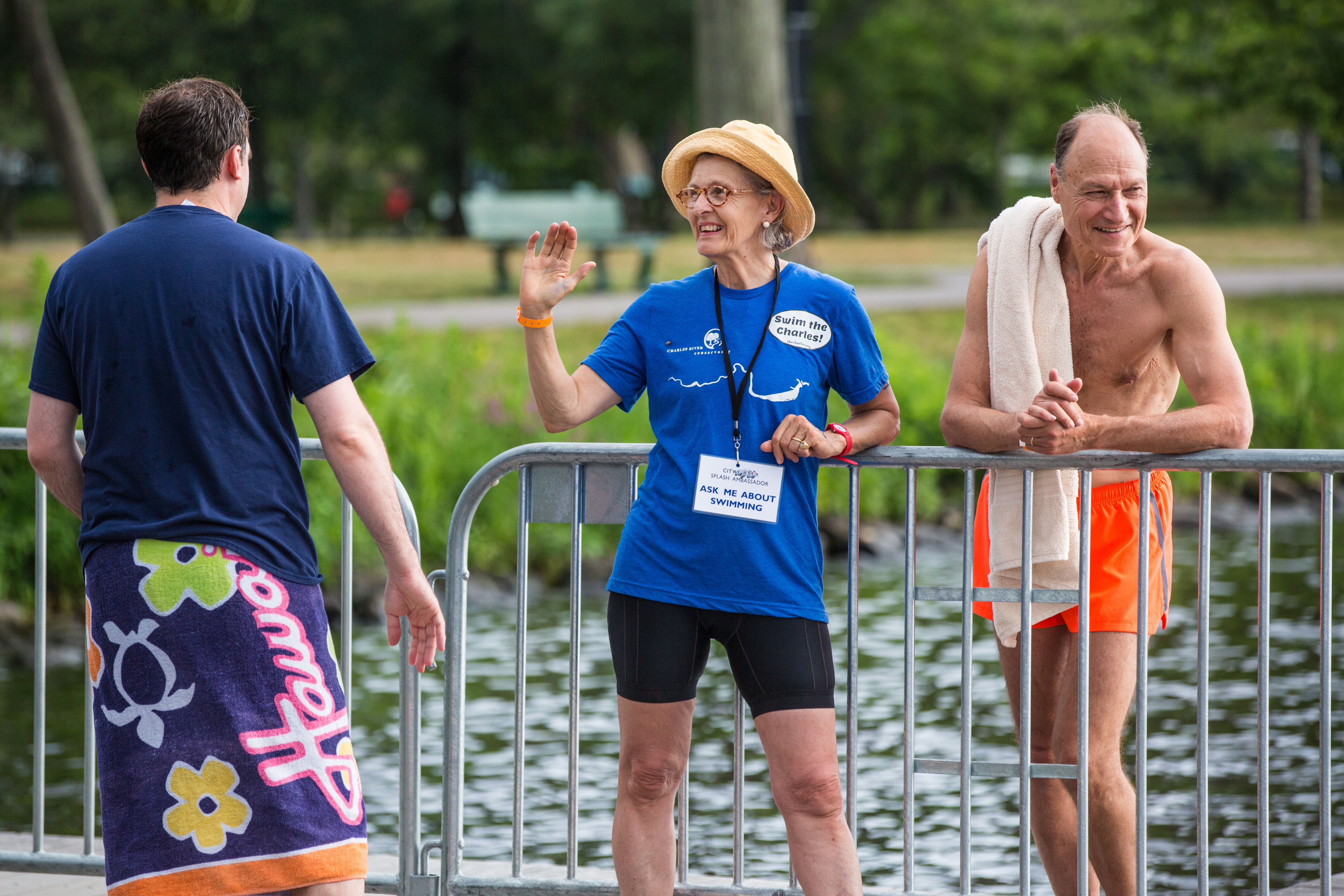
Renata von Tscharner brought river swimming from Bern to the United States. Over 25 years ago, she founded the Charles River Conservancy and spent almost two decades campaigning to ensure that people in Boston and Cambridge could swim in their river again.
Select your language
Generated with artificial intelligence.
Listening:
The Swiss woman who brought river swimming to Boston

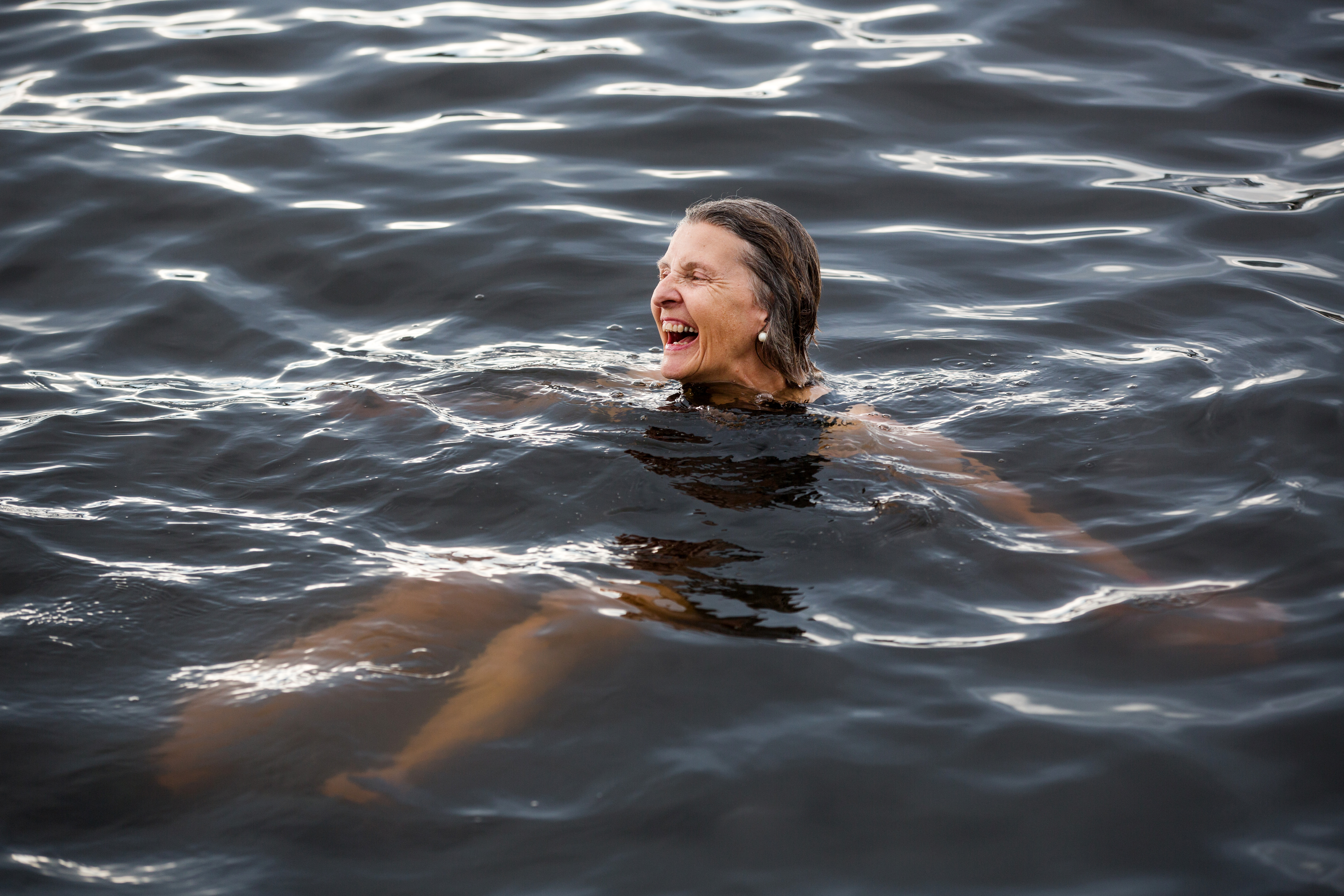
Whenever Renata von Tscharner visits Switzerland, there is one tradition she never misses: she goes for a swim in the Aare or the Rhine. For the 78-year-old, swimming in rivers is as much a part of home as the mountains or the local dialect. “I’ve always loved swimming in the Aare and the Rhine,” she says. This experience has been a constant in her life.
Today, this Swiss expatriate lives in Cambridge, near Boston in the US, where swimming in rivers is severely restricted, not only because of the water quality but also for legal reasons. However, this has done nothing to dampen her passion for rivers – on the contrary: it has become the driving force behind her professional life’s work.
More
The Swiss who ‘love that dirty water’
From Lützelflüh to Boston
Von Tscharner was born in 1948 in Lützelflüh in the Emmental, canton Bern. As her father was a vicar, the family moved several times – first to Basel and later to canton Aargau. She studied architecture and urban planning at the federal technology institute ETH Zurich and emigrated in the late 1970s, first to the UK and later to the US.
There she worked as an urban planner and consultant in numerous American cities. In 2000, she founded the Charles River Conservancy, which is dedicated to revitalising the Charles River and its banks between Boston and Cambridge.
Initially, the focus was on parks, public spaces and urban development. From the very beginning, however, von Tscharner had another goal in mind: “I wanted to bring river swimming to Boston.”
A river to look at – not to swim in
The Charles River separates Boston and Cambridge. For decades, it was considered heavily polluted. Even today, the water quality deteriorates after heavy rainfall because sewage flows into the river.
“The problem is always the water quality,” von Tscharner says. Before every swimming event, it must be proven that the water is clean enough. The requirements are even stricter than, for example, those for the water in the Seine during the Olympic Games in Paris.
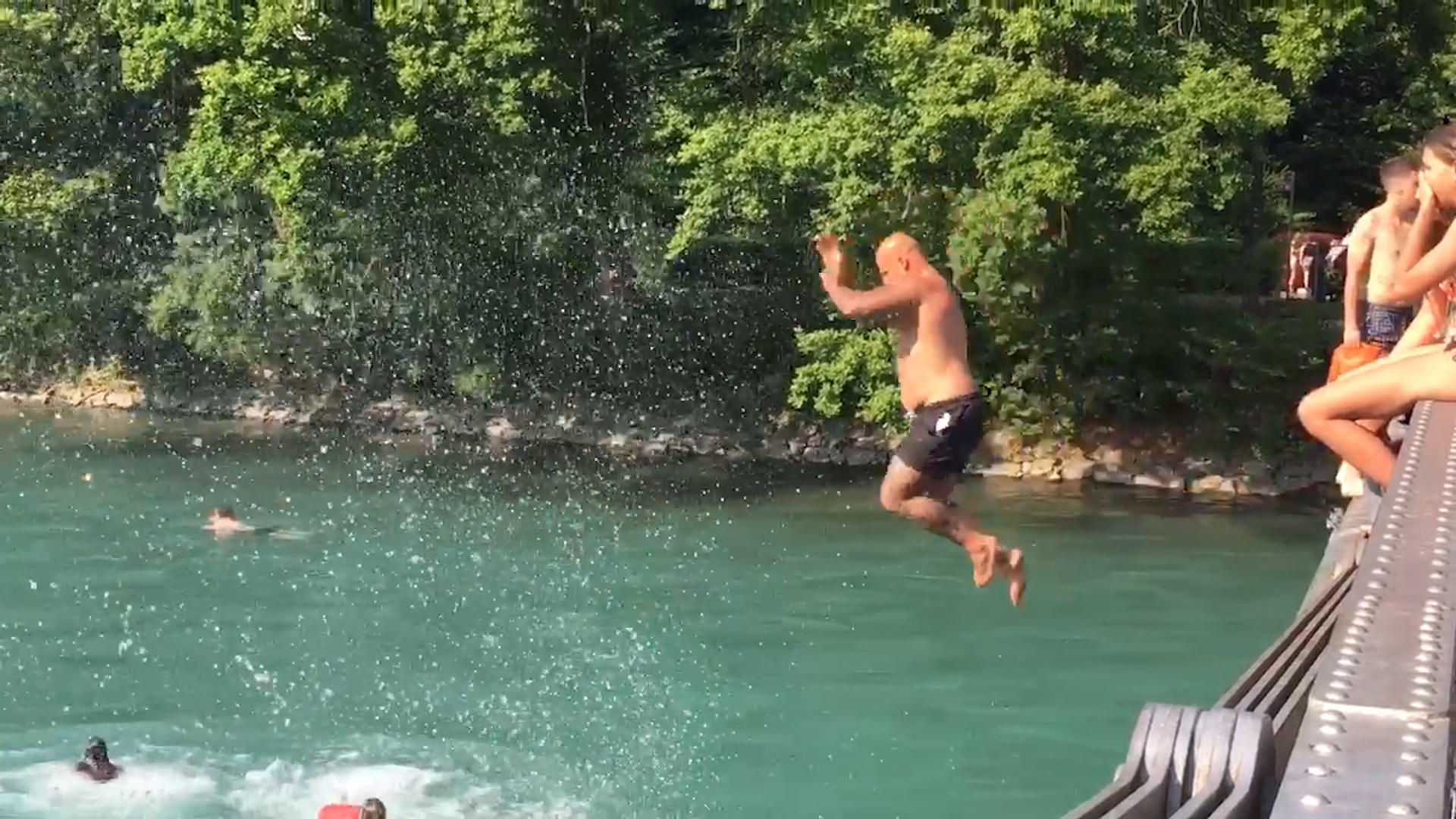
Added to this is the fact that the Charles River flows considerably more slowly than the Aare. Von Tscharner describes this difference using an analogy that betrays her Swiss origins: “The Aare is like downhill skiing; the Charles River is more like cross-country skiing.”
More
Floating through the Swiss capital!
The fear of liability claims
While river swimming is taken for granted in many parts of Switzerland, it was long considered unthinkable in Boston. That was precisely what von Tscharner wanted to change.
Through the Charles River Conservancy, she organised public swimming events, campaigned for better water quality and developed long-term plans to reintegrate the river into public life. These include floating wetlands designed to purify the water naturally.
As well as water quality, another hurdle arose: American liability law. In the US, authorities and organisations often fear legal action if people are injured while taking part in leisure activities. “Suing people is common practice,” she says. While in Switzerland it is generally assumed that each person bears a certain degree of personal risk, in the US people often look for someone to hold responsible.
This legal practice also plays a role in river swimming. Strict safety regulations therefore apply to swimming events on the Charles River. Participants must confirm that they can swim, are only allowed in the water with a companion, and are supervised by numerous lifeguards.
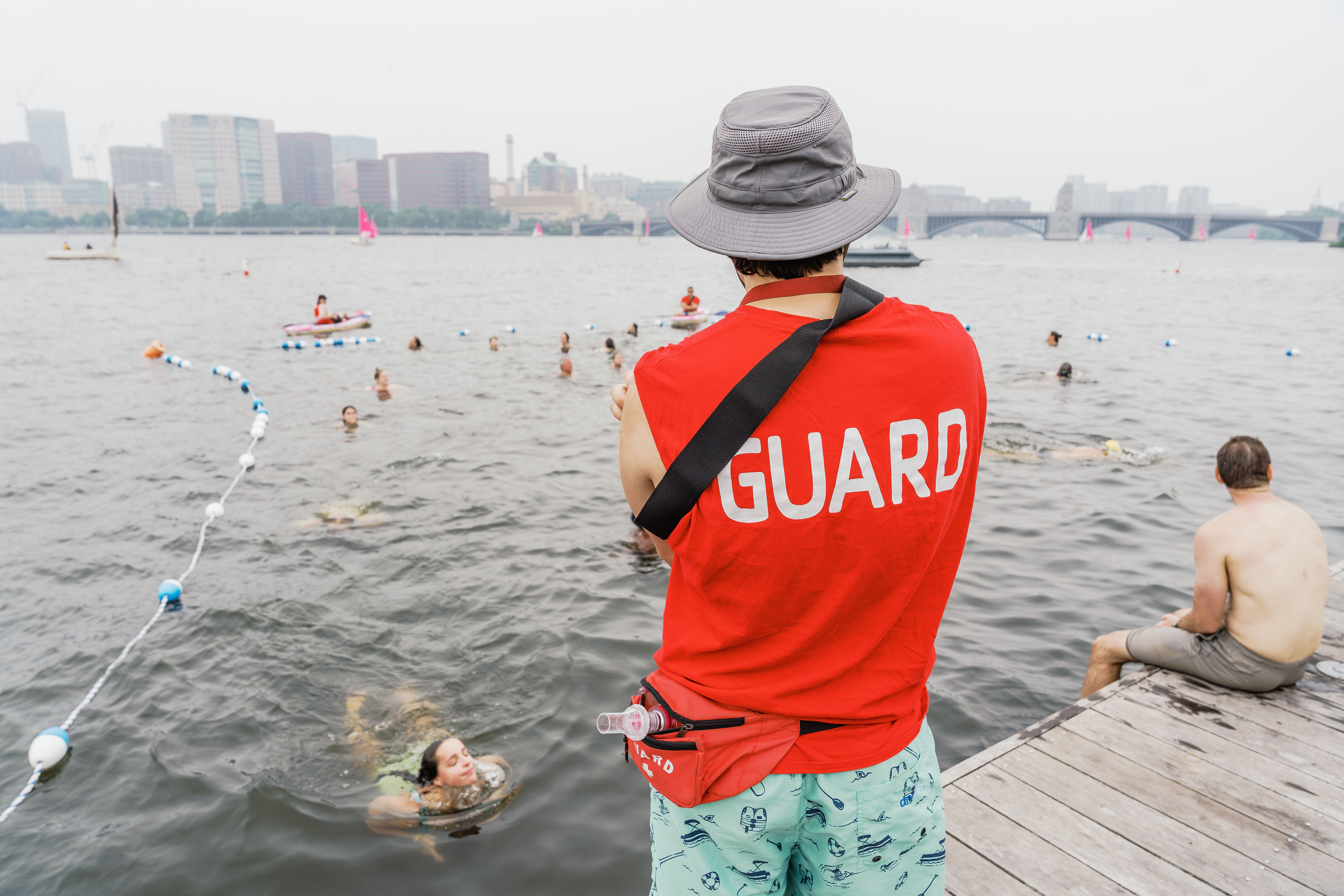
Despite these precautions, she is not in favour of blanket bans. Even in Switzerland, there are still swimming accidents in rivers from time to time. “I’m glad that Switzerland is still allowing people to swim and isn’t simply saying: ‘We’re banning this now’,” von Tscharner says. She sees this as a sign of a society that does not simply tackle risks with bans.
In July, another major swimming event took place on the Charles River. Von Tscharner was not there this time, however – she had travelled to Europe shortly beforehand and was very sorry to have missed it.

Connected to her homeland
Renata Von Tscharner has now been living in the US for almost five decades. Her three children were born there, and she now has seven grandchildren.
Nevertheless, her connection to Switzerland has remained strong. Her children speak Swiss German, the family regularly spends time in Europe, and von Tscharner visits her old home country several times a year.
What does she miss? “A certain order that is built into the institutions,” she says. Particularly in the current political climate, she observes with concern just how fragile institutions can be in the US.
At the same time, she appreciates the optimism and willingness to take risks in the US. “If you have an idea, you say: ‘Why not?’ Not: ‘That won’t work.’”

More
Everything you need to know about the Swiss Abroad
Perhaps it is precisely this attitude that explains her success. When, more than 20 years ago, she spoke of swimming in the Charles River, many considered the idea unrealistic.
In 2018, von Tscharner stepped down as head of the Charles River Conservancy at the age of 70. A conscious decision, as she puts it. She had seen all too often that founders find it difficult to let go of their organisations.
Today she devotes her time to her grandchildren, plays the accordion and is committed to preserving the medieval ruins of Neu-Schauenburg in the Basel area, which have been in her family’s possession for generations.
Her legacy is neither a bridge nor a building. It is the idea that a river can be more than just a backdrop – namely, a public space that people can experience and make use of.
Edited by Balz Rigendinger. Translated from German, sub-edited by ts

In compliance with the JTI standards
More: SWI swissinfo.ch certified by the Journalism Trust Initiative

You can find an overview of ongoing debates with our journalists here . Please join us!
If you want to start a conversation about a topic raised in this article or want to report factual errors, email us at english@swissinfo.ch.