








Alain Werner: A life spent fighting impunity

For nearly 25 years, the Geneva lawyer Alain Werner has helped victims of war crimes seek justice. He continues this fight as director of the non-governmental organisation Civitas Maxima, even as international justice comes under mounting strain.

How does someone end up documenting war crimes in order to bring their perpetrators before the courts? Almost by chance, according to Alain Werner, director of the Geneva-based NGO Civitas Maxima.
“I don’t know whether I had much freedom in choosing to study law,” the lawyer replies, weighing his words carefully. With a father who specialised in international arbitration, a mother who worked as a prison chaplain and a grandfather who was a judge, the call of the law was hard to resist.
“In the end, I embarked on a career that was legal enough to please my dad and human enough to please my mum,” Werner says with a smile, adding that he was “a good boy”.
“But the immense stroke of luck I had was that I started studying law at the University of Geneva in 1993, just as our field was being revived,” he adds. Now approaching 54, his eyes still light up when he talks about that period.
International justice on the rise
That year, the International Criminal Tribunal for the former Yugoslavia had just been established. The tribunal for Rwanda followed a year later.
“After stalling for around 50 years from the end of the Nuremberg trials to the fall of the Berlin Wall, international justice suddenly exploded,” Werner says. As a law student, he attended a seminar given by Robert Roth, a professor who would later become a judge at the Special Tribunal for Lebanon. After qualifying as a lawyer, Werner headed to New York and the prestigious Columbia University. There he encountered another leading figure in the field he would eventually enter: the American lawyer Reed Brody — known as the “dictator hunter” — at the international human rights organisation Human Rights Watch.

“He was a star to me. We would try to catch his eye from the lecture hall, hoping to work with him, but he barely looked at us. He already had his teams,” Werner jokes. At the time, he could not have imagined that they would later work together for several years on the trial of former Chadian dictator Hissène Habré.
As he recounts his story, Werner makes frequent references to friends and colleagues he admires, places he has visited and historical events, punctuating them with legal details. He speaks at a dizzying pace. Mid-sentence, he apologises, stops, goes back, then leaps forward again; his animated body language as he shifts in his chair seems to mirror the movements of his mind.
He completed his studies in New York in 2003, a year after the International Criminal Court (ICC) was established in The Hague. “I remember thinking: ‘If progress continues at this pace, in 20 years we’ll have won: impunity will no longer be the rule, but the exception,’” he says with conviction.
Charles Taylor’s trial
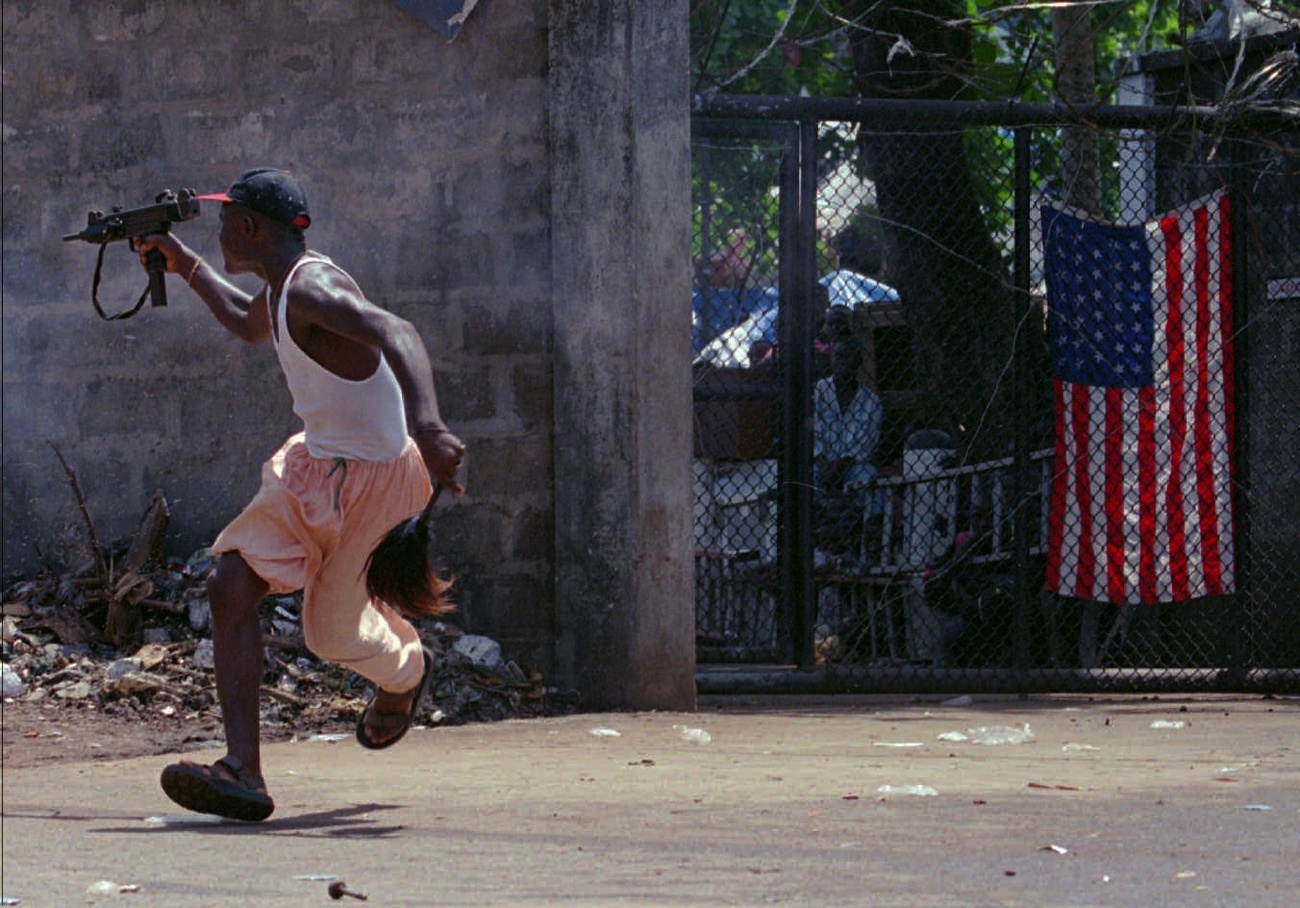
Back in Switzerland, Werner was eager to leave again as soon as possible. In 2003, the Swiss government sent him on a mission to Freetown, the capital of Sierra Leone, as an expert at the Special Court for Sierra Leone. The country was just emerging from a bloody civil war. Werner would stay for three years.
“An incredible stroke of luck!” he exclaims. Werner, a modest man, invokes luck repeatedly during our conversation, almost obscuring the enormous amount of work he must have done to establish himself in the select circle of international criminal justice.
In 2006, an event changed the course of his career. The former Liberian president, Charles Taylor, was arrested in Nigeria and transferred to Freetown. He was accused of supporting rebels from neighbouring Liberia who belonged to the Revolutionary United Front (RUF), a group responsible for unimaginable atrocities in Sierra Leone. Taylor would become the first former head of state to be convicted by an international court since the Nuremberg trials.
“Nobody had ever thought this time would come,” Werner recalls. He was one of the few lawyers in the prosecutor’s office familiar with the crimes committed by the RUF. He was asked to stay on and help establish the link between those atrocities and Taylor. What followed were months of travelling across West Africa in search of repentant fighters who had received orders from the deposed president.
“I spent all of 2008 in hearings in The Hague,” he says. “We heard around 100 witnesses, about 30 of them insiders. It was an extraordinary experience.”
See our profile of the director of the Geneva Appeal:

More
An advocate for the laws of war in a world that no longer believes in them
Working with victims
In 2009, his friend, British lawyer Karim Khan – who would become ICC prosecutor in 2021 before being removed from office in 2026 – invited Werner to join him in Phnom Penh, Cambodia. Together, they would represent around 30 victims in the first trial of a senior Khmer Rouge official. Werner was not paid, but accepted without hesitation.
“I had dreamed of playing a more direct role alongside victims,” he says. Unlike in the Taylor trial, where they could only testify, victims of the Khmer Rouge had the opportunity to join proceedings as civil parties. Werner represented a group of relatives of detainees who had been tortured and then executed at the S-21 detention centre, where between 12,000 and 20,000 people were killed between 1975 and 1979.
Werner’s voice falters as he admits that he was “slapped in the face” by the realisation of how raw their pain remained, and how urgently they still needed justice, 30 years after the events. “Perhaps that was what cemented my allegiance to victims,” he adds, once again weighing his words carefully.

Although he has chosen never to defend perpetrators, the lawyer is wary of being labelled a “hero”.
“I have always had enormous respect and admiration for defence lawyers,” he stresses. They do “a much more difficult job” and, he knows, receive far less recognition from the general public.
As a teenager, Werner saw his stepfather, the Geneva banker Robert Leclerc, convicted in a fraud case following a highly publicised trial. At the time, he regarded the family’s lead lawyer, a prominent criminal defence specialist, as a kind of “Zorro, fighting everyone alone, the ultimate shield against the machinery of justice”. “Out of loyalty to my family history, I should have tried to become a leading criminal defence lawyer in Geneva,” he adds. Today, dressed in an elegant light-grey suit, he retains only the uniform – without the tie.
Justice under pressure
When Werner founded Civitas Maxima in 2012, he set out to contribute, on his own scale, to a fairer system of international justice, without “blind spots” that allow certain leaders to escape justice for political reasons. He acknowledges that this ambition is now “completely against the prevailing winds”.
Werner watches with bitterness as the ICC comes under pressure. The court has been targeted by Donald Trump’s administration, which objects to its arrest warrants for Israeli leaders, including the prime minister. Some of its officials have already been sanctioned. Washington is now threatening to expand those measures and has pledged to dismantle the ICC “brick by brick”, while pressuring states to withdraw from it.
“I would never have thought the situation would become so catastrophic,” Werner sighs. But while he condemns the political attacks on the ICC, he also takes a critical view of the court’s record. It has an annual budget of around €200 million.
“The ICC has spent more than €2 billion to secure ten convictions in almost 25 years. The vast majority of those convicted have been rebels, all of them Africans,” he laments.
Werner is convinced that “the fight must now be taken to the national level”. This means strengthening specialised war crimes units and expanding the use of universal jurisdiction, which allows states to prosecute perpetrators of the most serious crimes even when those crimes were committed abroad.
See also: International Geneva is home to several NGOs working to combat impunity:
More
The Swiss NGOs that use universal jurisdiction to bring war criminals to justice
Fighting impunity
After 14 years at the helm of Civitas Maxima, whose annual budget has now reached CHF 2.5 million, Werner can point to several successes. The painstaking evidence-gathering carried out day after day by his team of around 20 people has helped bring several individuals involved in civil wars to justice.
Among them is the former Liberian rebel commander Alieu Kosiah, convicted of war crimes by Switzerland’s Federal Criminal Court in Bellinzona in 2021. It was the first trial of its kind before a non-military court in Switzerland. In 2023, he was convicted on appeal of crimes against humanity, another Swiss first.
Four other criminal convictions in France and the United States add to the record, along with “a dozen arrests or arrest warrants”, Werner says, proud of how far the work has come. Other cases are under way elsewhere in the world, he says, but for now they remain confidential.
Confronted with the retreat of international courts and a growing climate of impunity, Werner, who is the father of two young daughters, refuses to give in to pessimism.
“The worse things get, the more we have a duty to resist,” he insists. “What is at stake is whether our children and future generations will still believe that these crimes – which are so serious and affect us all – must be punished.”
Edited by Pauline Turuban/ds
This profile is a part of a series dedicated to the individuals who embody the trends shaping International Geneva today. The next instalment will focus on Beatrice Ferrari, Director of International Affairs for the State of Geneva, at a time when the city is facing a withdrawal of support from certain states.
First profile: Alain Délétroz: An advocate for the laws of war in a world that no longer believes in them

More
Our newsletter on geopolitics


See more Swissinfo articles in your Google results. Learn more

In compliance with the JTI standards
More: SWI swissinfo.ch certified by the Journalism Trust Initiative

You can find an overview of ongoing debates with our journalists here . Please join us!
If you want to start a conversation about a topic raised in this article or want to report factual errors, email us at english@swissinfo.ch.