








Swiss cantons brace for millions in costs for Ukrainian refugees

Cantons and municipalities are warning of substantial additional costs as Ukrainians with protection status S begin transitioning to regular social assistance from 2027. Nationwide, the extra burden is estimated at around CHF300 million ($380 million).
Select your language
Generated with artificial intelligence.
Listening:
Swiss cantons brace for millions in costs for Ukrainian refugees
+ Get the most important news from Switzerland in your inbox
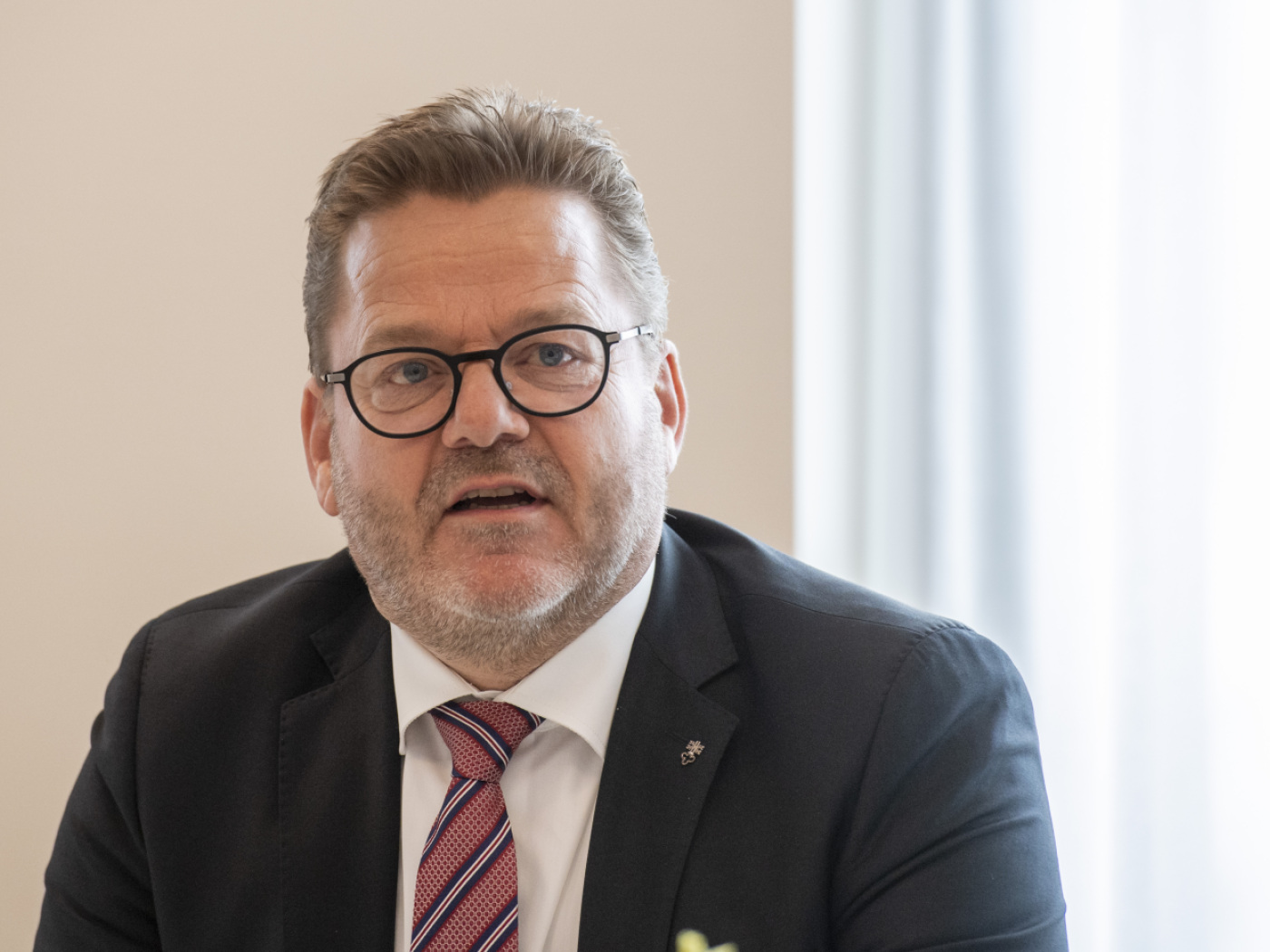
“Without federal support, this would add about three percent to our municipal tax rate,” said Bruno Tüscher, mayor of Münchwilen, canton Aargau, highlighting the stakes.
From 2027, the first people with protected refugee status S will transition to regular social assistance. The bill will be passed on to the cantons and municipalities. Nationwide, they expect additional costs of around CHF300 million.
Several cantons have already quantified the impact. In Aargau, municipalities expect additional costs of around CHF25 million and are pressing for clarity as 2027 budgets are prepared.
+ Swiss refugee pivot for Ukrainian refugees raises doubts
Graubünden estimates that about 900 refugees could switch to regular welfare, costing CHF5.4 million annually – CHF 2.2 million of that in the city of Chur alone.
“And that’s a best-case scenario. I expect that this figure will unfortunately have to be revised upwards,” says city councilor Patrik Degiacomi of the Social Democratic Party.
More
Swiss cantons object to conversion of asylum status to work permits
In St Gallen, municipalities anticipate an added CHF16 million burden. Given the strained financial situation, this represents an additional burden for many municipalities, says Bernhard Keller, director of the Association of St Gallen municipalities.
The Conference of Social Directors of Central Switzerland also speaks of drastic consequences. In several Swiss cantons there, welfare costs for Ukrainian refugees could nearly double if no countermeasures are taken.

More
Since rule change Switzerland rejects 104 Ukrainian refugees
Questioning system
Some cantons are questioning the system itself. Bern has around 7,500 people with status S, of which 5,000 could be eligible for a B residence permit – and thus for regular social assistance – in 2027. From canton Bern’s perspective, they should nevertheless remain within the asylum social assistance system. The canton argues that the basic principle of status S – temporary protection with a prospect of return – is undermined by an automatic transfer to ordinary social assistance.
Criticism of the federal government is mounting
“The federal government had over five years to create a clear and sustainable regulation for status S. This has not yet been achieved,” says Gundekar Giebel, spokesperson for the Bern cantonal social services department.
Currently, recipients of status S receive between CHF 13 and CHF 23 per day for basic needs, depending on the canton – levels the Swiss Refugee Council deems too low.
Tobias Fritsche from Bern University of Applied Sciences, who has researched the integration of people with S status, warns of the consequences of reduced support payments. Less money limits integration opportunities. Children and young people are often affected – for example, when leisure activities or membership in a sports club can no longer be financed.
He finds it particularly troubling that the federal government is unilaterally shifting costs onto cantons and municipalities as part of the 2027 relief package. Extending regular social assistance to people with status S will further increase this burden.
Eastern Swiss cantons are also calling for more autonomy, insisting they should decide benefit levels if they are expected to bear the financial burden.
Translated from German with AI/sb
We select the most relevant news for an international audience and use automatic translation tools to translate them into English. A journalist then reviews the translation for clarity and accuracy before publication.
Providing you with automatically translated news gives us the time to write more in-depth articles. The news stories we select have been written and carefully fact-checked by an external editorial team from news agencies such as Bloomberg or Keystone.
If you have any questions about how we work, write to us at english@swissinfo.ch.
External Content

In compliance with the JTI standards
More: SWI swissinfo.ch certified by the Journalism Trust Initiative

You can find an overview of ongoing debates with our journalists here . Please join us!
If you want to start a conversation about a topic raised in this article or want to report factual errors, email us at english@swissinfo.ch.