








A brief history of Swiss banking oversight and its scandals
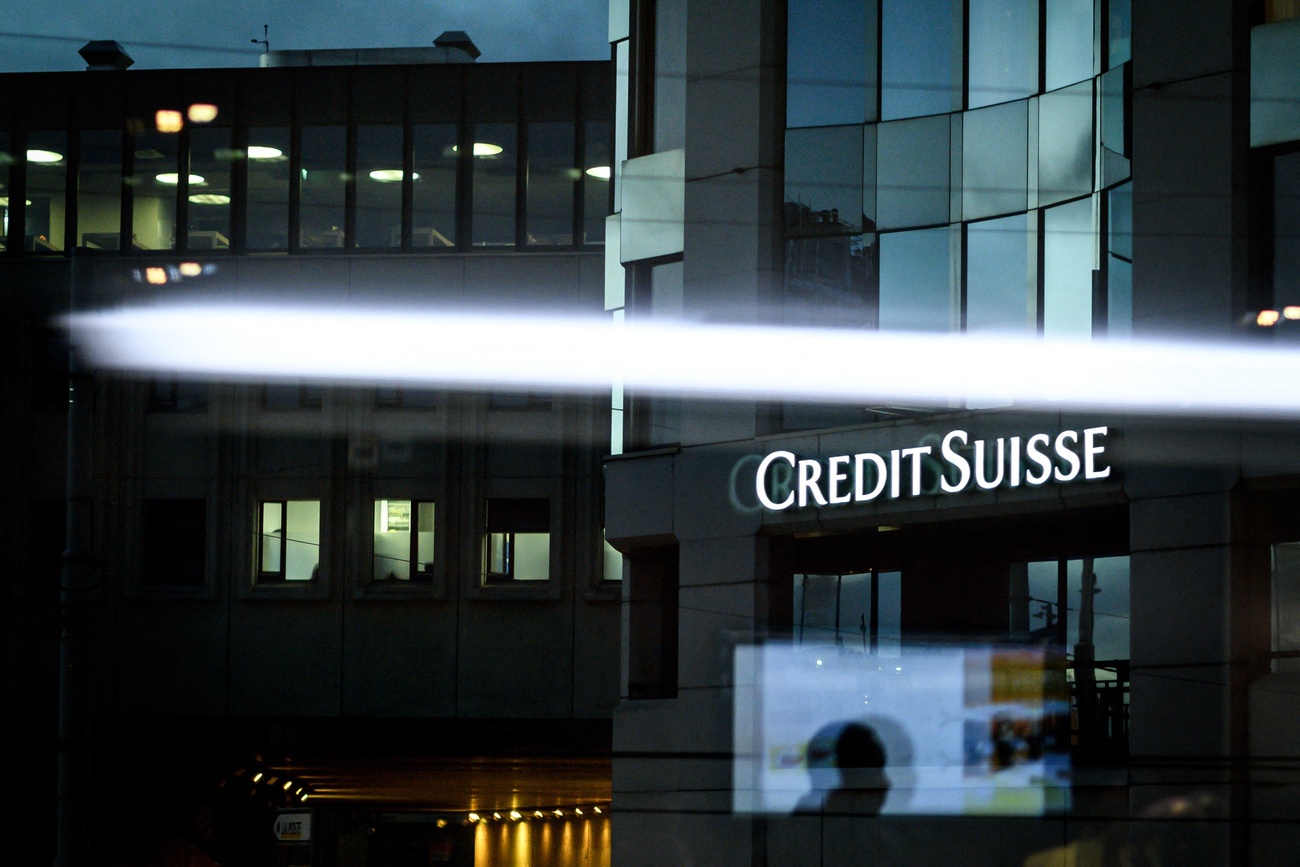
Over time, scandals and pressure from abroad have shaped the development of Switzerland’s banking regulations – while powerful financial lobbies have often managed to water them down.
Select your language
Generated with artificial intelligence.
Listening:
A brief history of Swiss banking oversight and its scandals
Three years after the collapse of Credit Suisse, the Swiss government wants to strengthen the country’s banking regulator. The planned reforms would give Switzerland tools which other countries with similarly sized financial centres have long had.
One reform would enable the Financial Market Supervisory Authority (FINMA) to impose fines and publicly name banks that violate regulations. Had it had the powers three years ago, it could have exposed Credit Suisse’s mistakes earlier and in greater detail.
However, resistance to the government’s plans is already emerging in parliament. This is not surprising: for years, there were debates in Switzerland about whether the banking sector even needed to be federally regulated at all. The first attempt to do so, a bill drafted in 1916, sat in a drawer in Bern until the Great Depression.

The 1931 collapse of the Banque de Genève and the crisis of the Schweizerische Volksbank, which was propped up by a CHF100 million ($123 million) government bailout in 1933, forced politicians to act. They hastily drafted the Federal Banking Act, a law later described by a finance minister as “a child of necessity”. It came into force on March 1, 1935, and mainly served to protect creditors thanks to rules about liquidity and capital requirements. A five-member independent authority, the Federal Banking Commission (FBC), enforced the new rules.
The regulator with links to Trujillo
On June 4, 1965, the authority faced its first big scandal when the government decided to remove FBC president Max Hommel from office with immediate effect.

Hommel, an accountant from canton Thurgau, had used his fiduciary firm in Bern to advise two companies belonging to Spanish financier Julio Muñoz, receiving a monthly payment of CHF2,000 in the process. The mandate, which Hommel failed to disclose to his FBC colleagues, was particularly sensitive because Muñoz managed the European fortune of a controversial figure: Rafael Leónidas Trujillo Molina, the Dominican dictator assassinated in 1961.
Along with Swiss stand-ins, Muñoz managed to infiltrate two renowned banks in St Gallen and Geneva. Meanwhile banking supervisor Hommel turned a blind eye as both banks granted major unsecured loans to foreign companies linked to Muñoz.
When the loans were not repaid, both “Trujillo banks” collapsed and were taken over by the Swiss Banking Corporation. Authorities and banks tried hard to quietly settle the embarrassing affair surrounding the flight of capital stemming from the inheritance of a brutal dictator. Hommel, who was dismissed with immediate effect, did not have to appear before court. The only legislative consequence was a more clearly defined licensing requirement for foreign-controlled banks.
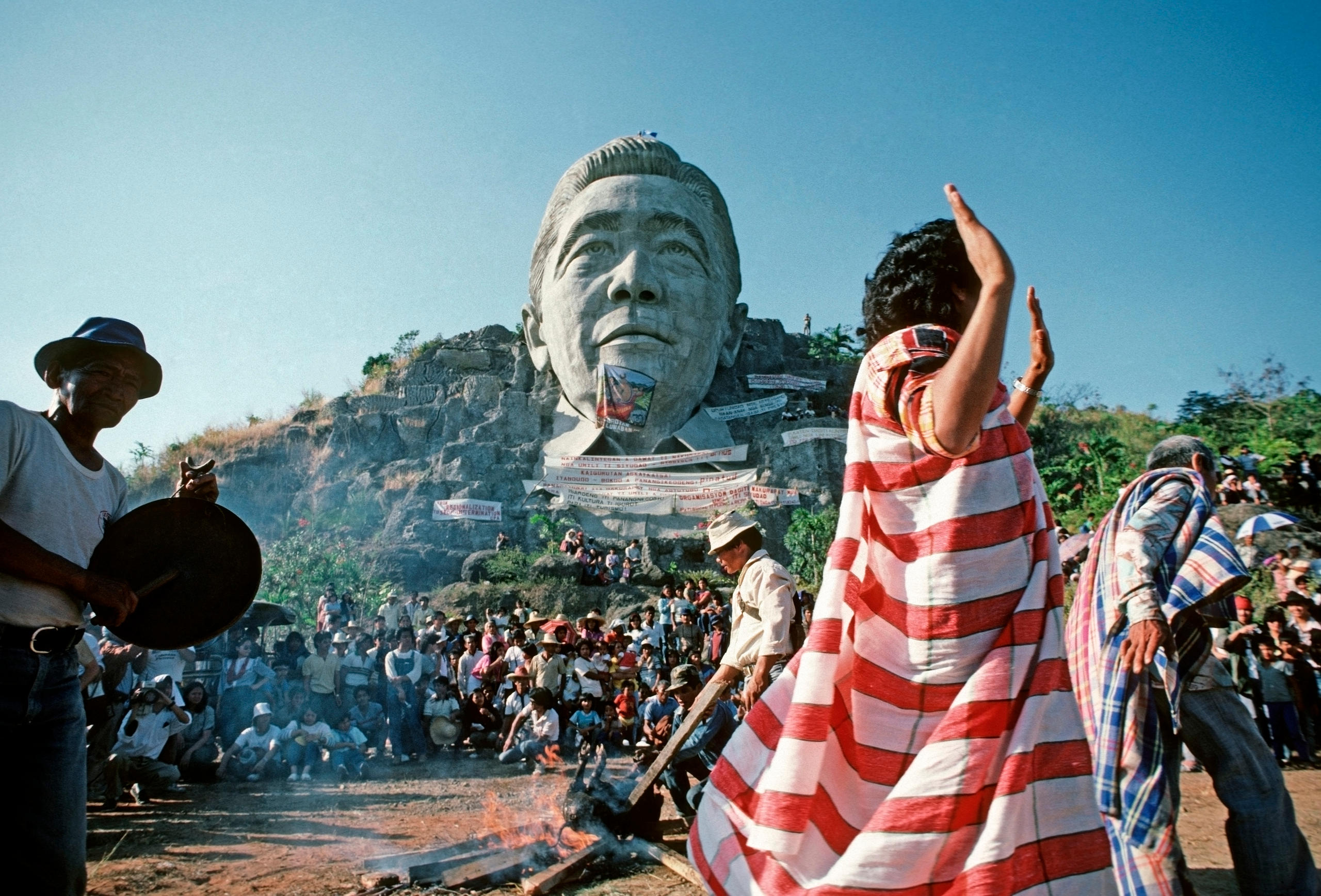
>>> Our overview of the most notable cases of dictator money stashed in Switzerland:
More
Dictators’ funds in Switzerland – the biggest scandals
A haven for Italian tax evasion in Ticino
In April 1977, tax evasion from Italy played a key role when the Schweizerische Kreditanstalt (which would later become Credit Suisse) ran into serious trouble. For 15 years, the bank’s branch in the border town of ChiassoExternal link had channelled CHF2.2 billion of its Italian clients’ money into a letterbox company in Liechtenstein. Acting as a “bank within a bank”, the company granted loans and bought into non-banking investments, mainly in Italy.
The Liechtenstein firm also served as a dumping ground for bad loans from the Chiasso branch and losses from securities speculations by senior managers. The affair resulted in losses of CHF1.4 billion, making it the largest banking scandal ever in Swiss history – at the time.
Unlike Credit Suisse 46 years later, however, the Schweizerische Kreditanstalt was rescued. In the middle of the night on April 26, 1977, the Swiss National Bank (SNB) announced that, if needed, it would support it with up to CHF3 billion, together with the two major banks, the Swiss Bank Corporation and the Union Bank of Switzerland. And while this loan was never used, the announcement restored confidence and prevented a bank run.
More
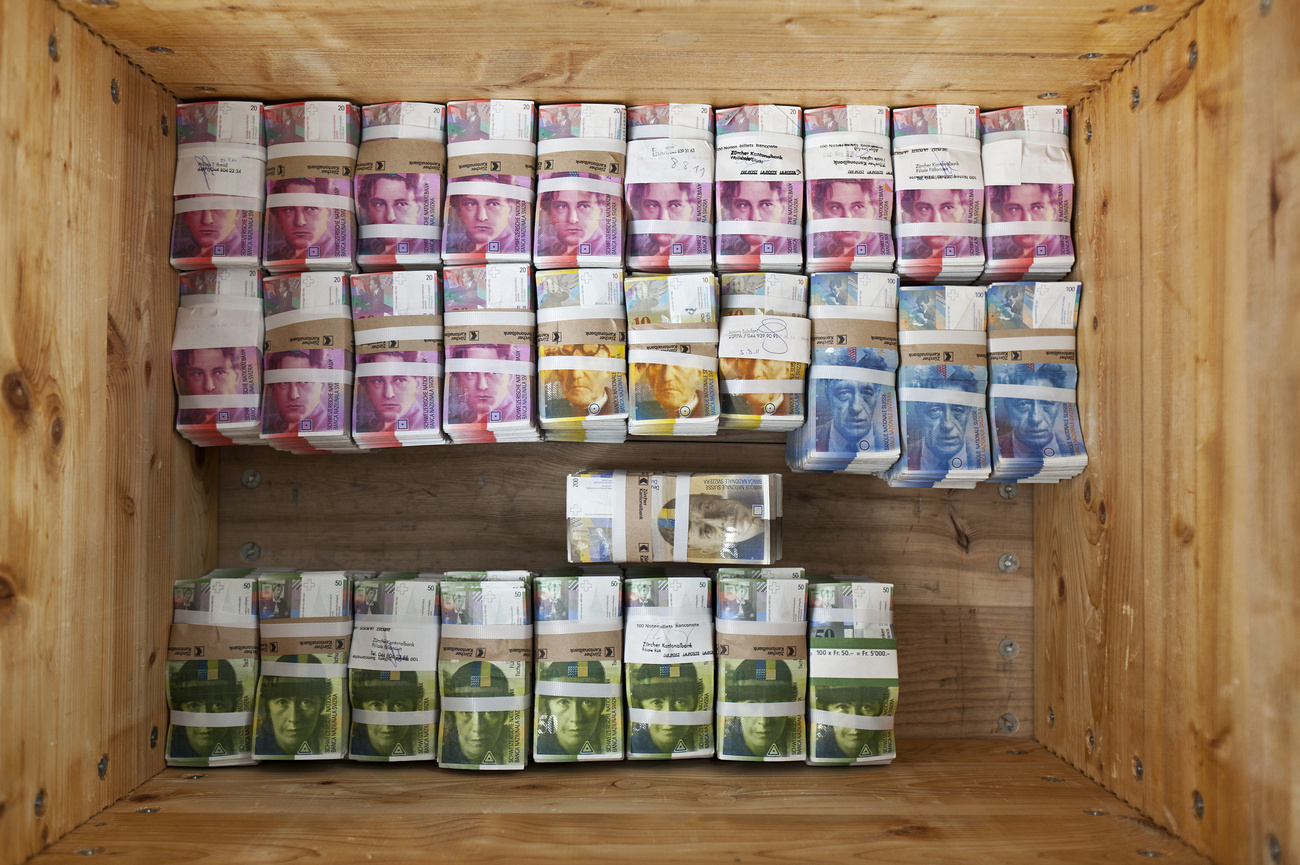
With US in retreat, can Switzerland maintain fight against kleptocracy?
Then-SNB president Fritz Leutwiler likened the scandal to a time bomb and realised that things could not go on as normal. Within a few weeks, the SNB and the umbrella organisation for Swiss banks quickly drafted a code of conduct to restore the reputation of the country’s financial centre. The “Agreement on the Swiss banks’ code of conduct with regard to the exercise of due diligence (CDB)” became the cornerstone of self-regulation in the sector.
A vote on banking secrecy
The left-wing Social Democrats reacted to the Chiasso affair by launching a people’s initiative calling for laws to combat tax evasion and capital flight. Timing as well as strong lobbying by the banking sector worked against the idea, and in May 1984, 73% of voters rejected it. Finance actors celebrated the result as a popular endorsement of banking secrecy, while the government abandoned plans to enshrine parts of the banking industry’s code of conduct in law. The finance minister at the time, Social Democrat Willi Ritschard, quipped that banking secrecy was as sacred as a nun.
Just two years later, in spring 1986, the Swiss financial sector again made international headlines. On March 24, the government invoked emergency powers to freeze the Swiss-based funds of Philippine president Ferdinand Marcos, after he had fled to the US – a decision marking a turning point in how Switzerland deals with dictators’ assets.
>>> Read our report about the dramatic freezing of Marco’s assets:

More
The dramatic freezing of Ferdinand Marcos’s assets in Switzerland
More haste, less speed in tackling money laundering
The “Pizza Connection” and “Lebanon Connection” scandals exposed further details of the laundering of drug money in Switzerland’s financial centre in the second half of the 1980s. When Elisabeth Kopp, Switzerland’s first female government minister, resigned over her husband’s questionable business ties in 1989, politicians suddenly sprang into action. Two anti-money laundering laws were passed much faster than planned.
When it came to implementing international regulations, however, such haste was less evident. The Swiss Bankers Association sought to restore the financial centre’s tarnished reputation by launching a public relations campaign. In 1999, backed by the government and the SNB, it promoted Switzerland’s anti-money laundering rules as a model for other countries.
Another scandal emerged in 1999 when it was discovered that the late Nigerian dictator Sani Abacha had plundered his country for years and transferred billions abroad. As a precautionary measure, Switzerland froze CHF533 million ($660 million) held in accounts at 19 Swiss banks. Frustrated with the banking sector, the FBC named all 19 banks involved – an unprecedented divulging of information.
This tough line continued a year later when corruption funds belonging to former Peruvian president Alberto Fujimori and his intelligence chief Vladimiro Montesino were discovered in Swiss accounts. The FBC not only published the names of the banks involved, but, for the first time, also removed a bank executive from his position, the director general of Bank Leumi’s Swiss branch.
This naming and shaming was toned down with the 2009 creation of the Swiss Financial Market Supervisory Authority (FINMA) – a merger of the Banking Commission, the insurance regulator and the anti-money laundering authority.

FINMA’s creation as an integrated oversight body was shaped by the aftermath of UBS’s near collapse. In autumn 2008, the bank had been rescued through a temporary partial state takeover and a bad bank, or stability fund, financed by the SNB in autumn 2008. Complex regulations were subsequently introduced, designed to ensure that taxpayers would never again have to bail out systemically important banks.
However, when the regulations faced their first test in spring 2023, the too-big-to-fail-concept was not used to rescue Credit Suisse. Under international pressure, the government, SNB and FINMA orchestrated UBS’s takeover of its collapsing rival. Since then, the struggle to ensure stability in the banking sector has started again.
Join the debate:
External Content
Edited by Benjamin von Wyl. Adapted from German by Billi Bierling/dos


See more Swissinfo articles in your Google results. Learn more

In compliance with the JTI standards
More: SWI swissinfo.ch certified by the Journalism Trust Initiative

You can find an overview of ongoing debates with our journalists here . Please join us!
If you want to start a conversation about a topic raised in this article or want to report factual errors, email us at english@swissinfo.ch.