








Swiss bankruptcies rose sharply in first half of year

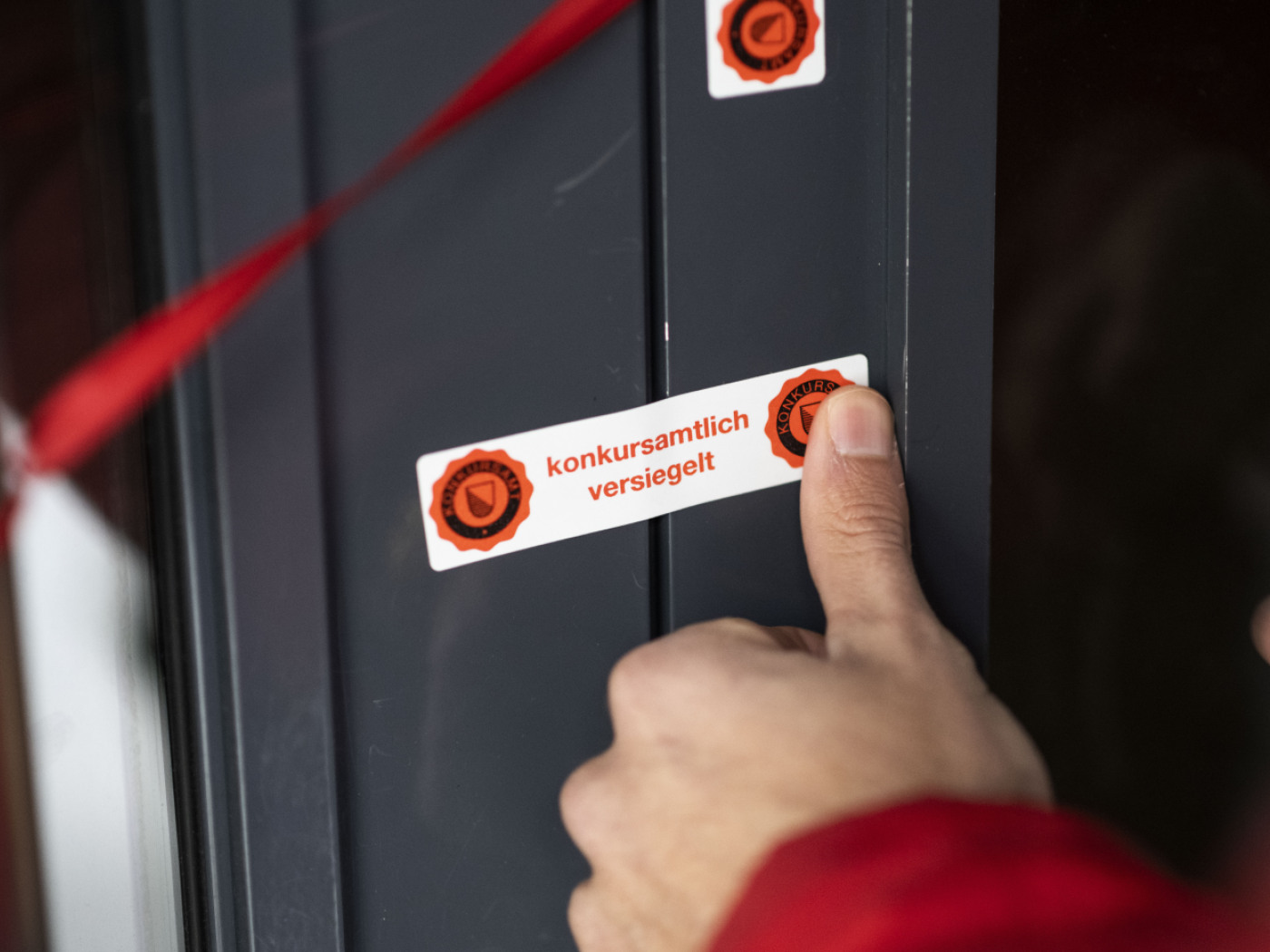
In Switzerland, the number of corporate bankruptcies rose sharply in the first half of 2026. This increase is partly due to economic factors and partly to a change in the law.
Select your language
Generated with artificial intelligence.
Listening:
Swiss bankruptcies rose sharply in first half of year
From the start of 2025, public creditors such as tax and social security authorities have been obliged to enforce outstanding claims more rigorously through debt recovery proceedings. This explains part of the rise, the business information service Dun & Bradstreet explained.
Specifically, corporate insolvencies rose by just under 55% to 7,496 cases in the first six months – the highest level since 1994. If the trend continues, it could result in a record figure of around 15,000 insolvencies for the year as a whole, up from just under 11,900 in the previous year.
“The rise in Switzerland is only partly due to economic factors,” said Dirk Radetzki, senior vice-president, global transformation & business development at Dun & Bradstreet Germany. Consequently, the figures are no longer comparable with those of previous years. Some of the current cases would never have ended up in bankruptcy proceedings under the old rules.
From an economic perspective, according to Radetzki, the continued high cost of finance, together with weaker demand in parts of the construction, retail and hospitality sectors, is driving the rise in insolvencies.
Worst hit sectors
At sector level, the skilled trades (1,053), the hospitality sector (770) and the retail sector (626) reported the highest number of insolvencies. However, the number of insolvencies has risen in virtually all sectors with the exception of the construction industry. In percentage terms, the sharpest increases in case numbers were seen in the printing and publishing sector, the utilities sector and the transport sector.
Regionally, with the exception of Schwyz, all cantons recorded more insolvencies than in the same period last year.
It is also striking that established companies were more severely affected by insolvencies than newer ones. Companies with more than ten years’ market presence suffered the most, followed by those that have been active in the market for between five and ten years. Dun & Bradstreet concludes that the longer a company has been in the market, the greater its risk of becoming insolvent in the current environment.
“The fact that almost all cantons and sectors in Switzerland are being affected simultaneously is unusual and reinforces the picture of a systemic rather than a sector-specific effect,” said Radetzki. The legislative reform is bringing to light those cases that have long been operating at their economic limits – often long-established businesses with little scope to absorb further strain.
More
Swiss company bankruptcies rise significantly
+ How we produce English news
Translated from German, reviewed by an English Department journalist.
External Content

In compliance with the JTI standards
More: SWI swissinfo.ch certified by the Journalism Trust Initiative

You can find an overview of ongoing debates with our journalists here . Please join us!
If you want to start a conversation about a topic raised in this article or want to report factual errors, email us at english@swissinfo.ch.